
Sherwan (Union Council in Abbottabad District)
Sherwan is a Union Council in Abbottabad District, Khyber Pakhtunkhwa, Pakistan, located about 35 km west of Abbottabad city. It is a rural administrative area with local governance, agriculture and hilly terrain.
Overview
Sherwan is a Union Council — the smallest rural administrative unit used for local government in Pakistan — located in the western part of Abbottabad District. It lies within the province of Khyber Pakhtunkhwa and is situated roughly 35 km west of Abbottabad city. The area is primarily rural, with settlements clustered in valleys and on the surrounding hills typical of this part of northern Pakistan.
Image gallery
1 Image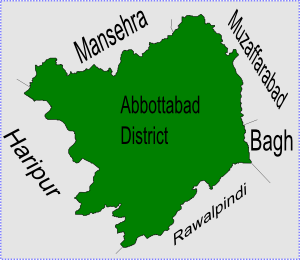
Geography and settlement
Sherwan occupies hilly terrain and small agricultural valleys that drain toward larger streams in the district. The landscape influences settlement patterns: homes and small villages are often found along road corridors and terraced slopes. The climate and topography favor mixed farming, forestry, and seasonal grazing rather than large-scale industry.
Administration and services
As a Union Council, Sherwan performs local administrative and civic functions under district authorities. Typical responsibilities include civil registration, primary education oversight, basic health outreach, maintenance of minor roads and local dispute resolution. The council acts as an interface between residents and higher tiers of government.
Economy and daily life
The local economy is dominated by agriculture, small-scale trade and remittances from people working in larger towns or abroad. Common livelihoods include crop cultivation, orchards, livestock rearing and small retail shops. Community life centers on markets, mosques and village meeting places where social and cultural activities occur.
History and development
Sherwan shares the broad historical and cultural background of the Abbottabad area, shaped by rural settlement patterns, regional trade routes and the administrative changes of the modern Pakistani state. Development has been gradual: improvements in access, schooling and telecommunications have reached many villages, but services may still be limited compared with urban centers.
Notable facts and context
- Sherwan is an example of local governance in a predominantly rural district of Pakistan.
- Its proximity—about 35 km—to the district headquarters in Abbottabad city connects residents to broader markets and administrative services.
- The Union Council model places emphasis on local participation and basic service delivery at grassroots level.
For further administrative details or maps of the region consult district resources and provincial planning documents via official portals or local government offices. The area remains representative of many rural council areas in northern Pakistan: geographically varied, agriculturally based and engaged in steady, if uneven, development.
Related articles
Author
AlegsaOnline.com Sherwan (Union Council in Abbottabad District) Leandro Alegsa
URL: https://en.alegsaonline.com/art/89709
Sources
- abbottabad.gov.pk : Sherwan Union Council
- abbottabad.sdnpk.org : Administrative Units of District Abbottabad
- abbottabad.sdnpk.org : List of Union Councils and population in Abbottabad District