
Seelisberg: Swiss mountain village in the canton of Uri
Seelisberg is a small municipality in the canton of Uri, Switzerland, known for its terrace above Lake Lucerne, scenic views, hiking, and the 1947 Seelisberg Conference addressing antisemitism.
Overview
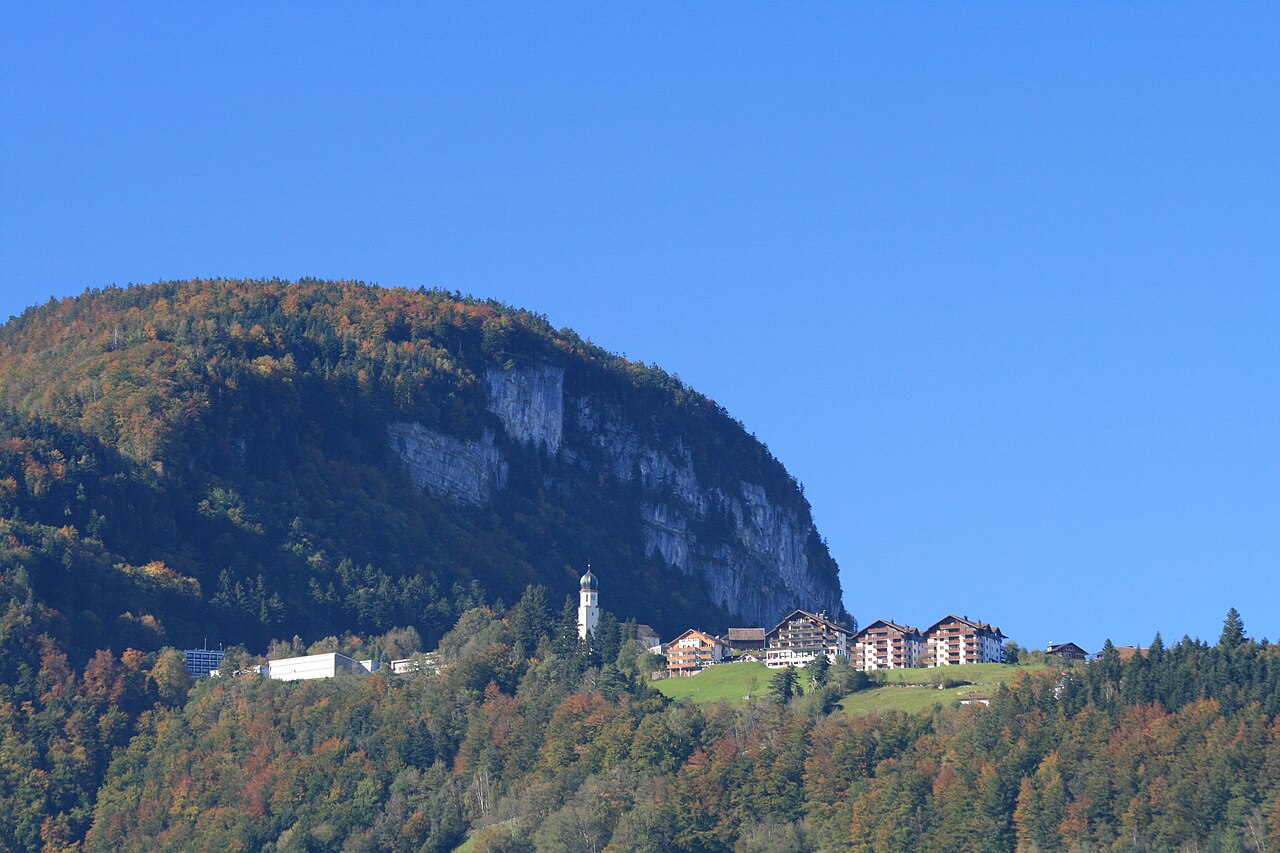
Seelisberg is a municipality in the Swiss canton of Uri. It covers an area of 13.28 square kilometres and occupies a wooded terrace above Lake Lucerne. The community combines a rural character with visitor-oriented services; it is often described as a village with broad views over the lake and surrounding alpine ridges. For official information see the municipal page.
Image gallery
5 Images


Geography and settlement
The village stands on upland slopes that mix forest, pasture and small-scale agriculture. Its setting is representative of central Swiss alpine foothills: steep valley sides, cliffs and cultivated terraces. Seelisberg is part of the political canton of Uri and is one of several lakeside and upland communities that form the region around Uri and Switzerland more broadly.
History and notable events
Seelisberg’s roots reach back through the medieval and early modern periods typical of Swiss mountain settlements, with a history of farming and forestry. In 1947 the village hosted an international meeting of Christian and Jewish leaders that produced the widely cited "Ten Points of Seelisberg," a statement confronting antisemitism; this event remains one of the place’s most notable contributions to modern history.
Economy, tourism and activities
Local life combines agriculture, small businesses and tourism. Visitors come for panoramic viewpoints, quiet walks and access to regional hiking routes. The village is reachable by local roads and links with nearby transport hubs; practical visitor details and maps are available from regional tourism offices and the area information service.
Distinctive features
- Compact mountain village with a lakeside outlook and mixed forest-pasture landscape.
- Historic community life shaped by pastoral farming and alpine economy.
- Site of the 1947 Seelisberg conference and its Ten Points addressing religious prejudice.
- Recommended for visitors seeking scenic views, local culture and easy hikes; see general resources at Switzerland tourism pages.
Related articles
Author
AlegsaOnline.com Seelisberg: Swiss mountain village in the canton of Uri Leandro Alegsa
URL: https://en.alegsaonline.com/art/88542
Sources
- bfs.admin.ch : "Arealstatistik Standard - Gemeinden nach 4 Hauptbereichen"
- bfs.admin.ch : "Ständige Wohnbevölkerung nach Staatsangehörigkeitskategorie Geschlecht und Gemeinde; Provisorische Jahresergebnisse; 2018"