
Baltoro Glacier — major Karakoram glacier in Baltistan
The Baltoro Glacier in Pakistan's Karakoram spans about 62 km. It feeds the Shigar and Indus rivers, hosts Concordia and K2 base camp, and is central to mountaineering, hydrology, and glacier research.
Overview
The Baltoro Glacier is one of the largest non-polar glaciers in the world, running roughly 62 kilometres through Baltistan in Pakistan’s Karakoram range. It lies amid some of the planet’s highest peaks, including the region’s tallest summit, K2 (8,611 m). The glacier forms a major ice corridor linking multiple high-altitude valleys and serves as the source of the Shigar River, itself a tributary of the Indus River.
Image gallery
8 Images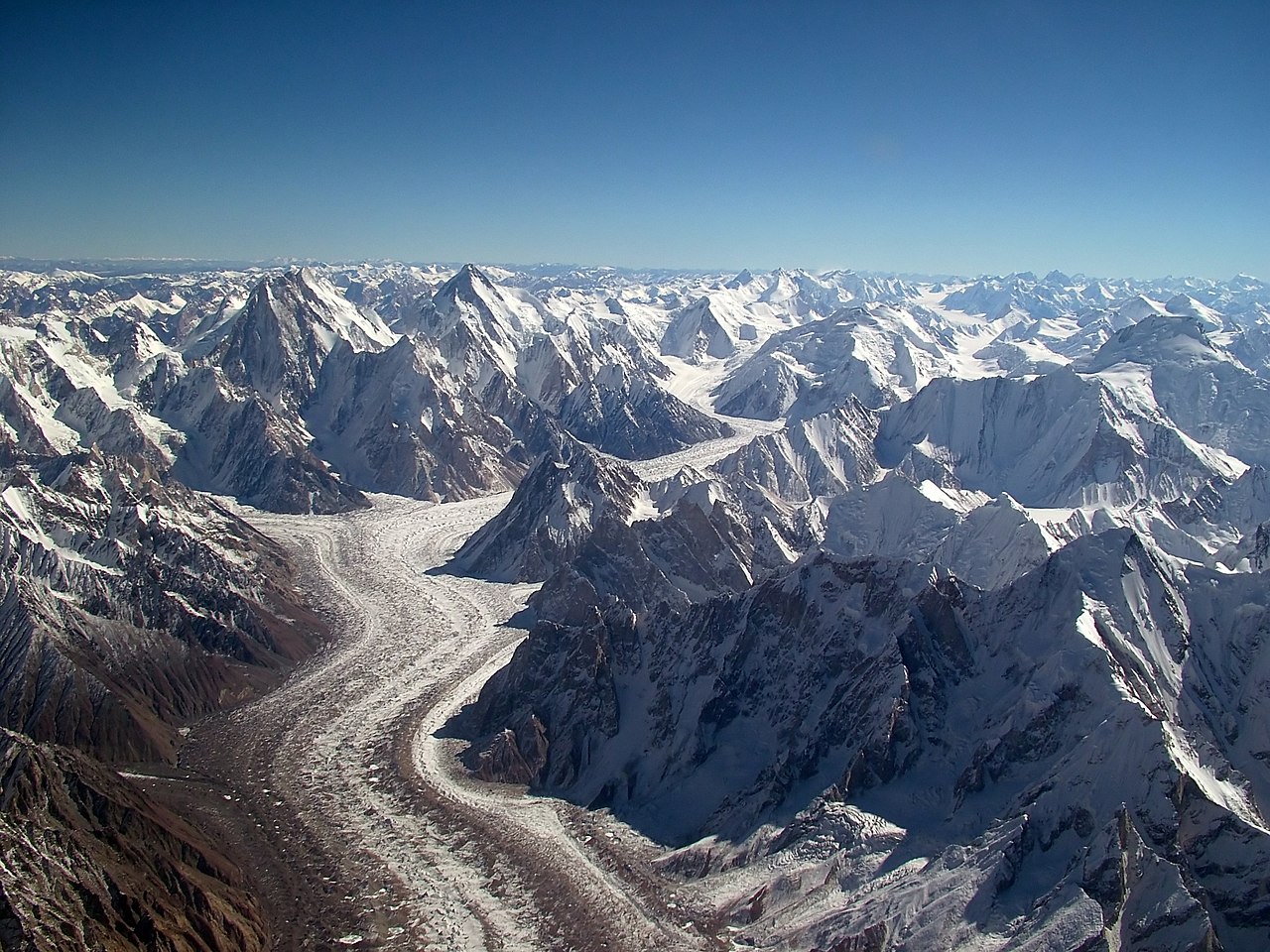


Physical characteristics
The Baltoro Glacier is a trunk glacier fed by many tributary glaciers that descend from surrounding peaks and ridges. The main channel is notable for its broad trough, steep lateral walls in places, and frequent icefalls where small valley glaciers join the trunk. As it flows, the glacier carves and polishes bedrock, leaving striations and basins that can collect meltwater to form glacial lakes. Its surface is crevassed and often strewn with moraine debris carried from higher elevations.
Tributaries and notable features
- Godwin Austen Glacier — descends from the slopes of K2 and joins the Baltoro at the famously scenic convergence known as Concordia.
- Abruzzi and several Gasherbrum Glaciers — flow from the Gasherbrum massif and contribute substantial ice and rock debris.
- Vigne Glacier — drains from Chogolisa and links with the main trunk.
- Yermandendu Glacier — flows down from the Masherbrum area into the Baltoro system.
The confluence at Concordia is a key landmark for trekkers and climbers; from there several eight-thousanders are visible and base camps, including K2 base camp, are established nearby.
History, human use and access
The Baltoro region has long been inhabited and traversed by Balti communities. In the modern era it has become a focal point for mountaineering, high-altitude trekking and scientific observation. Access to the glacier is usually made from the town of Skardu, which serves as the logistical hub for expeditions and treks into the Karakoram. Routes approaching Concordia and K2 base camp are among the most visited high-altitude trekking corridors outside the Himalaya proper.
Scientific and environmental context
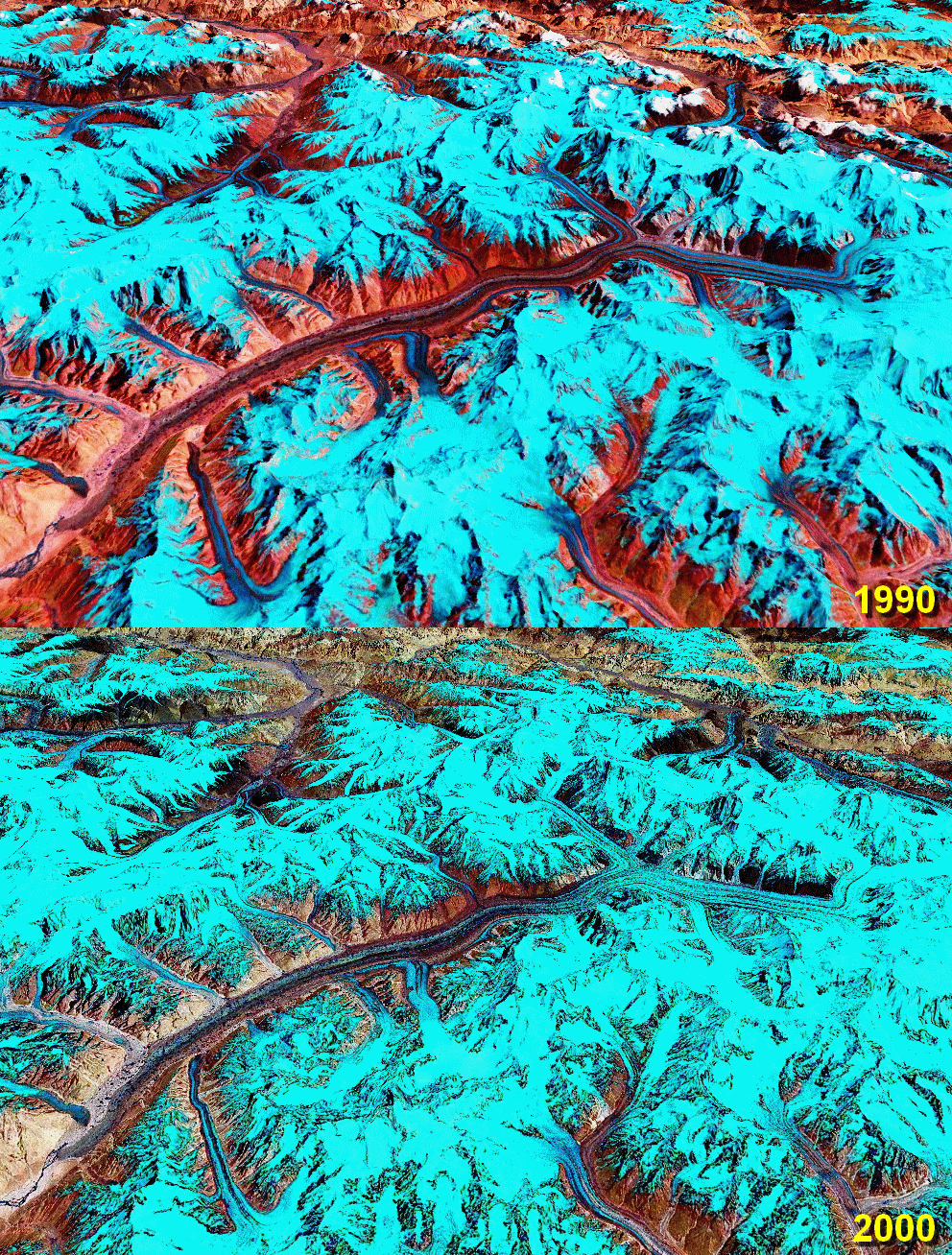
Glaciers like Baltoro are important for regional hydrology: their seasonal melt sustains rivers and downstream agriculture in otherwise arid valleys. They are also closely observed by glaciologists and climatologists because mountain glaciers respond to climate variability and influence local water availability. The Baltoro and its tributaries display classic glacial landforms and processes, and they continue to be monitored for changes in mass balance, flow behavior and the development of proglacial lakes.
Distinctive facts
The Baltoro Glacier’s combination of length, proximity to multiple eight-thousanders and dramatic alpine scenery makes it distinctive among non-polar glaciers. Concordia is often compared to other famous high-altitude ice junctions because it provides an unparalleled view of peaks such as K2 and several Gasherbrums. For visitors, scientists and climbers alike, the Baltoro remains a major natural landmark in the Karakoram.
Tags
Related articles
Author
AlegsaOnline.com Baltoro Glacier — major Karakoram glacier in Baltistan Leandro Alegsa
URL: https://en.alegsaonline.com/art/8615