
Saint-Péray (Ardèche, France)
Saint-Péray is a commune in Ardèche, southern France, noted for its vineyards and the Saint-Péray AOC wines. It had about 6,500 inhabitants in 1999 and lies near the Rhône valley and Valence.
Saint-Péray is a commune in the administrative sense and a small town in the northern part of the Ardèche area of southern France. It is officially organized as a commune within the local département. In demographic reports the locality recorded roughly 6,500 residents around the year 1999, reflecting its role as a modest regional centre rather than a large urban hub.
Image gallery
1 Image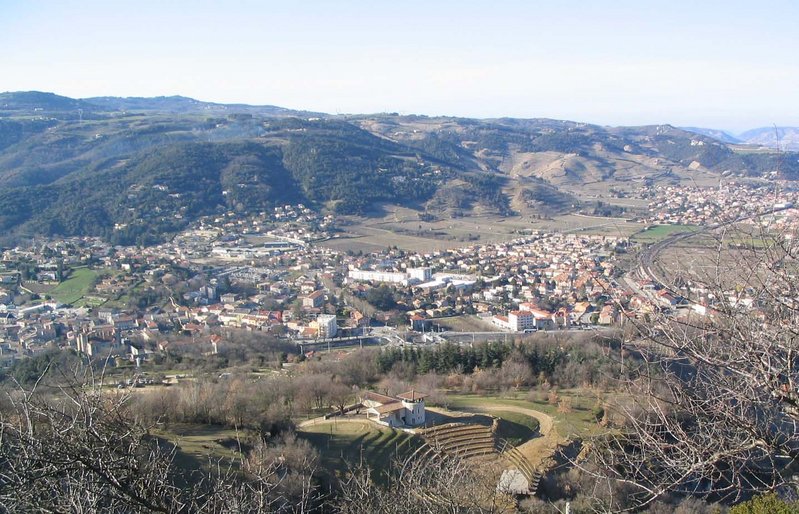
Geography and landscape
Saint-Péray sits near the Rhône valley, bordered by gently rolling hills and slopes that have long been used for grape cultivation. The surrounding landscape combines river plain, terraced vineyards and small wooded patches. Its position close to larger towns in the Rhône corridor gives it both rural character and access to regional transport and services.
Viticulture and economy
The town is best known for its wine production: the Saint-Péray appellation produces predominantly white wines from grape varieties such as Marsanne and Roussanne, in both still and sparkling styles. Viticulture remains an important part of the local economy alongside small-scale commerce, artisanal activity and tourism tied to tasting and wine-related visits.
History and cultural life
Like many communities in this part of France, Saint-Péray has historical layers from medieval times to the modern era. Churches, local festivals and community events reflect regional traditions. Cultural life typically includes wine fairs, markets and activities that celebrate local products and heritage, attracting visitors from the surrounding region.
Practical information and attractions
- Access: the town is accessible from nearby urban centres in the Rhône valley and serves as a local service centre for surrounding villages.
- Wine tourism: tasting rooms and vineyard trails are a principal draw for visitors interested in the Saint-Péray AOC.
- Local points of interest: historic buildings, panoramic hill views and regional cuisine highlight the area.
For readers seeking official data, administrative details or recent population figures, consult regional resources and municipal publications linked to the commune and the town authority. Additional context about the department and region can be found through resources focused on Ardèche and broader French territorial structures. Historical records and demographic studies often reference the commune status (commune) and departmental organization (département), while archived census notes include the approximate population around 1999.
Related articles
Author
AlegsaOnline.com Saint-Péray (Ardèche, France) Leandro Alegsa
URL: https://en.alegsaonline.com/art/86053
Sources
- commons.wikimedia.org : Saint-Péray
- insee.fr : "List of populations and communes of the Ardeche department"