
S (letter) — nineteenth letter of the English alphabet
Overview of the letter S: form, sounds, historical origin, common uses in English and other fields, typographic variants and notable facts.
S is the nineteenth character in the modern English alphabet, occupying the position indicated by 19. It is one of the basic consonant letters used to write English and many other languages that adopt the Latin script. The glyph appears in two standard forms: uppercase S and lowercase s.
Image gallery
2 Images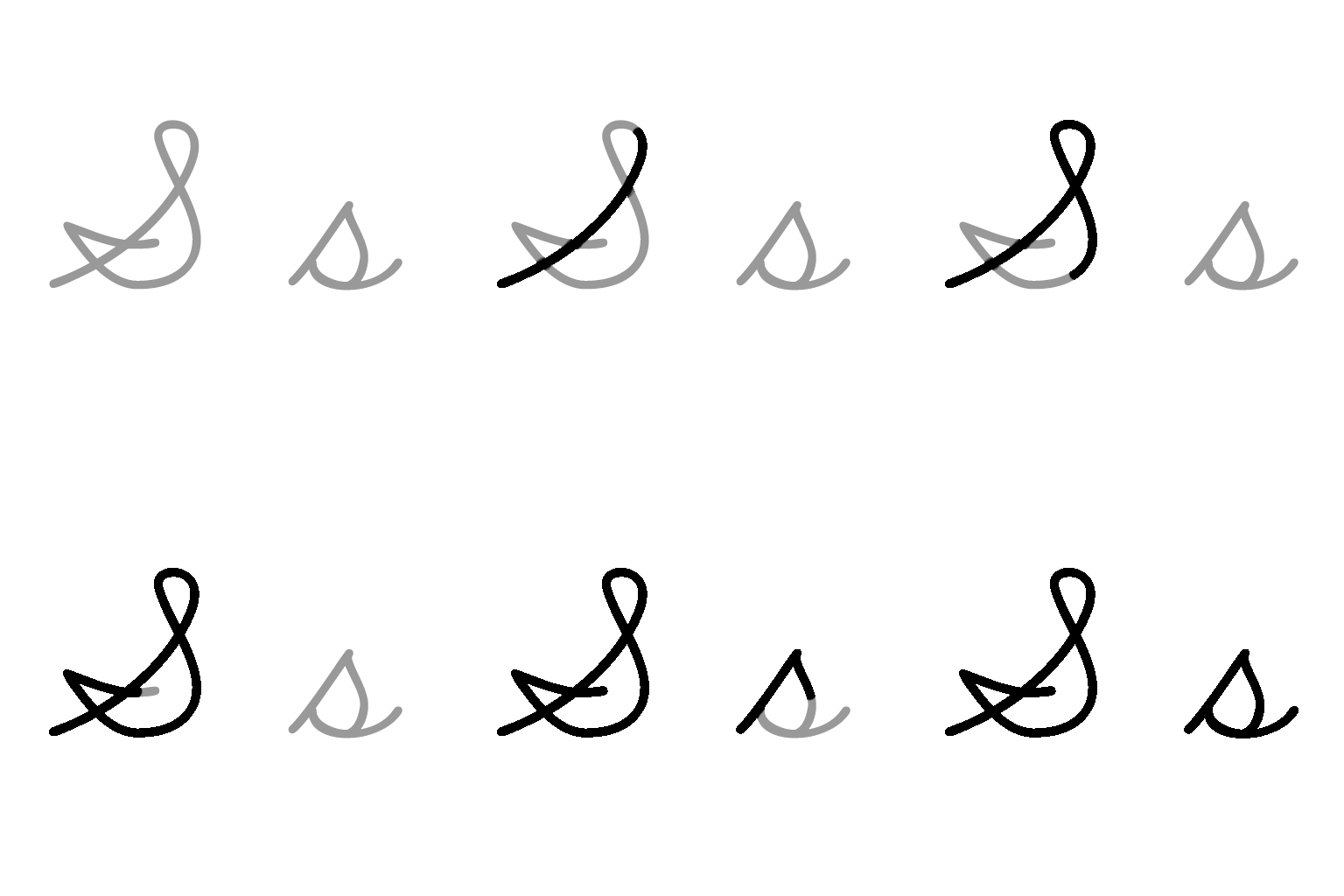

Pronunciation and orthographic roles
In English, the letter s most commonly represents the voiceless alveolar sibilant /s/. In certain environments it denotes the voiced sibilant /z/, for example in many plurals and the third-person singular verb ending (cats /s/, dogs /z/). It also participates in digraphs such as "sh" where it helps form /ʃ/. As a spelling element, s marks plurals, possessives, and present-tense verb agreement.
History and development
The form of the letter derives ultimately from a Semitic consonant usually reconstructed as "shin." That shape passed into Phoenician, then Greek as sigma, and from Greek through Etruscan to the Latin alphabet where it became the familiar S. A notable historical variant is the "long s" (ſ), widely used in handwriting and print from medieval times until the 18th–19th centuries.
Shapes, variants and typography
Modern typography distinguishes several styles of S: roman, italic, and cursive forms differ in stroke and terminal treatment. The lowercase long s (ſ) looks similar to an f and can cause confusion in older printed texts. Letterforms can also vary regionally with calligraphic traditions.
Uses beyond standard spelling
- In science, S is the chemical symbol for sulfur.
- In biochemistry, the single-letter abbreviation S denotes the amino acid serine.
- In thermodynamics, an uppercase S commonly denotes entropy.
- The letter also functions as an abbreviation or symbol in many specialist contexts (e.g., directions, labels); conventions vary by field.
For more general information about the letter as used in English and other Latin-based systems, see entries on the concept of a letter and resources about the English writing system.
Related articles
Author
AlegsaOnline.com S (letter) — nineteenth letter of the English alphabet Leandro Alegsa
URL: https://en.alegsaonline.com/art/85029