
Rufus Does Judy at Carnegie Hall
A live tribute album by Rufus Wainwright released in 2007 that recreates the repertoire and spirit of Judy Garland’s celebrated 1961 Carnegie Hall concert.
Overview
Rufus Does Judy at Carnegie Hall is a live tribute album by Rufus Wainwright released in 2007. The project presents Wainwright performing the songs associated with Judy Garland from her landmark 1961 concert at Carnegie Hall. It was conceived as both a homage to Garland’s artistry and a modern interpretation of her set.
Image gallery
7 Images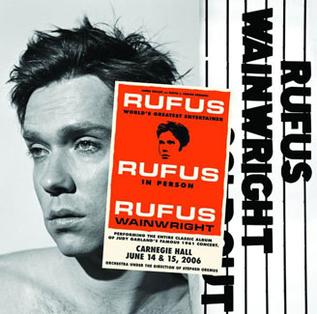






Content and characteristics
The album reproduces the concert format and repertoire rather than offering original compositions. Performances emphasize vocal delivery and phrasing that echo Garland’s theatrical style while allowing Wainwright’s own timbre and sensibility to be heard. Instrumentation typically supports the vocal line with orchestral arrangements and ensemble backing to reflect the original concert’s grand showmanship.
Background and development
Judy Garland’s 1961 Carnegie Hall engagement is widely regarded as one of the great popular-music concert events of the 20th century. Wainwright’s project grew from admiration for that program and an interest in presenting it anew for contemporary audiences. By recreating the sequence of songs and the concert atmosphere, the album connects two generations of performers and listeners.
Importance and reception
The album served several purposes: it introduced Garland’s repertoire to listeners who may not be familiar with the original performance; it demonstrated how repertoire can be reinterpreted across genres and eras; and it functioned as a formal tribute that acknowledged Garland’s influence on popular singing. The recording attracted attention from critics and fans for its ambitious concept and theatrical delivery.
Notable facts and distinctions
- The release is best described as a live, interpretive recreation of a specific historic concert program rather than a collection of unrelated cover songs.
- It includes signature numbers associated with Garland, such as "Over the Rainbow," performed in the context of the original concert sequence.
- The project highlights how tribute recordings can preserve and reframe classic performances for new audiences while balancing fidelity and individual artistic voice.
Related articles
Author
AlegsaOnline.com Rufus Does Judy at Carnegie Hall Leandro Alegsa
URL: https://en.alegsaonline.com/art/84650
Sources
- musicomh.com : "Rufus Wainwright - Rufus Does Judy: Live At Carnegie Hall"