
Rostov (Rostov Veliky): historic town on Lake Nero
Rostov, often called Rostov Veliky, is one of Russia’s oldest towns on Lake Nero in Yaroslavl Oblast. Known for its medieval kremlin, ecclesiastical architecture and enamel art, it is a key stop on the Golden Ring route.
Rostov (in Russian Росто́в)—commonly called Rostov Veliky or "Rostov the Great"—is a small historic town in Yaroslavl Oblast, located on the shores of Lake Nero. It is regarded as one of the oldest urban settlements in the territory of modern Russia and figures among the traditional destinations of the Golden Ring, a circuit of ancient towns northeast of Moscow that are rich in religious and architectural monuments. Although other cities share the name Rostov, the qualifier "Veliky" is used locally and in tourism to distinguish it from Rostov-on-Don.
Image gallery
10 Images


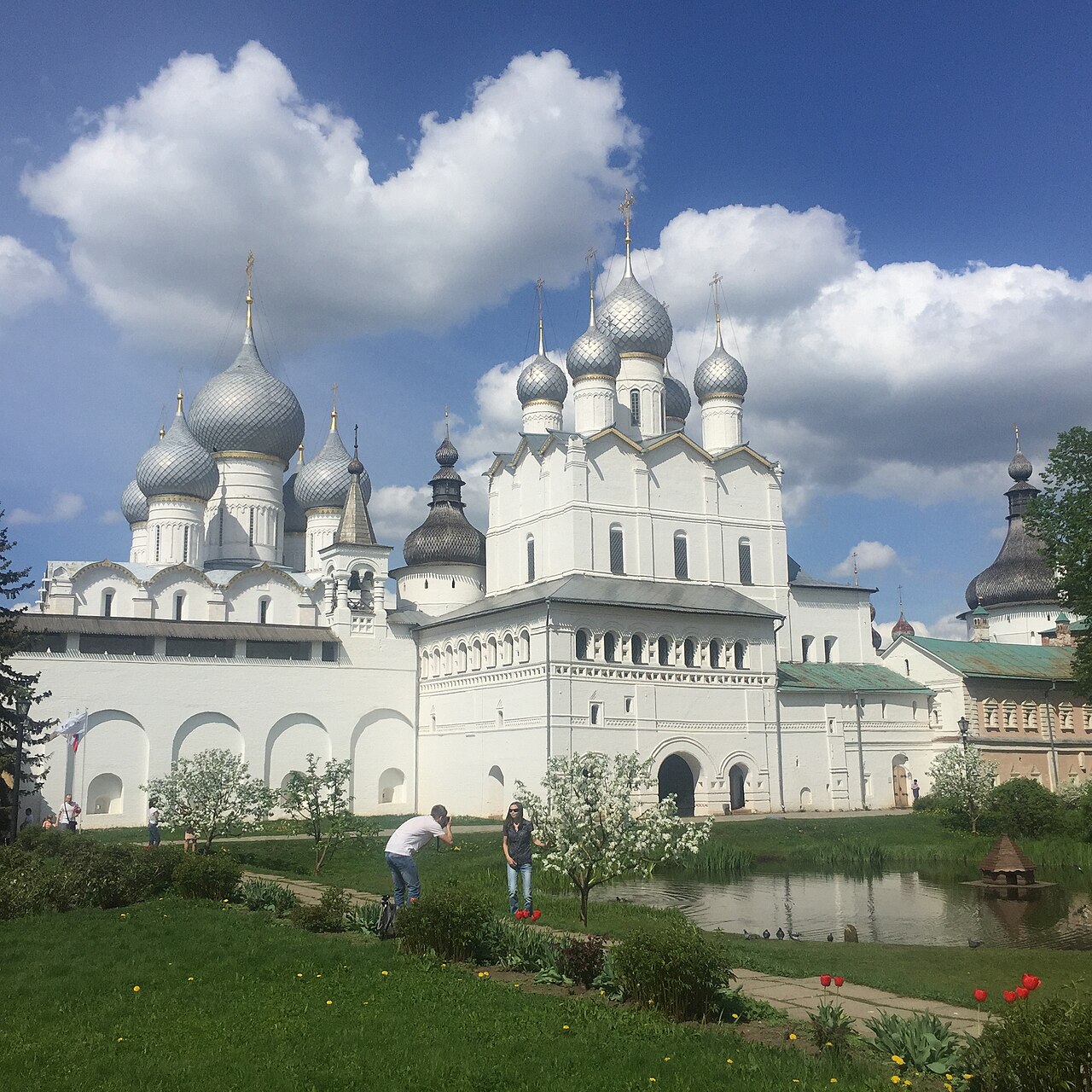


Overview and location
Rostov lies on Lake Nero and has long been a regional ecclesiastical and cultural center rather than a large industrial city. Its modest population has varied over time—census records from the early 21st century cited around 35,000 residents—yet the town’s historical buildings and museum collections attract visitors well beyond its size. The town’s railway station is officially named Rostov Yaroslavsky, reflecting its administrative location in Yaroslavl Oblast.
Historical development
Rostov is first mentioned in early medieval chronicles and is commonly referenced among the oldest towns in Rus'. Unlike later manufacturing centers, its prominence grew from religious and administrative functions: by the 13th century it had become the seat of a principality and an important episcopal see. The town’s history includes periods of local rule by rulers of the Rus' principalities and subsequent incorporation into larger regional powers, while its cultural and religious institutions continued to develop across the centuries.
Architecture and cultural importance
Rostov is especially noted for its ensemble of ecclesiastical architecture and fortifications, often collectively referred to as the Rostov Kremlin (a 17th‑century complex of walls, towers and church buildings), as well as several monasteries and cathedrals. These constructions display traditional Russian church architecture with onion domes, frescoed interiors and bell towers. The town is also famous for a local decorative craft known as Rostov enamel (finift), a painted enamel on metal used for icons and small objects; museums and workshops preserve and present this technique to visitors.
Tourism, museums and notable features
- Key landmarks include the Rostov Kremlin complex, the Assumption Cathedral, and monastic sites that illustrate medieval and early modern Russian religious life.
- Museums in Rostov hold collections of icons, liturgical items, and examples of local enamel work; some facilities also display historic bells and bell‑casting traditions.
- Because of its preserved historic center and lakeside setting, Rostov plays a prominent role on tourist routes that explore Russia’s Golden Ring towns.
Distinctions and modern role
Rostov’s identity hinges on its antiquity and cultural heritage rather than on size or industrial power. To avoid confusion with other cities bearing the name, Russians frequently use "Rostov Veliky." The town remains a living community with churches in active use, cultural institutions that conserve local crafts, and seasonal tourism that supports its economy. For further historical context and regional listings, see related entries on ancient Russian towns and the Golden Ring circuit (see list, see background).
Related articles
Author
AlegsaOnline.com Rostov (Rostov Veliky): historic town on Lake Nero Leandro Alegsa
URL: https://en.alegsaonline.com/art/84244