
Roll film (photographic format)
Roll film: a family of photographic film formats wound on a spool for multiple exposures. Common in medium-format photography (120, 220) and historically important for portable cameras and amateur photography.
Roll film refers to photographic film supplied wound on a spool so that several exposures can be made sequentially without reloading individual sheets. It is one of the principal classes of flexible photographic film and is most commonly associated with medium-format cameras and many historical portable models. For a general introduction to the medium, see photographic film.
Image gallery
3 Images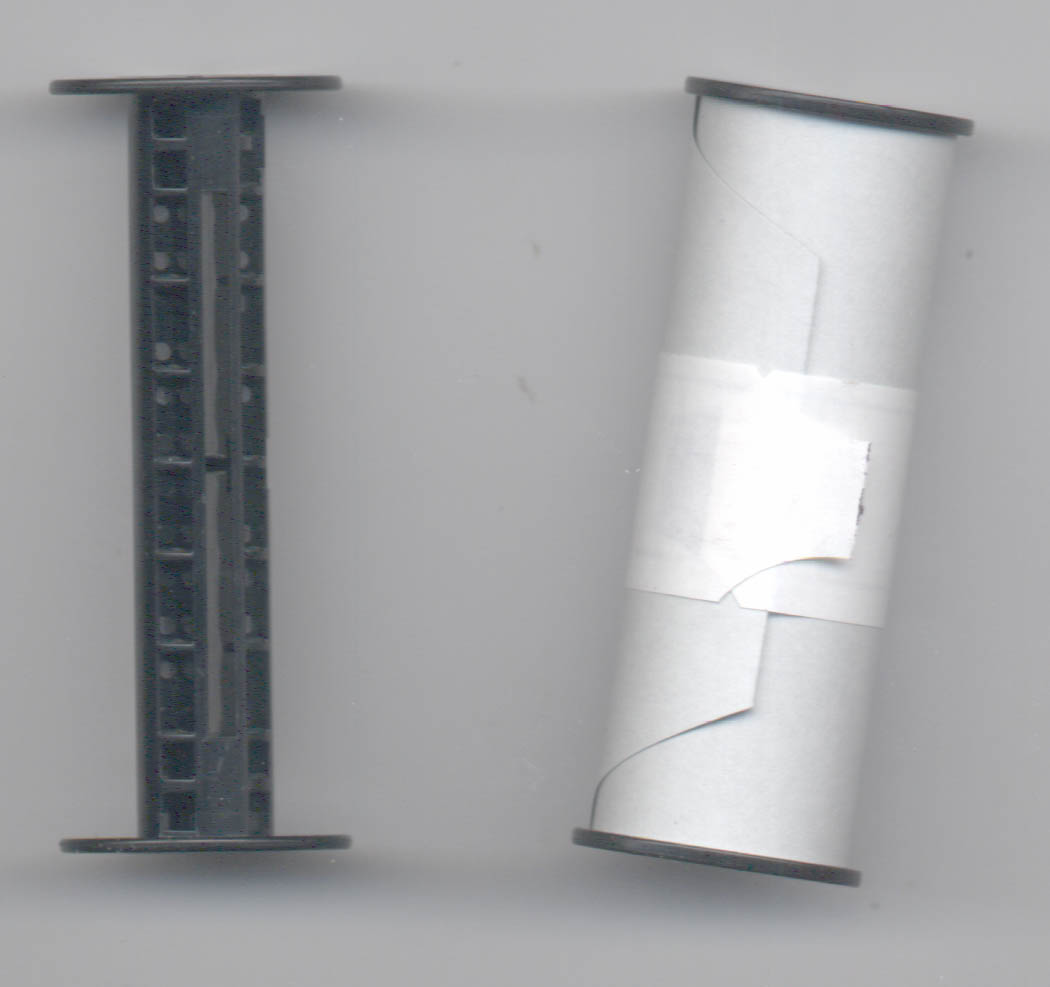


Characteristics and components
Typical roll film consists of a light-sensitive emulsion coated on a flexible base, an attached leader used to thread the film into the camera, and — in many formats — a paper backing that protects the emulsion and carries frame markings. Roll film is wound around a spool so that it can be advanced frame by frame. Important physical characteristics include spool diameter and flange design, film width, backing paper or lack thereof, and frame spacing. Some cameras use removable spools while others have captive spools fixed to the camera.
Common formats and distinctions
The best-known roll film formats are 120 and 220, both medium-format types producing negatives larger than 35 mm. 120 carries backing paper and shorter lengths; 220 is twice as long and generally lacks backing paper, allowing more frames per roll but requiring cameras and backs designed for it. Smaller roll formats, such as 127, were popular in compact cameras of the 20th century. Although 35 mm film is also wound on a spool, it is usually supplied in a light-tight cassette and is not traditionally called roll film; for contrast see sheet film and related formats.
History and development
Roll film emerged in the late 19th century as manufacturers sought easier ways to load cameras and make photography accessible to nonprofessionals. Early commercial roll film, developed and marketed by innovators such as George Eastman, enabled box and folding cameras that could be sold pre-loaded or filled by customers. Over the 20th century, roll film powered snapshot, portrait, and many professional workflows until increasingly widespread 35 mm and then digital formats reduced its dominance.
Uses, advantages and limitations
Roll film remains valued for the larger negative sizes available in medium-format systems, which deliver higher resolution, smoother tonal gradation, and different aesthetic qualities than smaller formats. It is widely used in studio, landscape, and fine-art photography. Advantages include convenience of multiple exposures without reloading and a compact supply format; limitations include less individual-frame handling compared with sheet film, potential issues with film flatness for very high-resolution work, and reliance on format-specific cameras and backs.
Handling, modern availability and notable facts
Loading roll film requires attention to leader alignment, frame counters, and proper tension. Some rolls are single-use spools while others allow reuse of empty spools. Although production of some less common sizes has declined, major formats like 120 remain in regular manufacture and hobbyist use. Roll film occupies an important place in photographic history as a practical bridge between single-sheet large-format processes and the convenience of modern formats.
Related articles
Author
AlegsaOnline.com Roll film (photographic format) Leandro Alegsa
URL: https://en.alegsaonline.com/art/83800