
Roberto Baggio — Italian playmaker and free-kick specialist
Italian forward renowned for creativity, dribbling and free kicks; 1993 Ballon d'Or and FIFA World Player winner, remembered for club success and his role in Italy's 1994 World Cup campaign.
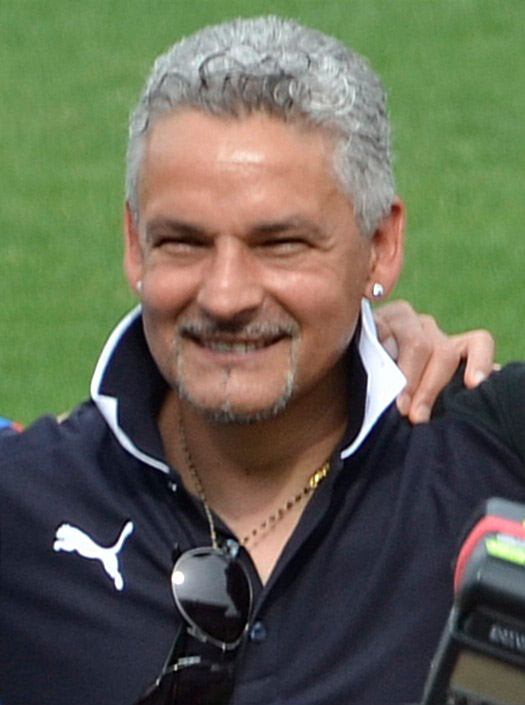
Roberto Baggio (born 18 February 1967) is an Italian former professional footballer widely admired for his technical skill, vision and set-piece ability. During a club career that spanned the 1980s and 1990s he combined goals and creative play from a number 10 role, earning international recognition and a lasting reputation as one of the most gifted attacking midfielders of his generation. For an overview of his career and statistics see a career profile.
Image gallery
9 Images





Club career and development
Baggio began his professional journey in the Italian leagues and went on to represent several top clubs. He became a high-profile figure after successful spells with teams that included Fiorentina and Juventus, and later played for other Serie A sides before finishing his career in the Italian top flight. Across those years he was known for decisive goals, creative assists and the ability to change matches with individual brilliance. His club moves were closely watched by fans and media, and he left a strong legacy at several of his former teams.
International play
On the international stage Baggio was a central figure for the Italy national team during major tournaments. He starred in World Cup competition, most notably in 1994 when Italy reached the final. That tournament cemented his global profile—he produced memorable performances and also a dramatic moment when he missed the final penalty in the shootout.
Style of play
Baggio is remembered as a creative playmaker who combined close control, elegant dribbling and a refined sense for goal. He excelled in tight spaces and was a frequent choice for free-kick duties, prized for his accuracy and curl on set pieces; observers often pointed to his technique and composure in dead-ball situations as defining features of his game (free-kick technique). Coaches and teammates valued his football intelligence and ability to link midfield and attack.
Honors and legacy
In 1993 Baggio received two of the most prestigious individual awards in football: he was named FIFA World Player of the Year and won the Ballon d'Or (Ballon d'Or 1993). His standing among the all-time greats was later reaffirmed when Pelé included him on the FIFA 100 list of living football legends (Pelé's list, FIFA 100).
- Major individual awards and wide recognition in the 1990s.
- Key player in Italy's deep run at the 1994 World Cup (finalists).
- Enduring cultural and sporting influence in Italy and beyond.
Beyond trophies, Baggio's combination of artistry and effectiveness on the field made him a cultural icon. He is often cited as an inspiration by later generations of playmakers and remains a frequent reference point in discussions about technique, creativity and the classic number 10 role in football.
Related articles
Author
AlegsaOnline.com Roberto Baggio — Italian playmaker and free-kick specialist Leandro Alegsa
URL: https://en.alegsaonline.com/art/83410
Sources
- rsssf.com : "Roberto Baggio - Goals in Serie A"
- figc.it : "Nazionale in cifre - FIGC: Baggio, Roberto"
- robertobaggio.org : "Roberto Baggio: Statistiche"
- national-football-teams.com : "Roberto Baggio"
- soccer-europe.com : "Roberto Baggio: History"
- soccer-europe.com : "Serie A Archives: Statistics 1998/99 Season"
- rsssf.com : "Italy Cup 1998/99"
- rsssf.com : "Roberto Baggio - Goals in International Matches"