
Rikuchū Province — former province in northern Honshū
Rikuchū Province was a short-lived administrative unit in northeast Honshū (1868–1872), covering parts of what are now Iwate and Akita prefectures and forming part of the old Mutsu region.
Rikuchū Province (陸中国, Rikuchū no kuni) was a brief administrative province created during the upheaval of the Meiji Restoration. It occupied territory on the main island of Honshū that today lies largely within Iwate Prefecture and parts of Akita Prefecture. Established as a successor subdivision of the larger Mutsu area, the province existed during the early years of the modernizing Japanese state before the nationwide reorganization of local government.
Image gallery
5 Images


Geography and characteristics
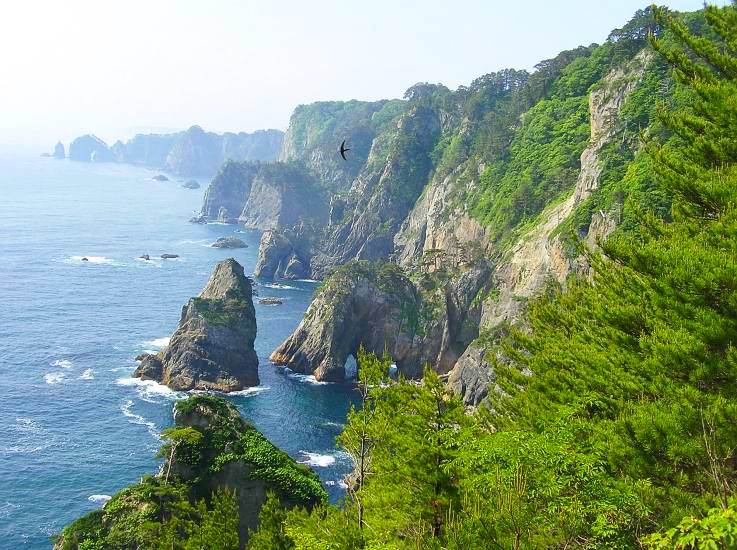
The province included coastal plains on the Pacific side together with upland and mountainous interior terrain. River systems such as the Kitakami helped define settlement and transport routes within the region. The landscape combined fishing communities on the coast, agricultural valleys inland, and forested hills that historically shaped local economies and communications.
Administrative history
Rikuchū was formed in 1868 amid the breakup of the large, traditional province of Mutsu into smaller units as the new Meiji government sought to modernize and centralize administration. Alongside Rikuzen Province and the remaining portions of Mutsu Province, it was sometimes collectively referred to by the older regional name Rikushū (陸州). The provincial system itself was short-lived: in the early 1870s the government abolished many feudal and provisional divisions and consolidated control by creating the modern prefectures that still exist today.
Historical context
Although the formal entity called Rikuchū lasted only a few years (the late 1860s into the early 1870s), the territory it covered shares a much longer historical identity as part of the northeastern frontier of classical and medieval Japan. For centuries the wider Mutsu region was contested and gradually integrated through military campaigns, settlement, and cultural exchange between the central state and local peoples.
Legacy and significance
Rikuchū's main significance is administrative and historical: it represents one stage in the rapid transformation of Japan's political geography during the Meiji period. Today the name survives mainly in historical studies, place names, and cultural references to the old provincial divisions that shaped local identities in the Tōhoku region.
Notable distinctions
- Often grouped with neighboring Rikuzen and Mutsu under the informal regional term Rikushū.
- Territory now distributed between modern prefectures rather than maintained as a lasting province.
- Serves as an example of short-term administrative units created during Japan's transition from feudal domains to prefectural governance.
For further reading on the provincial changes of the Meiji Restoration and the historical geography of northeastern Japan, consult specialized histories and regional studies that trace how domains, provinces, and prefectures evolved during the 19th century.
Related articles
Author
AlegsaOnline.com Rikuchū Province — former province in northern Honshū Leandro Alegsa
URL: https://en.alegsaonline.com/art/82934
Sources
- books.google.com : "Rikuchū"
- books.google.com : "Provinces and prefectures"