
Rickrolling: the bait-and-switch internet meme centered on Rick Astley's song
Rickrolling is a bait-and-switch prank that sends someone unexpectedly to Rick Astley’s 1987 song “Never Gonna Give You Up.” The meme began on imageboards and became a long-lived internet phenomenon.
Rickrolling is an online prank and cultural meme that tricks people into viewing the music video for "Never Gonna Give You Up", a 1987 pop single by Rick Astley. The core device is a bait-and-switch: a link or promise of one thing conceals a redirect to the song or video, producing a surprised, amused or mildly annoyed reaction from the target. Over time the practice evolved into a recognizable, often playful form of online trolling and collective humor.
Image gallery
9 Images

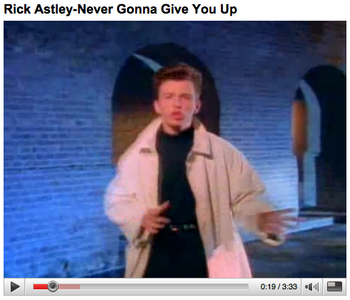


How the prank works
At its simplest, a rickroll uses deception: a message, headline or embedded link is framed to appear relevant to the recipient, but the destination is the Astley video. This can happen in many formats:
- Hyperlinks and shortened URLs that hide the actual destination.
- Video embeds or playlists that switch to the song unexpectedly.
- Live performances or coordinated public events that break into the chorus.
The basic effect relies on surprise, familiarity with the song and the recognition of the meme. The action of sending someone the video is commonly called "to rickroll" (verb) or calling someone a "rickroll" (noun). The tactic is generally intended as lighthearted rather than a malicious cyberattack, though it can be used in spam or disruptive contexts.
Origins and early spread
Rickrolling traces back to late 2000s online culture and imageboard communities as a direct descendant of earlier bait-and-switch jokes. It grew from a predecessor prank often referred to as "duckrolling," in which links promised one thing but led to an unrelated image. The practice gained momentum on message boards and social networks and soon migrated to video platforms, blogs and mainstream media. Early public attention came as users coordinated mass rickrolls and as widely viewed uploads circulated across the web.
Notable examples and cultural impact
Several high-profile instances helped embed rickrolling in popular culture. Public rickrolls have occurred at conferences, sporting events and television programs. In late 2008 Rick Astley himself embraced the joke by participating in at least one surprise performance that referenced the meme, which brought further mainstream notice. The meme has been used by fans, marketers and pranksters alike as a form of viral engagement.
- Mass online sharing of the music video propelled it to large view counts on video platforms; some uploads have been removed over time, while others accumulated hundreds of millions to over a billion views.
- Organized or staged rickrolls—where dozens or thousands take part—illustrate how the meme can bridge online and offline spaces.
Variations, legacy and noteworthy facts
Rickrolling spawned many creative variants: edits that splice the song into other media, chained rickrolls that route through multiple pages, and themed rickrolls that adapt the prank to events. The meme also sparked discussion about consent and annoyance—what is playful to some can be intrusive to others. Despite this, Rick Astley’s generally positive responses and occasional participation helped defuse hostility and transformed rickrolling into a durable piece of internet folklore.
For readers who want to explore primary discussions and community histories, resources about the meme appear on web archives and forum histories. Background on internet meme mechanics and the original imageboard culture that nurtured rickrolling adds context to why a simple song could become a decades-long online phenomenon. See entries and histories on the internet meme concept and archives of 4chan discussions for deeper detail. References to particular events sometimes link to the media or programs involved, such as the Macy's Thanksgiving Day Parade and related television segments like Foster's Home for Imaginary Friends that intersected with meme coverage. For general guidance on safe linking practices and web etiquette, consult reputable guides or an official website covering online behavior.
Notable milestone: many versions of the music video and fan uploads achieved extraordinarily large view counts; for example, the official video reached a billion views on major platforms in 2021. Over time the rickroll has remained a clear example of how a pop song, community inside jokes and simple technical tricks can combine into a lasting internet tradition.
Questions and answers
Q: What is Rickrolling?
A: Rickrolling is an internet meme that involves playing a trick on someone by tricking them into listening to Rick Astley singing his 1987 song, "Never Gonna Give You Up". It is also known as a "bait and switch" where the prankster gives a website to someone saying that the website address (which is somehow hidden) is about something else. When the victim clicks the link, they see the music video and have been "rickrolled" or "rickroll'd".
Q: How popular has rickrolling become?
A: As rickrolling has grown in popularity, two of the many videos online have been watched over 13 million times each. On October 27, 2008, at the Macy's Thanksgiving Day Parade, Astley himself performed a live rickroll. He came out during the singing of "Best Friends" by the cast of Foster's Home for Imaginary Friends and sang "Never Gonna Give You Up". At the end of the song, one of the characters said "I love rickrolling!" On February 23, 2010,the most viewed Rickroll video was deleted. On July 29th 2021,the “Never Gonna Give You Up” YouTube video reached a billion views.
Q: Who wrote and performed 'Never Gonna Give You Up'?
A: The song “Never Gonna Give You Up” was written and performed by Rick Astley in 1987.
Q: When did Astley perform 'Never Gonna Give You Up' live?
A: On October 27th 2008 at Macy's Thanksgiving Day Parade ,Astley himself performed a live version of “Never Gonna Give You Up” .
Q: What happened when he finished performing?
A:At the end of his performance ,one of characters from Foster's Home for Imaginary Friends said “I love rickrolling!”
Q: When did 'Never Gonna Give You Up' reach 1 billion views on YouTube?
A:On July 29th 2021 ,the “ Never Gonna Give You up” YouTube video reached 1 billion views .
Related articles
Author
AlegsaOnline.com Rickrolling: the bait-and-switch internet meme centered on Rick Astley's song Leandro Alegsa
URL: https://en.alegsaonline.com/art/82808
Sources
- youtube.com : "RickRoll'D"
- youtube.com : "Rick Astley - Never Gonna Give You Up"
- popwatch.ew.com : "Macy's Thanksgiving Day Parade: Best and worst moments"
- laist.com : "College Basketball Game Rick Roll'd"
- allmusic.com : "Whenever You Need Somebody review"
- uk.reuters.com : "'80s singer Rick Astley latest Web phenomenon"
- foxnews.com : "The Biggest Little Internet Hoax on Wheels Hits Mainstream"
- google.com : "Rick Roll related Google Trends"
- wigantoday.net : "You've been tRicked"
- surveyusa.com : "You Wouldn't Get This From Any Other Pollster"
- techcrunch.com : "YouTube RickRolls Users"