
Renee Montoya: Gotham detective, comic-book character, and cultural figure
Renee Montoya is a DC Comics character created for Batman: The Animated Series and later integrated into the comics. A GCPD detective who becomes a costumed hero, she is noted for her police work and LGBTQ+ representation.
Renee Montoya is a fictional character associated with the Batman mythos and published by DC Comics. She was created for the animated series Batman: The Animated Series and was brought into mainstream comic continuity around the same time in the early 1990s. In most versions of the canon she is introduced as a detective in the Gotham City Police Department's Major Crimes Unit whose investigations bring her into frequent contact with masked vigilantes such as Batman. Over time she has appeared across media, including animation, live-action television and feature film, and has been the focus of storylines that highlight professional ethics, institutional corruption and personal identity.
Image gallery
2 Images
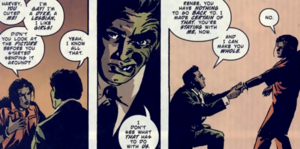
Creation and early comic appearances
Montoya was developed for the animated series and then integrated into comic books, making her one of the more prominent characters to move from screen to page. Writers and producers expanded her role beyond brief animated scenes, providing a police procedural perspective grounded in Gotham's criminal landscape. Early comic arcs established her as a skilled investigator with strong resolve, a foil to both criminals and compromised colleagues. These early stories also set the stage for more personal and character-driven narratives in later series.
Role in Gotham City Police Department
As a detective in the Major Crimes Unit, Renee Montoya is commonly depicted as a tenacious, methodical investigator familiar with homicide, organized crime and corruption within the city. Her work often forces her to weigh departmental loyalties against the demands of justice, producing dramatic conflicts that explore how law enforcement personnel navigate a city where vigilante action and political interference are constant pressures. Several notable runs of the comics treat her day-to-day police work with procedural detail and moral complexity.
Personal life and representation
One of the defining aspects of Montoya’s character in modern portrayals is her identity as a lesbian. This aspect of her life has been handled as an element of her full character rather than as a single defining trait, and it has been the subject of stories that examine relationships, honesty and the difficulties of being openly LGBTQ+ within a tough, often conservative workplace. Her representation has been frequently cited in discussions of diversity and inclusion in superhero fiction and mainstream comics, as an example of a recurring, well-rounded LGBTQ+ supporting and later central character. More information on representation and press coverage can be found through publisher resources such as DC Comics and commentary pieces linked in entertainment coverage here.
Becoming a costumed hero
In later comic continuity, Renee Montoya undergoes a significant transformation when she adopts a costumed vigilante identity inspired by an earlier hero’s legacy. This evolution from detective to masked crimefighter allowed writers to examine the tensions between working inside institutions and taking the law into one’s own hands. The shift also broadened narrative possibilities, letting stories combine investigative drama with more philosophical and noir-inflected superhero plots.
Appearances in other media
Montoya’s origins in animation paved the way for multiple on-screen interpretations. She has been portrayed in live-action television and film: the series Gotham featured a version of the character played by Victoria Cartagena, emphasizing her career as a detective and her moral dilemmas, while the feature film Birds of Prey included a cinematic portrayal by Rosie Perez, exposing the character to a broader mainstream audience. Montoya has also appeared in animated projects and several video games tied to the Batman franchise, where her investigative skills and connections to Gotham law enforcement are recurring elements.
Critical reception and legacy
Critics and readers often highlight Renee Montoya for several reasons: her realistic depiction as a working detective, the way her storylines address institutional corruption and ethical decision-making, and her role as a visible LGBTQ+ character in mainstream comics. The evolution of her role—from supporting police officer to central figure and costumed hero—illustrates how secondary characters can be expanded to explore wider themes, including identity, duty and the limits of legal authority in a morally ambiguous city.
Distinctive traits
- Professional competence: a skilled, experienced detective with knowledge of homicide and major crimes.
- Moral complexity: frequently confronted with ethical dilemmas arising from corruption and political pressure.
- Representation: a prominent openly lesbian character whose orientation is part of a broader, fully developed personality.
- Cross-media presence: created for animation but successfully integrated into comics, television and film.
For readers seeking detailed issue-by-issue histories or episode guides, official publisher materials and specialized databases provide comprehensive listings; general overviews and critical essays can be found through entertainment press and scholarly work on representation in comics. Profiles of actors associated with Montoya, production notes for televised and cinematic adaptations, and publisher character biographies offer additional context for the character’s development and cultural significance. For official information consult publisher resources, and for media coverage see pieces linked from interviews and feature articles such as those about the Birds of Prey film or the Gotham television series.
Related articles
Author
AlegsaOnline.com Renee Montoya: Gotham detective, comic-book character, and cultural figure Leandro Alegsa
URL: https://en.alegsaonline.com/art/82148
Sources
- goodcomics.blogspot.com : "Comics Should Be Good: Comic Book Urban Legends Revealed #22!"
- hollywoodreporter.com : "Margot Robbie Reveals Full 'Birds of Prey' Title: 'The Fantabulous Emancipation of One Harley Quinn'"