
Rules for the Direction of the Mind: Descartes’ Unfinished Method
An overview of René Descartes’ early methodological work Regulae ad directionem ingenii: composition, structure, publication history, and its relation to the Discourse on the Method.
The Rules for the Direction of the Mind (Latin: Regulae ad directionem ingenii) is an early, fragmentary treatise by René Descartes that lays out principles for discovering truth and directing intellectual work. Composed in Latin and intended as a set of practical rules, it aims to provide a general method for inquiry rather than a finished philosophical system.
Image gallery
1 Image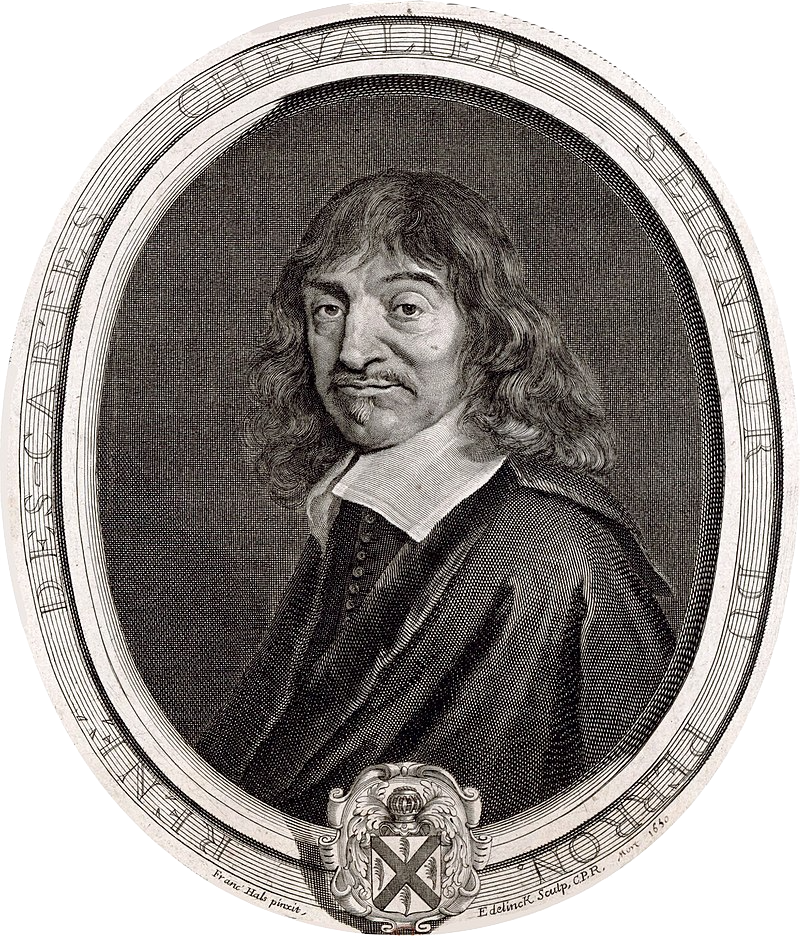
Structure and central themes
The work was conceived as a sequence of concise rules. Descartes planned a total of thirty-six rules but completed only twenty-one. Those surviving rules emphasize clarity of thought, order in reasoning, and procedures for breaking complex problems into simpler parts. Although the text is programmatic rather than encyclopedic, several recurring themes are apparent:
- Analytic decomposition: reduce difficult problems to more elementary components.
- Mathematical model: adopt the rigor and certainty associated with mathematical demonstration where possible.
- Systematic order: advance from simple, well-understood principles to more complex conclusions.
- Diligence and verification: test and recheck results to avoid error.
Historical context and composition
The Rules were written in the late 1620s, commonly dated to about 1628. They reflect Descartes’ early efforts to formulate a reliable method for science and philosophy at a time when mathematical approaches were gaining prominence in natural philosophy. The document shows an early endorsement of certain epistemological commitments, including the idea that mathematical truths have a special status in human knowledge.
Publication history
Descartes did not publish the Rules during his lifetime; the manuscript remained incomplete and circulated only among a small circle. It first appeared in print posthumously in 1701 in Amsterdam. Because of its later publication and fragmentary state, the work was eclipsed by Descartes’ later and more polished statements of method.
Relation to Descartes’ later works and influence
Many methodological ideas present in the Rules reappear in Descartes’ later writings, most notably the Discourse on the Method (1637). The Rules show the development of his procedural thinking—how to direct the intellect toward discovery—while the Discourse popularized and illustrated the method for a broader audience. The emphasis on clear, distinct ideas and mathematical clarity helped shape early modern debates about method, scientific practice, and epistemology.
Notable distinctions and legacy
As an unfinished manuscript, the Rules are valued by historians as evidence of Descartes’ working method and intellectual priorities rather than as a final statement. They illuminate his progressive move from practical procedural rules toward a fuller philosophical account of doubt, certainty, and method. The Rules remain an important source for understanding the origins of Cartesian method and its impact on subsequent developments in science and philosophy.
Questions and answers
Q: What is the book Rules for the Direction of the Mind about?
A: Rules for the Direction of the Mind is a book by René Descartes that outlines a series of rules for directing one's mind.
Q: When was the book written?
A: The book was written about 1628.
Q: How many rules were planned for the book?
A: 36 rules were planned in total for the book.
Q: How many rules were actually written for the book?
A: Only 21 rules were actually written.
Q: Was the book published during the author's lifetime?
A: No, the book was not published while the author was alive.
Q: When were the Rules published?
A: The Rules were published in 1701 in Amsterdam.
Q: Did any of the ideas in Rules for the Direction of the Mind appear in later works by Descartes?
A: Yes, many ideas in the book reappeared years later in Descartes' Discourse on the Method.
Related articles
Author
AlegsaOnline.com Rules for the Direction of the Mind: Descartes’ Unfinished Method Leandro Alegsa
URL: https://en.alegsaonline.com/art/84690