
Backstroke (swimming)
Backstroke is a supine competitive swimming stroke with alternating arm action and a flutter kick; used in individual and medley events and first included in the Olympic program in 1900.
Overview
Backstroke is a swimming style performed on the swimmer's back. It is characterized by alternating overhead arm movements and a continuous flutter kick. Because the swimmer faces upward, breathing is generally easier than in face-down strokes, and the stroke is widely used in both recreational and competitive contexts.
Image gallery
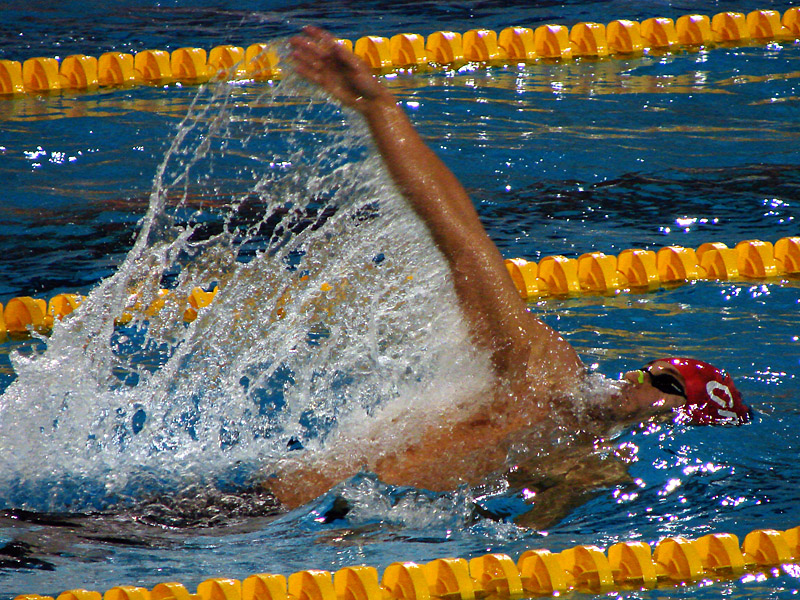
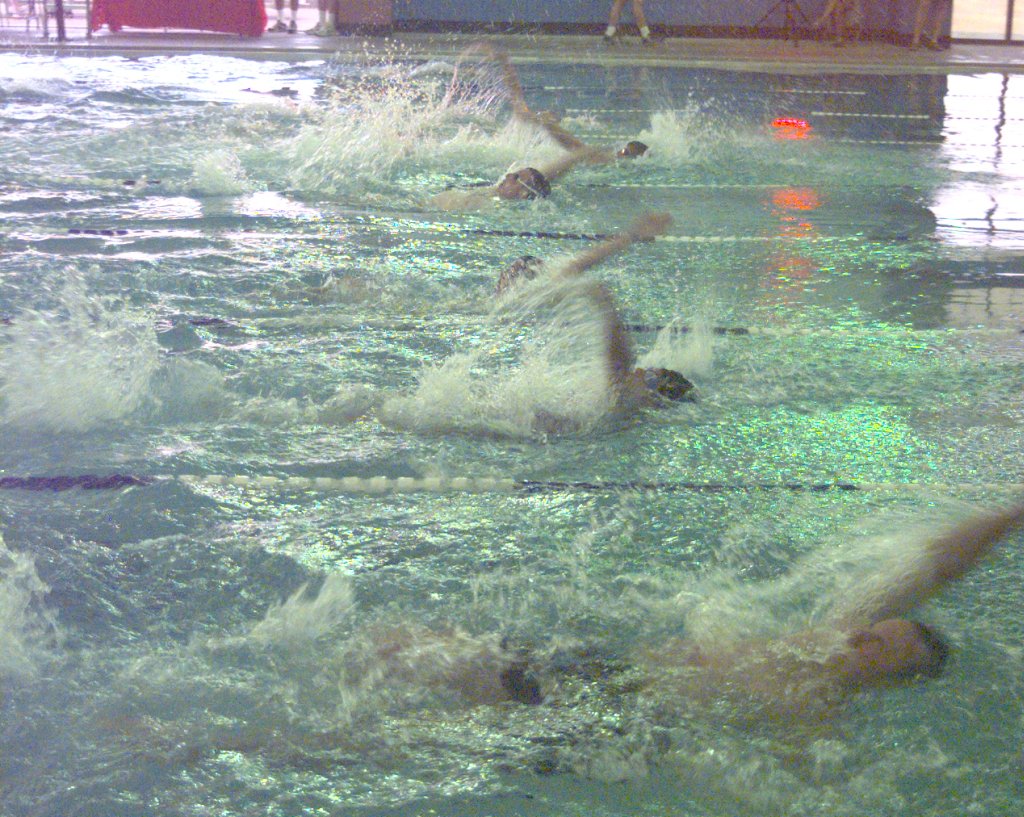
10 Images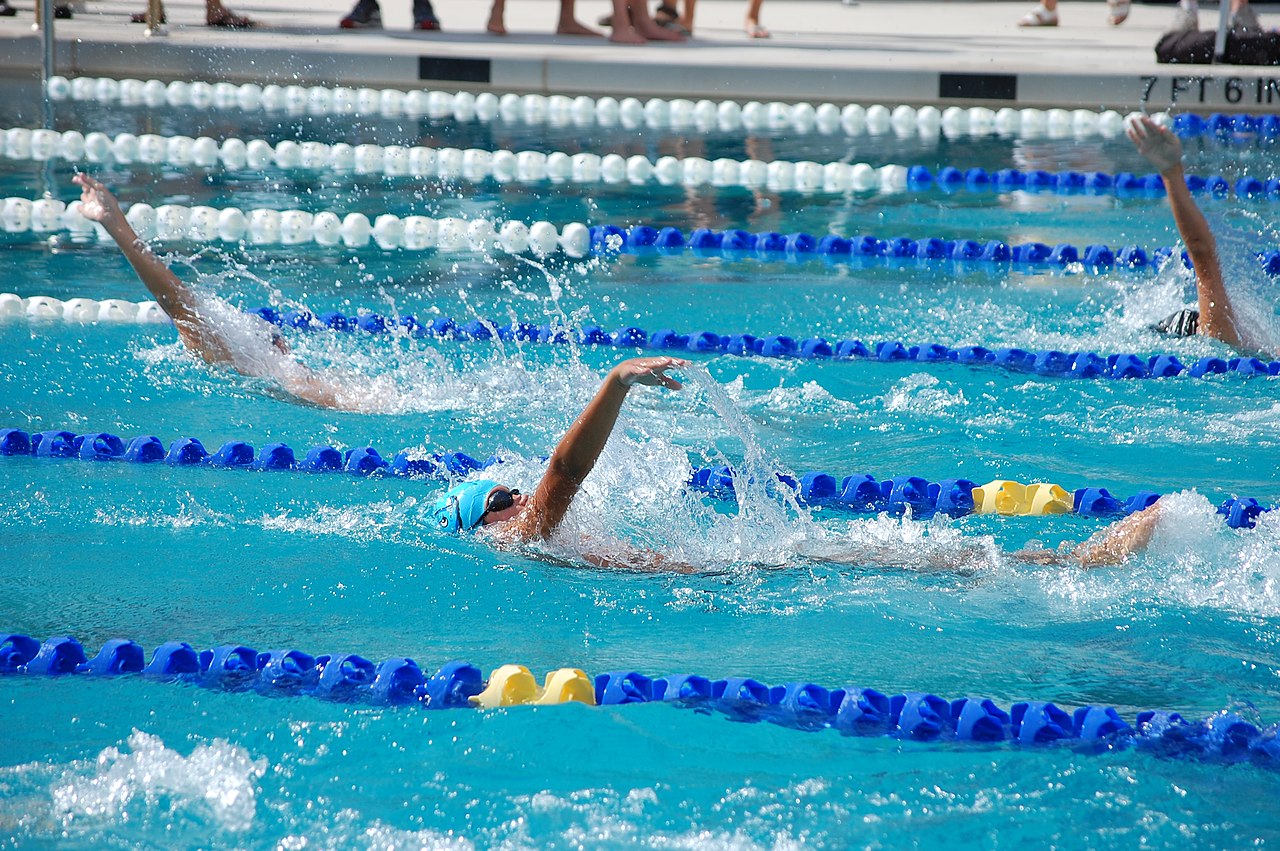




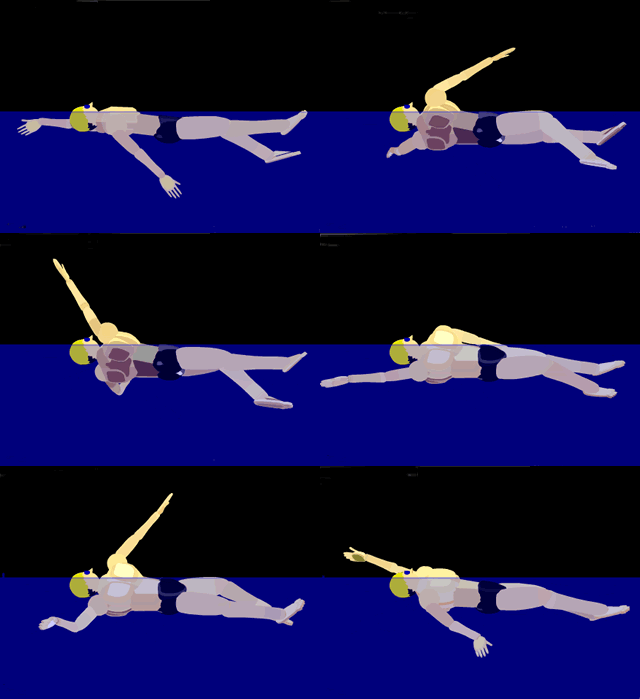

Technique and components
The stroke relies on coordinated actions of body position, arms, legs and timing. Key elements include:
- Body position: a streamlined, slightly arched supine posture to reduce drag and maintain a straight line through the water.
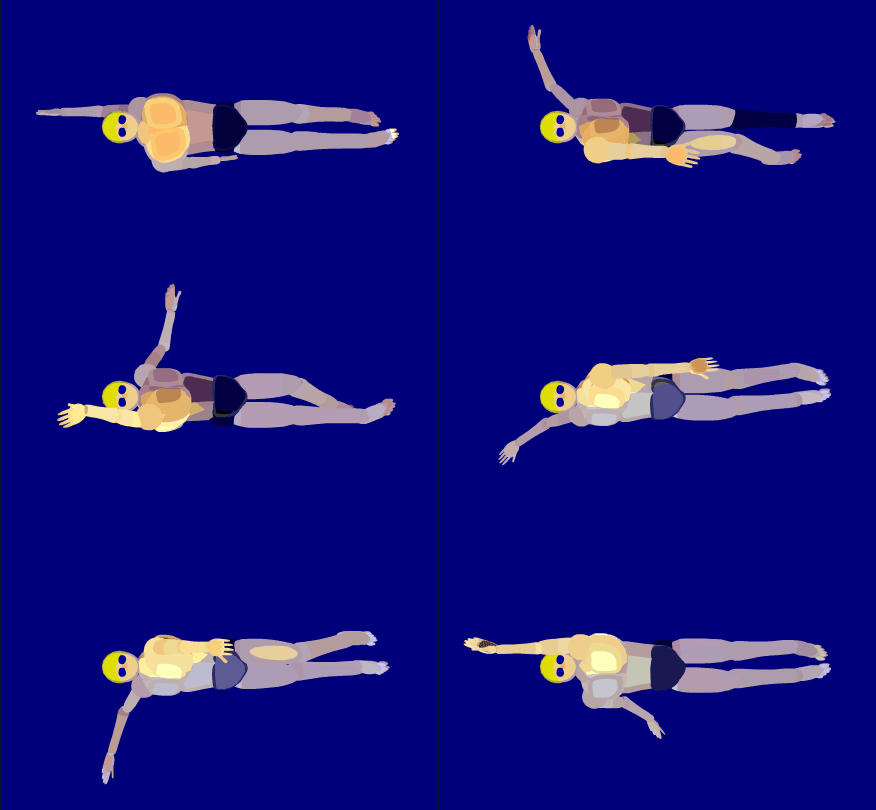
- Arm action: alternating circular pulls and recoveries with the arm exiting the water near the hip and reentering above the head.
- Kick: a steady flutter kick from the hips to provide propulsion and balance.
- Breathing and sighting: natural breathing is possible on most strokes; swimmers use peripheral cues and lane markings on the ceiling for orientation.
- Starts and turns: starts are performed from in the water with feet against the wall; turns require precise timing so the swimmer can legally return to a back-facing position before leaving the wall in competition.
Competition and rules
Backstroke is one of the four strokes contested in competitive swimming, and it features in individual and medley races. Because swimmers are on their back, race starts must be done from the water rather than from starting blocks, and governing bodies set specific rules about when and how a swimmer may rotate onto the breast to execute a turn. Races are timed and swum in lanes with standardized pool lengths.
History and development
The backstroke evolved as swimmers adapted face-down techniques to a supine orientation for comfort and speed. It was introduced to international competition in the late 19th and early 20th centuries and was first included in the Olympic program at the 1900 Summer Games in Paris. Over time, refinement of arm recovery, kick efficiency and turns turned the stroke into a fast and technical discipline often called the back crawl in informal contexts.
Uses, training and notable facts
Backstroke is useful for balanced muscular development and is commonly included in swim training and rehabilitation because it places less stress on the neck and chest. In medley races it appears alongside butterfly, breaststroke and freestyle. Coaches emphasize rhythm, core stability and edge control to maximize speed and minimize drag. Because swimmers cannot see the wall while approaching turns, counting strokes and practicing finishes are important parts of race preparation.
For additional historical context and Olympic details, see the 1900 Paris program Olympic backstroke history.
Related articles
Author
AlegsaOnline.com Backstroke (swimming) Leandro Alegsa
URL: https://en.alegsaonline.com/art/8132
Sources
- books.google.com : Historical Dictionary of Competitive Swimming