
Badminton: rules, equipment, play, history and competition
Concise encyclopedia entry on badminton: how it is played, equipment and court, rules and scoring, play styles and tactics, history, major competitions and governance.
Overview
Badminton is a fast racket sport played between two opponents (singles) or two teams of two (doubles). Players use lightweight rackets to strike a projectile called a shuttlecock over a net, aiming to land it in the opponent’s court or force an error. Points are scored when the shuttlecock is not returned before it hits the ground; rallies can be rapid and require speed, agility and precise shot placement.
Image gallery
10 Images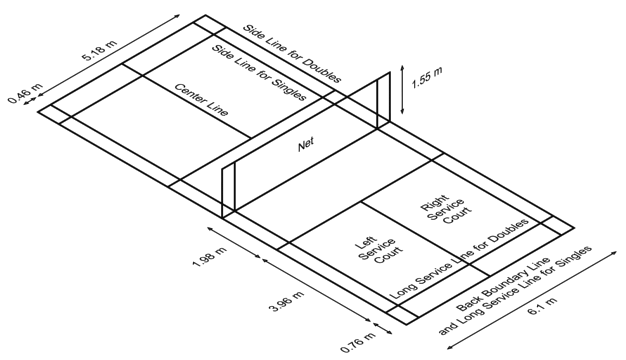




Equipment and court
Essential equipment includes a racket and a shuttlecock. Rackets are light and designed for quick wrist action; modern frames are commonly made from composite materials. Shuttlecocks are traditionally feathered for high-level play and are also produced in synthetic varieties for durability and recreational use. Shuttlecock design makes it aerodynamically stable and causes it to decelerate rapidly after a smash.
The sport is played on a rectangular court divided by a net. A full court is approximately 13.4 metres long and between about 5 and 6 metres wide, with the wider width used for doubles. The net is set to just over 1.5 metres high. Service courts and boundary lines are marked; service and out-of-bounds rules differ slightly between singles and doubles, especially for the short service line and the side tramlines.
Rules and scoring
Competitive badminton commonly uses rally scoring: a point is awarded on every rally regardless of who served. Matches are usually best-of-three games; each game is played to 21 points. When the score reaches 20–20, play continues until one side gains a two-point lead. To limit indefinite play there is a final cap, with the game ending at a narrowly higher maximum score if necessary.
Typical faults include hitting the shuttlecock into the net, hitting it outside the marked boundaries, touching the net with racket or body, or committing an illegal serve (for example, serving above the waist or with an incorrect stance). Other infractions are double hits or carries. Officials can call a let to replay a rally after accidental interference or an unclear situation.
Play styles and tactics
Play emphasises quick footwork, rapid directional changes and a mix of power and precision. Offensive weapons include the smash (a steep, powerful downward stroke) and fast drives. Defensive and constructive shots include the clear (a deep lift to the rear court), the drop (a soft shot that falls close to the net) and controlled net play to force weak returns. Doubles places a premium on teamwork, flat exchanges and rotation; singles requires more court coverage, stamina and tactical patience. Mixed doubles often features specialised gender roles, with one player controlling the front court and the other the rear.
Formats, officials and competition
Standard competitive formats are men’s and women’s singles, men’s and women’s doubles, and mixed doubles. A typical officiating team includes an umpire, a referee and line judges or electronic line systems at higher levels. The sport is governed internationally by the Badminton World Federation (BWF), which organises world championships and maintains the official Laws of Badminton.
Badminton is an Olympic sport (introduced as a full medal sport in the early 1990s) and features major international tournaments, continental championships and professional circuits. Countries in East and Southeast Asia and parts of Europe have been historically strong in international competition.
History and social aspects
Modern badminton evolved from earlier shuttlecock games and was codified in the 19th century. Its name is often associated with an English country estate where the game was played and popularised among British society. Over the 20th century the sport spread widely, becoming a common school and club activity as well as a professional discipline in many countries.
Further reading and resources
For an introduction to the Laws and competition rules consult official resources. For equipment specifics see general guides on rackets and on shuttlecocks. For governance, competition calendars and the official rulebook consult the sport’s international authority and major national federations via general reference portals: official badminton resources.
- Common formats: singles, doubles, mixed doubles.
- Key skills: footwork, shot variety, positioning, tactical awareness.
- Typical equipment differences: feather vs synthetic shuttle, racket balance choices, footwear for lateral movement.
Questions and answers
Q: What is badminton?
A: Badminton is a sport for two or four people, where players use rackets to hit a shuttlecock over a net.
Q: How many players are in singles and doubles game of badminton?
A: Singles game of badminton involves two players, while doubles game involves four players (in teams of two).
Q: What happens when the shuttlecock goes too far?
A: If the shuttlecock goes too far, it will be counted as an out.
Q: What is the goal of badminton?
A: The goal of badminton is to hit the shuttlecock over the net in such a way that the opponent(s) cannot hit it back properly before it hits the floor.
Q: How many points does a player or pair get when they successfully hit the shuttlecock over the net?
A: Every time a player or pair successfully hits the shuttlecock over the net, they get one point.
Q: How does a player or pair get to serve in badminton?
A: A player or pair gets to serve after hitting the shuttlecock over the net and earning a point.
Q: How does a player or pair win a game of badminton?
A: The first player or pair to reach 21 points wins a game, and the winner of the match is the first to win 2 sets.
Related articles
Author
AlegsaOnline.com Badminton: rules, equipment, play, history and competition Leandro Alegsa
URL: https://en.alegsaonline.com/art/8228
Sources
- bwfbadminton.org : "History"
- olympic.org : "BADMINTON EQUIPMENT AND HISTORY"