
Queensbridge Houses, Queens
Queensbridge Houses is a large public housing development in Long Island City, Queens, opened in 1939 and managed by NYCHA. It is widely cited as the largest public housing complex in North America.
Overview
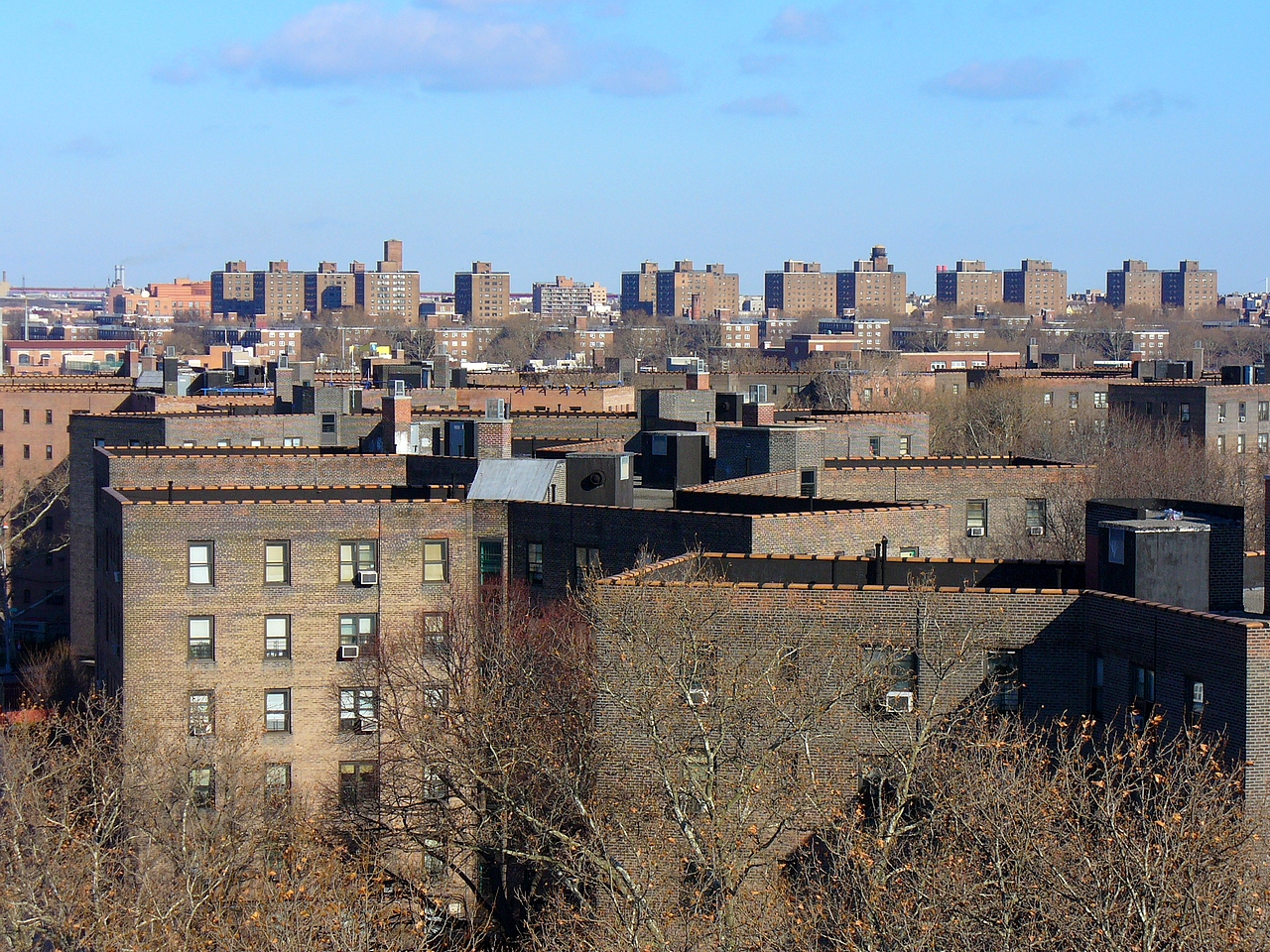
Queensbridge Houses is a public housing complex located in the Long Island City neighborhood of Queens, New York City. Opened in 1939 and owned and managed by the New York City Housing Authority (NYCHA), it is widely cited as the largest housing development in North America. The site contains more than three thousand residential units and houses several thousand residents in a compact urban setting.
Image gallery
4 Images

Design and layout
The development occupies a superblock typical of mid-20th-century public housing projects. It is composed of multiple multi‑story residential buildings set among courtyards, walkways, play areas and landscaped strips. The arrangement was intended to combine relatively high density with common outdoor space and community facilities. The complex is adjacent to the industrial and waterfront areas of Long Island City, with transit connections to the rest of the city.
History and development
Built during the late 1930s as part of a wider expansion of municipal public housing, Queensbridge Houses reflected New Deal-era commitments to provide affordable rental units in urban centers. Since its opening in 1939 the property has experienced several phases: initial construction and early occupancy; mid‑century demographic and economic changes; and more recent periods of repair, modernization and community programming coordinated by NYCHA and local organizations.
Community, culture and notable residents
Queensbridge has a notable cultural profile, particularly in music. The development has produced or influenced several well-known hip‑hop artists and groups, and it features in songs and popular media that discuss life in New York public housing. Local schools, community centers and social programs serve residents alongside informal neighborhood networks. Residents and advocacy groups remain active in pushing for improvements and services.
Challenges and initiatives
- Maintenance and funding: like many large municipal housing properties, Queensbridge has faced ongoing maintenance needs and funding shortfalls that affect repairs and building systems.
- Social and economic issues: concentrated poverty and limited local employment opportunities have posed long-term challenges, addressed through job training, youth programming and partnerships with city agencies.
- Renovation efforts: NYCHA and local stakeholders have implemented incremental upgrades and pilot initiatives to improve living conditions while preserving affordability.
Today Queensbridge Houses remains an important example of American public housing: large in scale, historically significant, and closely connected to the social and cultural life of Queens and greater New York City. For more detailed records, municipal planning documents and NYCHA reports provide current statistics and program descriptions.
Related articles
Author
AlegsaOnline.com Queensbridge Houses, Queens Leandro Alegsa
URL: https://en.alegsaonline.com/art/80480