
Q.E.D.: meaning, history, and use in mathematics and logic
Q.E.D. (quod erat demonstrandum) is a Latin phrase used to mark the completion of a proof or demonstration. This article explains its meaning, forms, history, and modern usage.
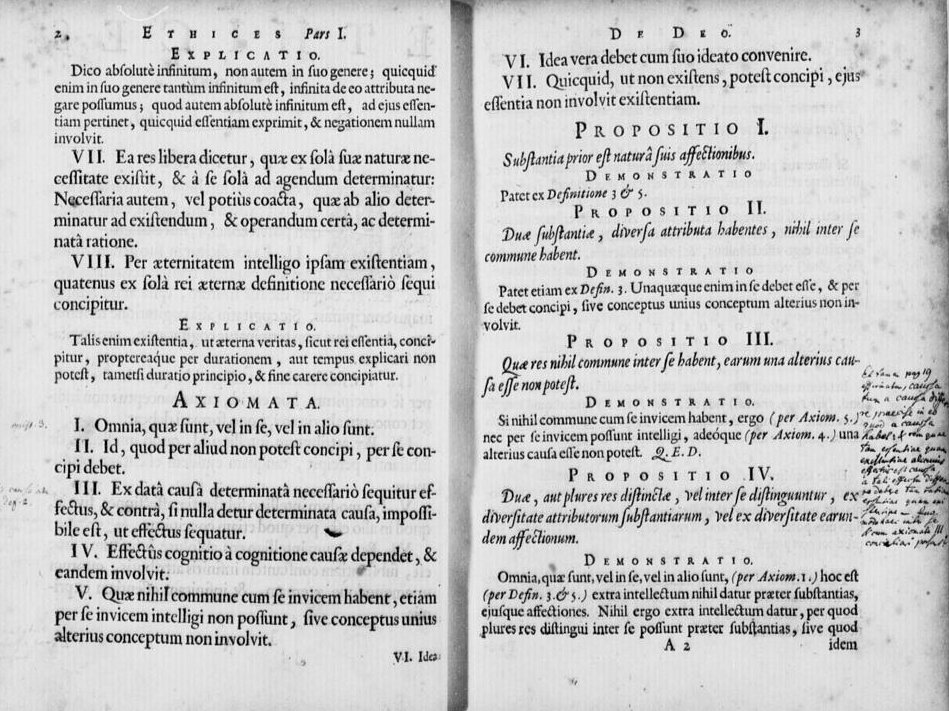
Q.E.D. is traditionally written at the end of a mathematical proof or logical demonstration to indicate that the statement set out to be proved has been established. The letters are an acronym or an initialism of the Latin phrase quod erat demonstrandum, literally "which was to be demonstrated." The expression functions as a concise closure, signalling that the required argument has been completed.
Image gallery
2 Images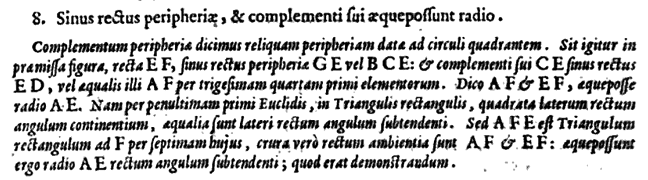
Meaning and context
In practice, Q.E.D. serves both a technical and rhetorical purpose. Technically, it marks the end of a formal proof so readers know the chain of reasoning is intended to be complete. Rhetorically, it can emphasize that a conclusion follows inevitably from earlier premises. Authors may write Q.E.D., QED, or omit the letters and instead use a typographical symbol to close a proof.
Forms and conventions
- Traditional abbreviation: Q.E.D. or QED, sometimes with periods.
- Greek equivalent used in ancient texts, often translated to the same idea.
- Modern symbol: a small square or "tombstone" (■ or ∎) is widely used to mark the end of a proof; this form is often credited with popularization by 20th-century authors.
Choice of form depends on editorial style and audience. Textbooks, research papers, and classroom notes may prefer the symbol to keep notation compact; historical and philosophical works often retain the Latin wording for clarity about the tradition being followed.
History and development
The practice of explicitly marking completed demonstrations goes back to antiquity. Ancient mathematicians used equivalent phrases in Greek and Latin to indicate that a theorem had been established. Through the medieval period and into the early modern era, the Latin phrase became standard in scholarly works. In more recent times typographical conventions evolved, and printers and authors adopted shorter signs to signal the end of proofs.
Beyond technical writing, Q.E.D. appears in everyday language when someone wants to underscore that an argument or explanation has decisively succeeded. While its origins are scholarly, its present-day role is both practical—helping readers follow formal reasoning—and cultural, linking contemporary practice to a long history of mathematical exposition.
Related articles
Author
AlegsaOnline.com Q.E.D.: meaning, history, and use in mathematics and logic Leandro Alegsa
URL: https://en.alegsaonline.com/art/80270
Sources
- google.com : Historical Encyclopedia of Natural and Mathematical Sciences, Vol. 1, p. 5603
- books.google.com : Shorter Dictionary of Catch Phrases, p. 109