
Quechua (Runa Simi): Overview, history, and linguistic features
Quechua, or Runa Simi, is a family of indigenous South American languages once used by the Inca and today spoken by roughly eight million people across the Andes.
Overview
Quechua (also written Quichua or Ketchua; speakers often call it Runa Simi or "the people's language") designates a family of related indigenous languages of the central Andes. Historically associated with the Inca Empire, Quechua varieties are still widely spoken today in several South American countries. Estimates place the number of speakers at around eight million, making Quechua the most spoken indigenous language family in South America and a key element of Andean cultural identity.
Image gallery
3 Images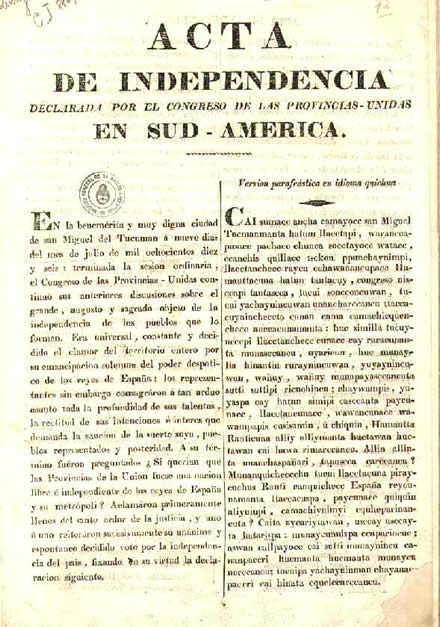


Geographic distribution and status
Quechua is spoken across a broad Andean zone. Major concentrations of speakers live in Peru and Bolivia, with significant communities in Ecuador, parts of northern Argentina, and southern Colombia. In several countries Quechua has gained official or recognized status and is used in some bilingual education and cultural programs. The language's modern presence ranges from daily rural use to urban communities, media, and revitalization initiatives.
Characteristics and structure
Quechua languages are generally agglutinative and predominantly suffixing: grammatical relationships and nuances are expressed chiefly by adding suffixes to word stems. Quechua dialects characteristically have a small vowel inventory (commonly three vowels: a, i, u) and a relatively simple syllable structure. There is no grammatical gender. Word order tends to be subject–object–verb, though variation occurs across dialects and contexts. Historically oral, many Quechua varieties are now written using adaptations of the Latin alphabet.
History and cultural importance
Quechua rose to prominence as the lingua franca of the Inca state, spreading across diverse Andean regions before and during the empire's expansion. After the Spanish conquest, Quechua continued to be widely used; missionary grammars and vocabularies were produced early in the colonial period. Over centuries the language was influenced by Spanish, especially in vocabulary and new domains of use. Today Quechua remains central to oral traditions, music, agricultural knowledge, ritual practice, and local administration in many highland communities.
Varieties, mutual intelligibility, and modern use
Quechua should be understood as a cluster of related but diverse varieties rather than a single uniform tongue. Some varieties are mutually intelligible, while others are distinct enough to be considered separate languages. Contemporary uses include household communication, traditional arts, radio and television programming, bilingual education, and language revitalization projects. Governments, universities, and community organizations support documentation and teaching to strengthen intergenerational transmission.
Notable facts and examples
- Many Andean place names and common cultural terms derive from Quechua; for example, regions and geographic names retain Quechua roots.
- Speakers who identify with the language often prefer terms from their own varieties—Runa Simi being one widely used autonym meaning "people's speech".
- Quechua's concise sound system and rich suffixation make it typologically distinctive and of interest to linguists studying language families of the Americas.
Further reading and resources
Questions and answers
Q: How many people speak Quechua?
A: Quechua is spoken by 8 million people in the South American nations of Peru, Bolivia, Ecuador, Argentina, and Colombia.
Q: Was Quechua the language of the ancient Inca Empire?
A: Yes, Quechua was the language of the ancient Inca Empire.
Q: Which language does the Quechuan languages family include?
A: The Quechuan languages family includes Quechua and several other indigenous languages spoken in South America.
Q: What is the most-spoken Native American language in South America?
A: Quechua is the most-spoken Native American language in South America.
Q: How many vowel sounds does Quechua have?
A: Quechua has only three vowel sounds: a, i, and u.
Q: How do Spanish-speakers refer to people who speak Quechua as their first language?
A: Spanish-speakers refer to people who speak Quechua as their first language as Quechua Indians.
Q: What do the Quechua people call themselves and their language?
A: The Quechua people call themselves Runa ("the people") and their language Runa Simi.
Related articles
Author
AlegsaOnline.com Quechua (Runa Simi): Overview, history, and linguistic features Leandro Alegsa
URL: https://en.alegsaonline.com/art/80443