
Province of Milan: overview, geography, history and economy
Former Italian province centered on the city of Milan; now largely superseded by the Metropolitan City. Geography, administrative role, economy, transport and cultural importance in Lombardy, Italy.
Overview: The Province of Milan (Italian: Milano) was an administrative division in the north of Italy, located in the heart of the region of Lombardy. Centered on the city of Milan, the province historically combined a dense urban core and extensive suburban and rural zones. It served as a major political, economic and cultural hub for northern Italy.
Image gallery
1 Image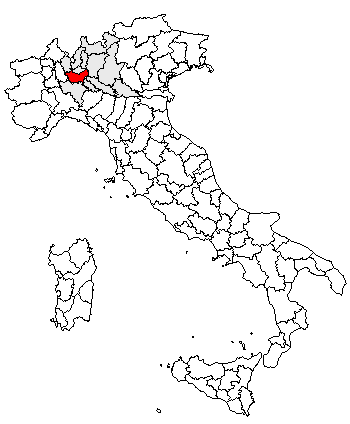
Geography and composition
The territory extended across the Po Valley and included a mix of flat agricultural plains, industrial belts and densely populated municipalities. It encompassed the capital city and many surrounding towns and communes, numbering over a hundred local administrations that varied from large urban centres to small rural communities. The area is drained by several minor rivers and benefits from fertile soils that support agriculture in the outer zones.
History and administrative change
The province was part of Lombardy's provincial framework for decades. In the 2010s Italy reformed local government structures and the Province of Milan was succeeded by the Metropolitan City of Milan, an entity created to coordinate metropolitan-scale services, planning and infrastructure across the wider urban area. This change aimed to improve coordination between the core city and surrounding municipalities.
Economy and transport
The province has long been Italy's economic engine: finance, manufacturing, design, publishing and the fashion industry are concentrated in the city and its suburbs. Major airports and rail terminals connect the area nationally and internationally. Key transport hubs and highways link the metropolitan area with the rest of the region and country, supporting commuter flows and freight movements.
Culture and notable facts
The cultural life of the province centered on the city’s theatres, museums, and historic architecture, while suburban areas host industrial heritage sites and green belts. The province formed part of the wealthiest and most industrialized region of Lombardy, with strong international ties in business, fashion and the arts. Its evolution into a metropolitan city reflects modern governance trends for large urban areas.
Key characteristics
- Administrative seat: the city of Milan.
- Composition: a mix of an urban core and many surrounding communes.
- Economic role: major center for finance, fashion and industry.
- Successor entity: Metropolitan City of Milan for metropolitan governance.
For further reading on administrative structures and local municipalities consult resources about the province and metropolitan reforms available through regional and national guides (province overview and contemporaneous reports at Milano-focused portals may be helpful).
Additional context about the region and country can be found via general introductions to Lombardy and Italy.
Notes: this article treats the Province of Milan primarily in its historical and administrative roles and notes its transition into a metropolitan governance model.
Related articles
Author
AlegsaOnline.com Province of Milan: overview, geography, history and economy Leandro Alegsa
URL: https://en.alegsaonline.com/art/79657