
Province of Lecce
Province in the Salento peninsula of southeastern Italy, noted for Baroque architecture, soft limestone carving (Lecce stone), olive oil, beaches and towns like Lecce, Otranto and Gallipoli.
The Province of Lecce occupies the southernmost part of the Apulia region. Centered on the city of Lecce, it lies on the Salento peninsula and is bordered by both the Adriatic and Ionian seas. Administratively it is known as the Province of Lecce, within the larger context of the Apulia region of southern Italy. The area has a long coastline, numerous historic towns and a landscape shaped by olive groves and limestone plateaus.
Image gallery
5 Images


Geography and climate
The province forms the heel of Italy’s boot and includes a mix of low plains, rocky coastlines and sandy beaches. Winters are mild and summers are hot and dry, a Mediterranean climate that favors olives, vineyards and tourism. The peninsula’s geology is dominated by a local soft limestone, widely used in local architecture and sculpture.
History and cultural character
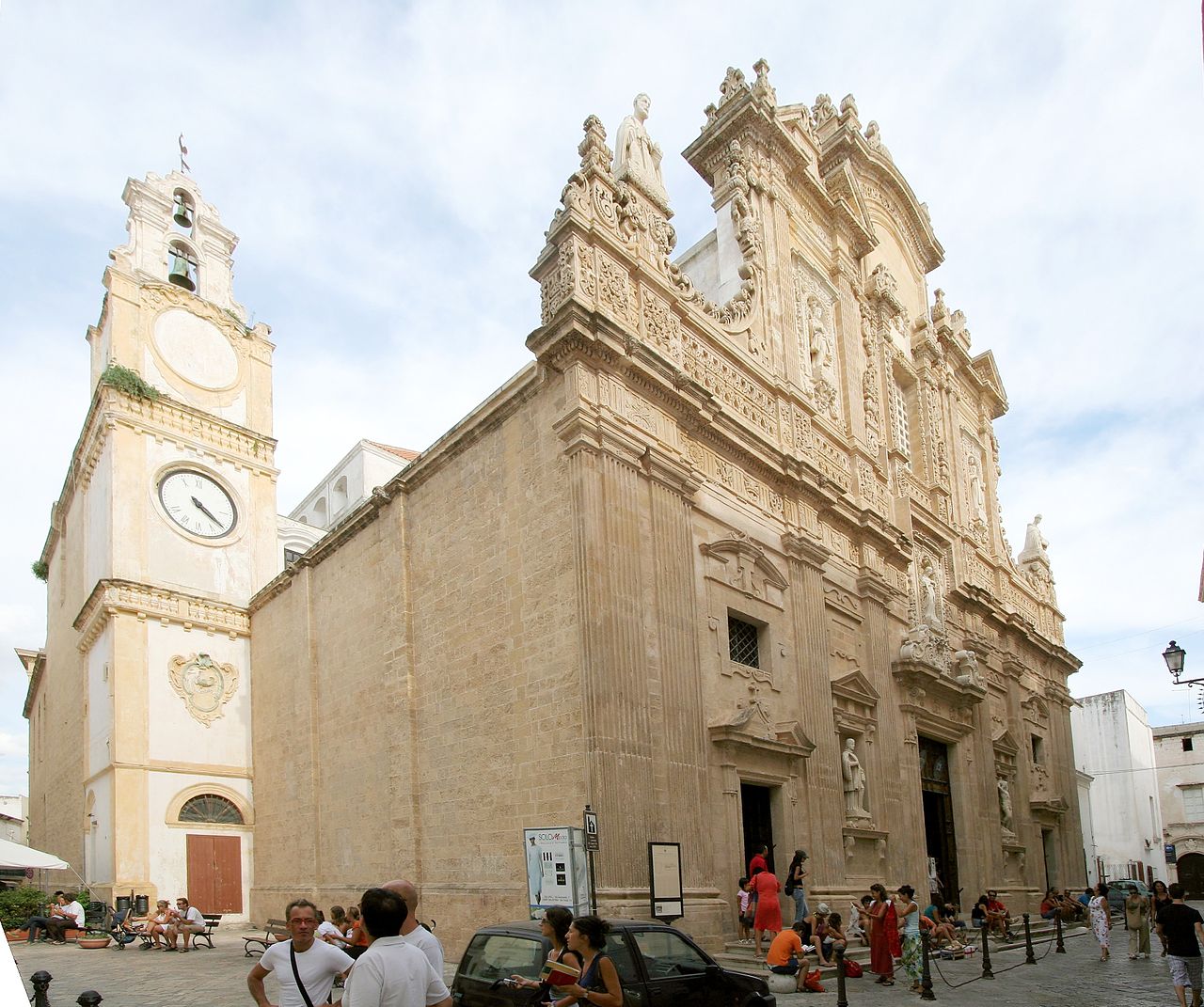
The territory has been inhabited since ancient times, with influences from Messapian, Greek, Roman, Byzantine and later Norman and Spanish cultures. This layered past is most visible in town centers, churches and fortifications. The city of Lecce is celebrated for its ornate Baroque façades carved from the regional stone, often called "Lecce stone," and for its lively craft traditions.
Economy and traditional activities
Agriculture remains important: olive oil production and vineyards are widespread, complemented by small-scale farming and fishing along the coast. Tourism is a major economic driver, with visitors attracted to historic centers, coastal resorts and cultural festivals. Local artisans continue stone carving, woodwork and ceramics for both religious and decorative uses.
Sights and notable towns
- Lecce: the provincial capital, known for Baroque churches and a cathedral square.
- Otranto: coastal town with a historic port and cathedral.
- Gallipoli: seaside old town famous for beaches and seafood.
- Santa Maria di Leuca: where the Adriatic and Ionian seas meet, noted for its lighthouse and coastal scenery.
Visitors often explore archaeological sites, religious festivals and traditional music and dance of the region, such as the local folk rhythms collectively associated with Salento. Practical access is by regional roads, rail links and nearby airports serving the wider Apulia area and Salento cultural itineraries. The province is part of the modern Italian state of Italy, and it preserves a distinct identity within southern Italy's cultural and gastronomic landscape.
Related articles
Author
AlegsaOnline.com Province of Lecce Leandro Alegsa
URL: https://en.alegsaonline.com/art/79641