
Primetime (television broadcasting)
Primetime is the evening period when television viewership peaks; in the U.S. it traditionally spans 8–11 p.m. ET (7–10 p.m. CT/MT). It drives programming choices, advertising rates, and major live events.
Primetime is the block of evening hours when television networks schedule their most prominent programming to reach the largest possible audience. It is associated with the highest viewer ratings and commands the largest advertising rates. The exact hours and cultural expectations vary by country, but primetime universally represents the key promotional and commercial period in a broadcast day.
Image gallery
1 Image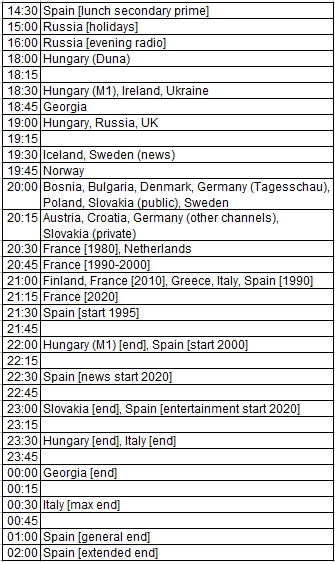
Typical schedule and audience
In the United States, conventional broadcast primetime commonly runs from 8:00 to 11:00 p.m. Eastern Time and 7:00 to 10:00 p.m. Central and Mountain Time, though local affiliates and cable channels may alter start times. Networks concentrate scripted series, reality shows, newsmagazines and entertainment specials in these hours to reach viewers after work and family activities. Live sports, awards shows and major news events can expand or displace scheduled primetime programming.
Characteristics and programming types
- Scripted series (dramas and comedies) and ongoing franchises are major anchors of primetime lineups.
- Reality television, game shows and talent competitions frequently occupy high-volume slots.
- Live events—sporting matches, political debates, televised ceremonies—draw exceptional audiences and premium advertising.
- Local news and late-night shows typically bookend primetime, with late-night beginning after the block concludes.
Because of its commercial importance, primetime is the focus of scheduling strategy, promotion and Nielsen-style ratings measurement. Advertisers pay top dollar for commercial time during programs that deliver large, desirable demographics.
History and regulation
The prominence of primetime developed with the rise of radio and then television as mass entertainment media in the mid‑20th century. Regulatory interventions and industry practices shaped how much network programming occupied evening hours; for example, policies intended to encourage local or public programming have influenced schedules in different eras. Over time, the emergence of cable, streaming platforms and time-shifting technologies has altered viewing patterns, fragmenting audiences but leaving the concept of a peak viewing period intact.
Uses, examples and notable distinctions
Broadcasters use primetime to launch new series, showcase season finales and maximize live-event exposure. Internationally, the precise hours called "prime time" differ: many countries center their peak viewing in late evening local time. The term also distinguishes this period from "daytime," "early fringe" and "late night" blocks used for different content and advertising strategies.
For further information on network schedules, ratings and historical rules consult official sources: network schedule resources, audience measurement authorities, regulatory documents and history, international broadcasting comparisons, and late-night programming overviews.
Related articles
Author
AlegsaOnline.com Primetime (television broadcasting) Leandro Alegsa
URL: https://en.alegsaonline.com/art/79136