
Prime Minister's Questions (PMQs)
Weekly parliamentary session in the UK where MPs, led by the Leader of the Opposition, question the Prime Minister. A high-profile, often combative accountability forum held on Wednesdays for about 30 minutes.
Overview
Prime Minister's Questions, abbreviated PMQs and officially titled "Questions to the Prime Minister," is a regular session of the House of Commons in which Members of Parliament put questions to the Prime Minister. It is a central feature of parliamentary scrutiny in the United Kingdom and is widely covered by the media. The event typically takes place on Wednesdays at midday and lasts around thirty minutes.
Image gallery
3 Images

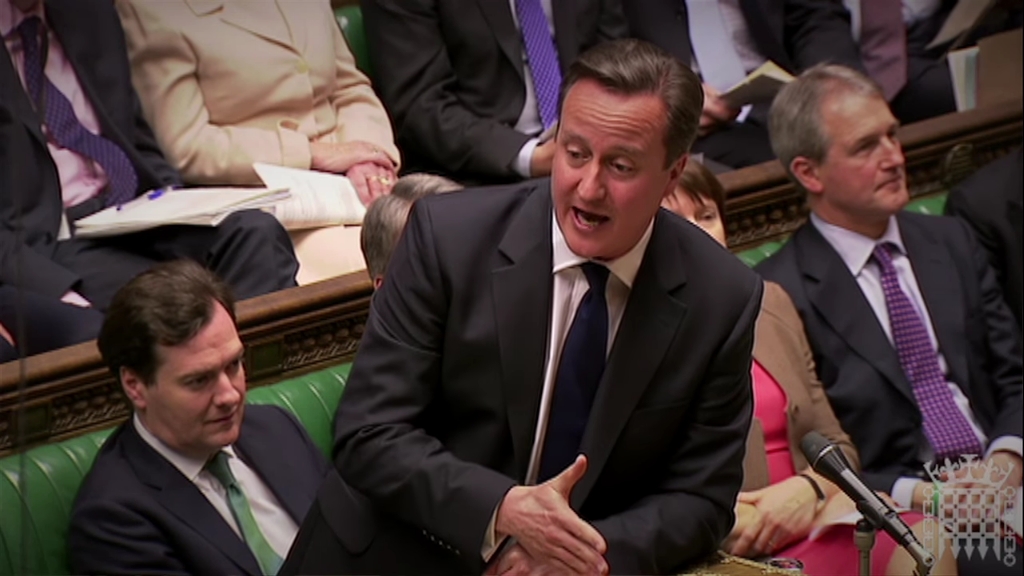
Format and conduct
The session is structured to give a priority sequence to the opposition leader followed by additional, shorter questions from backbench MPs and ministers. The Leader of the Opposition traditionally receives a set number of questions (commonly six) and may ask follow-up "supplementary" questions. The Speaker of the House controls the order and enforces the time limits. PMQs is notable for its energetic atmosphere, with ministers and opposition members often interjecting, clapping or shouting from the benches.
Typical components
- Opening question(s) from the Leader of the Opposition, often framed to highlight a political point.
- Supplementary questions from other parties and individual MPs.
- Occasional replies by the Prime Minister that set out government policy or respond to topical events.
History and development
PMQs has evolved from earlier practices of ministerial questioning and oral answer sessions. Before 1997 there were two short sessions each week; reforms consolidated these into a single longer Wednesday session to concentrate scrutiny and media attention. Over time the event became more formalised and widely broadcast, increasing its role as a public performance as well as a parliamentary procedure.
Purpose and significance
The primary purpose of PMQs is democratic accountability: it offers MPs a public forum to challenge the government's actions and to elicit commitments or clarifications from the Prime Minister. It also gives the opposition an opportunity to present an alternative narrative and to test the government's responses under pressure. For the public, PMQs provides a visible demonstration of the adversarial nature of British parliamentary democracy and often shapes news coverage and political debate.
Notable incidents and distinctions
Because of its confrontational style and theatrical potential, PMQs has occasionally produced memorable moments. One famous episode involved Michael Heseltine and the ceremonial mace, which exemplifies how tensions can spill over into dramatic gestures. The session also differs from other question periods, such as departmental question times or the devolved legislatures' sessions, in its national prominence and its focus on the head of government. For further context on the role of the opposition, see the entry on the Leader of the Opposition.
PMQs remains both a procedural instrument for oversight and a high-profile political stage, blending substantive scrutiny with performative exchanges that attract public and media attention.
Related articles
Author
AlegsaOnline.com Prime Minister's Questions (PMQs) Leandro Alegsa
URL: https://en.alegsaonline.com/art/79124