
Predicate logic
Predicate logic is the formal study of predicates, quantifiers, variables and relations; it extends propositional logic to express generality and structure in mathematics, linguistics and computer science.
Overview
Predicate logic is a branch of formal logic that analyses and represents statements containing predicates and variables. It is a central part of mathematical logic, providing a language that can express claims about objects, their properties and the relations among them. Where a simple declarative sentence like "Socrates is mortal" is a closed statement, a predicate such as "is mortal(x)" is an incomplete proposition that requires a subject to become a full assertion.
Image gallery
1 Image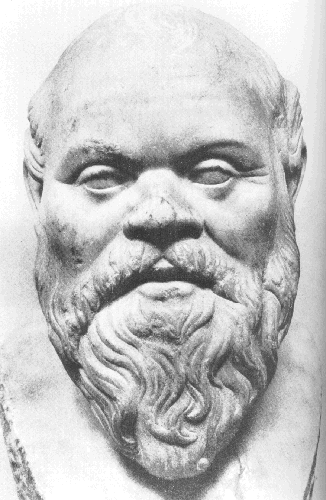
Basic components
Predicate logic uses a few basic ingredients to build formulas: terms (which name objects), predicate symbols (which assert properties or relations), logical connectives (and, or, not, implies), and quantifiers (which indicate quantity or scope). The principal quantifiers are the existential and the universal; these let the language say "there exists" or "for all" about members of a domain. See more on quantifiers and the universal quantifier specifically.
Syntax and semantics
Formulas of predicate logic distinguish free and bound variables. A quantifier like ∃x or ∀x binds occurrences of x inside its scope; unbound occurrences are free and make a formula an open one. Semantics assigns meaning by fixing a universe of discourse (a set of objects to quantify over) and interpreting each symbol as a function, relation, or element of that universe. A formula is true or false relative to such an interpretation, which is the link between symbolic expressions and intended meaning.
Example and notation
One common example is the formula ∃x ∀y L(y,x), which can be read as "there is an x such that for every y, y likes x" — colloquially, "everyone is liked by someone." Symbolic examples are often illustrated visually:
History and development
Predicate logic evolved from work in the late 19th and early 20th centuries as logicians sought to make mathematical reasoning rigorous. Foundational figures developed the notation and theory that allow quantification and relations to be handled precisely. The expansion from propositional systems to predicate systems marked a major advance: unlike propositional logic, predicate logic can express general mathematical statements and fine-grained structure.
Uses, limitations and notable facts
Predicate logic underpins much of modern mathematics, formal semantics in linguistics, and automated reasoning in computer science. First-order predicate logic (where quantifiers range over individuals but not over predicates or sets) is expressive enough for many foundations yet remains subject to important metatheoretical results: it has complete proof systems and undecidable general satisfiability, and certain phenomena (like identity and functions) are treated by adding special predicate or function symbols. Practical applications include specification languages, database query languages, and theorem proving.
Characteristics and distinctions
- Expressivity: richer than propositional logic because predicates expose internal structure.
- Quantification: allows statements about some or all members of a domain.
- Levels: first-order (variables for objects) versus higher-order (variables for predicates and sets).
- Model-theoretic perspective: truth depends on an interpretation over a chosen domain.
For introductory material and further reading, consult resources on mathematical logic, accessible guides to quantifiers, and explanations that compare predicate systems with propositional logic. Background on historical development and common examples can be found through standard textbooks and surveys in logic and the philosophy of language. Additional technical treatments discuss completeness, compactness and model theory in greater depth; for conceptual primers see articles on the universe of discourse and on the universal quantifier.
For more targeted explanations, introductory notes often include step-by-step formation rules, sample translations of ordinary sentences into formulas, and solved exercises demonstrating scope, binding, and the manipulation of quantifiers to avoid ambiguity.
Further reading: introductory textbooks and online lecture notes provide systematic introductions, while survey articles trace the historical shift from algebraic and propositional approaches to the richer framework of predicate logic. Many of these resources also compare predicate logic with alternative systems and show where it is best applied in mathematics, linguistics and computer science.
See also formal treatments and toolkits for automated reasoning and proof verification that implement predicate logic principles in software and educational materials.
External links: Incomplete propositions, Quantifiers overview.
Related articles
Author
AlegsaOnline.com Predicate logic Leandro Alegsa
URL: https://en.alegsaonline.com/art/78694