
Port Mòr — harbour settlement on the Isle of Muck
Port Mòr is the main harbour and small settlement on the Isle of Muck, one of the Small Isles in the Inner Hebrides off Scotland's west coast, with a very small year‑round population.
Overview
Port Mòr is the principal harbour and inhabited cluster on the Isle of Muck, one of the Small Isles in the Inner Hebrides off the West Coast of Scotland. The settlement functions as the island's primary landing place for residents, visitors and supplies. It is small and largely rural, with a permanent population recorded at about 27 people, though numbers vary with seasons and occupancy of holiday properties.
Image gallery
2 Images
Geography and layout
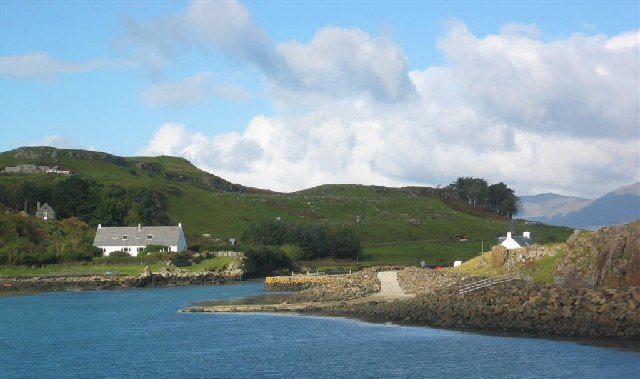
Port Mòr occupies a sheltered bay and is arranged around a quay or slipway used for boats and a few buildings that provide basic services. The surrounding landscape is typical of the Small Isles: low hills, machair and grazing ground, with maritime grassland and heath. The name is Gaelic in origin; mòr means "big", so Port Mòr can be translated as "big port", a relative description on an island scale.
Facilities and services
Facilities are modest. The harbour supports small ferries, private craft and fishing boats. There are a handful of houses and crofts, and limited visitor accommodation or self-catering properties. Essential supplies and mail arrive by sea; for many goods and services residents travel to larger islands or the mainland.
Economy and community
- Traditional activities include crofting, small-scale fishing and limited agriculture.
- Local services often combine practical functions with community uses; the harbour area acts as a social and logistical hub.
- Tourism is generally low-key, focused on wildlife, walking and the island experience rather than large-scale facilities.
Transport and links
Port Mòr is the island's main point of arrival and departure. Connections are maintained by regular small passenger and cargo boats rather than large car ferries. Weather and tidal conditions affect schedules, so reliability and planning are important for residents and visitors alike.
Environment and conservation
The wider Small Isles area is noted for seabird colonies, coastal habitats and scenic values. Conservation considerations and the island's small population shape land use and development, with an emphasis on preserving the natural landscape and supporting sustainable local livelihoods.
Historical context
The settlement grew around a safe landing place and the practices of crofting and coastal living. While improvements to piers and slipways have been made over time, Port Mòr remains a representative example of how small harbours shape patterns of settlement, transport and community life in remote Scottish islands.
Related articles
Author
AlegsaOnline.com Port Mòr — harbour settlement on the Isle of Muck Leandro Alegsa
URL: https://en.alegsaonline.com/art/78211
Sources
- road-to-the-isles.org.uk : road-to-the-isles.org.uk/thesmallisles.php