
AWD-Arena (HDI-Arena) — football stadium in Hanover
Stadium in Hanover originally built as Niedersachsenstadion (1952–54). Home to Hannover 96, modernized for major tournaments and renamed through commercial deals (AWD, later HDI).
The AWD-Arena, commonly referred to today by its sponsored name HDI-Arena, is a major football stadium in Hanover, the capital of Lower Saxony. Opened in the mid-1950s after construction from 1952 to 1954, it began life as the Niedersachsenstadion and has served as the primary home ground for the professional club Hannover 96. Over decades the venue has been repeatedly adapted to meet changing safety rules, spectator expectations and international tournament standards.
Image gallery
3 Images
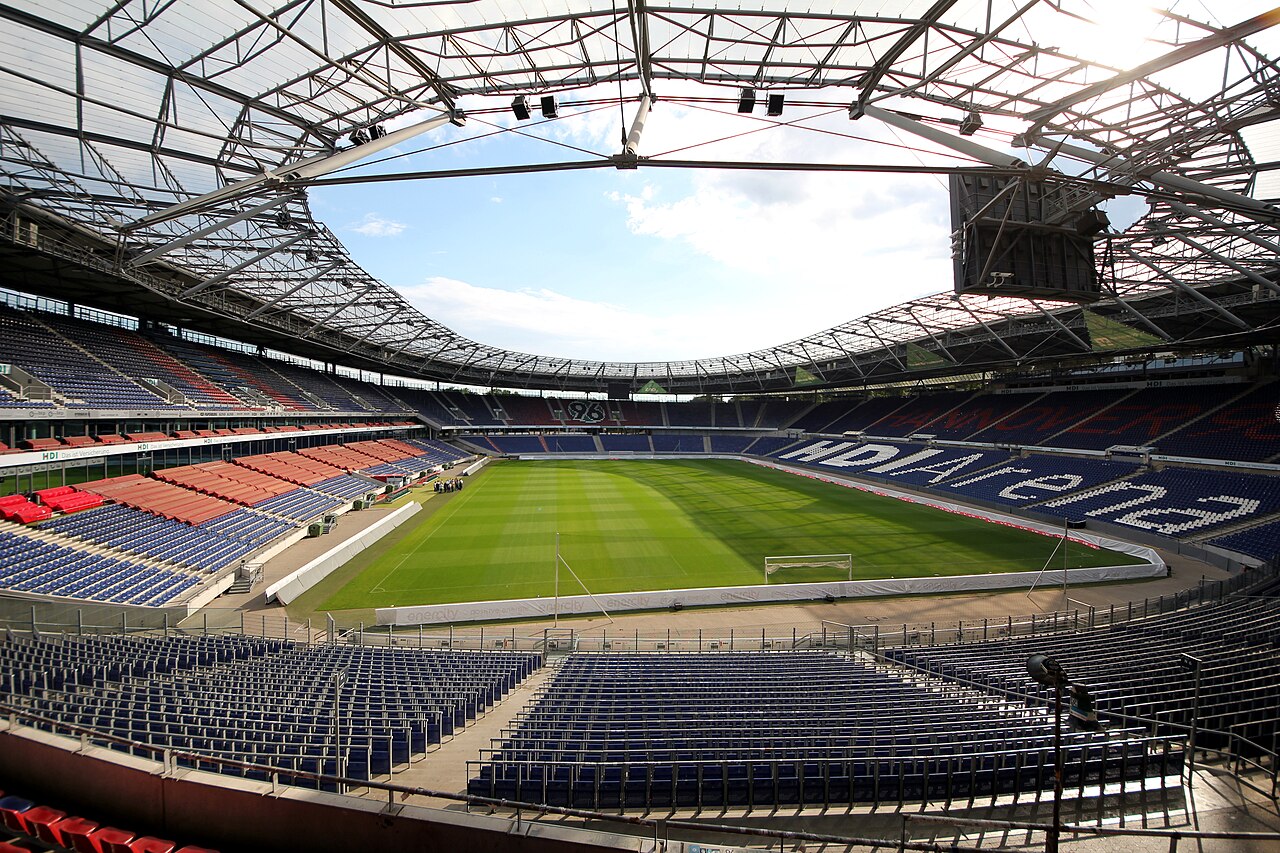

Physical characteristics and layout
The stadium originally offered very large spectator capacity thanks to extensive standing terraces. Conversions to predominantly seated accommodation and other modernization measures have reduced the maximum number of spectators compared with the early decades, and the facility today is configured primarily for football matches. The arena features covered stands on all sides, press and hospitality facilities, player and media areas compliant with contemporary requirements, and a single natural grass playing surface most often used for competitive fixtures and major events.
History and development
Built soon after World War II, the Niedersachsenstadion was designed to serve regional and national sport needs and to host large crowds. Ahead of major international tournaments it underwent significant renovations: in the 1970s and again toward the end of the 1980s the stadium was altered to meet international standards, notably converting many standing sections to seats and improving access and safety systems. In the early 2000s the ground was reshaped to focus on football use, and naming rights were sold to the financial services firm AWD, after which the venue was commonly called the AWD-Arena. It has since been rebranded under another commercial sponsor and is widely known as the HDI-Arena.
Uses and notable events
The stadium's core function is to host Hannover 96 home matches, from domestic league games to cup ties. It has also been selected as a venue for several rounds of international competition, having been upgraded before and used during high-profile tournaments — including hosting matches during the 2006 FIFA World Cup and other international fixtures and friendlies. Beyond sport, the arena is used for large concerts and community events when production requirements allow.
Importance and distinguishing features
- Representative post-war stadium architecture in Germany that has been adapted over time for modern audiences.
- Example of commercial naming rights in German sport: originally Niedersachsenstadion, later AWD-Arena and now commonly HDI-Arena.
- Transition from large standing-capacity design to an all-seater configuration reflecting wider safety and comfort trends in stadium management.
For further general information about the site and its role in international events, see references to international preparatory works and tournament listings at international championships. The arena remains one of the principal sporting venues in Lower Saxony and continues to be a focal point for football fans and large-scale events in northern Germany.
Related articles
Author
AlegsaOnline.com AWD-Arena (HDI-Arena) — football stadium in Hanover Leandro Alegsa
URL: https://en.alegsaonline.com/art/7819