
Axel Heiberg Island
Large, mostly uninhabited island in the Canadian Arctic Archipelago. Noted for Eocene fossil forests, polar glaciers and university research; part of Nunavut with an area of about 43,178 km².
Axel Heiberg Island is a remote island in the Canadian Arctic Archipelago with an area of about 43,178 km², making it one of the world's larger islands and among Canada's largest. It lies within the high Arctic, among the Queen Elizabeth and Sverdrup groups of islands, and has no permanent population. The island's landscape combines rugged coasts, high plateaus, perennial ice and large areas of polar desert.
Image gallery
10 Images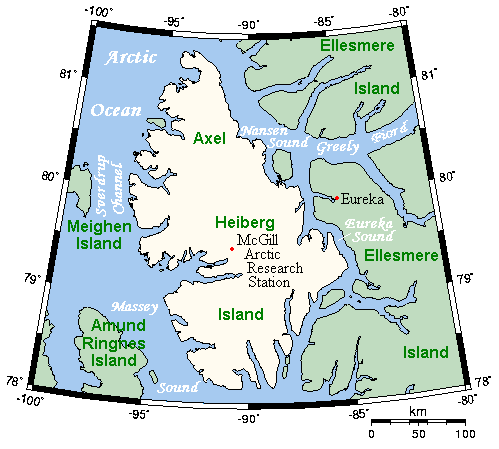


Geography and natural features
The island is characterized by cold-based glaciers, thick permafrost, and steep fjords that cut inland from the Arctic Ocean. Vegetation is sparse and mainly limited to mosses, lichens and a short season of tundra growth. Unusual geological and paleobotanical finds include well-preserved fossilized forests and other plant remains dating to much warmer periods in Earth history; these fossils provide important evidence about past climates and Arctic ecosystems.
Human history and exploration
Archaeological evidence and oral histories indicate that Inuit peoples visited and used parts of the region at various times in the past. The island was uninhabited when European explorers charted it during the late 19th and early 20th centuries. Norwegian arctic explorer Otto Sverdrup surveyed and named the island, honoring Axel Heiberg, a patron of his expedition. For a period the island was the subject of a Norwegian claim; that claim was relinquished and the island is now administered by Canada. The island is part of the territory of Nunavut.
Science, conservation and uses
Because of its cold, stable environment and exposed fossil material, Axel Heiberg Island is a focal point for polar and Earth-history research. Universities and research teams operate seasonal field camps and a small long-term research facility to study glaciology, permafrost processes, and ancient plant fossils. Scientific work on the island contributes to understanding climate change, polar ecology and the geological history of the Arctic.
Notable facts
- The island is largely uninhabited and has no permanent settlements; visits are primarily for research and occasional regulated tourism.
- Prominent features include extensive glaciers, exposed fossil beds, and a landscape shaped by cold-climate processes.
- Named by Norwegian explorer Otto Sverdrup in honor of the expedition sponsor Axel Heiberg; the island was part of early 20th-century Norwegian claims before becoming Canadian territory.
- Historical and cultural connections to the Inuit are part of the island's human story, and sovereignty is held by Canada and administered through Nunavut.
Axel Heiberg Island remains important for scientists seeking clues about ancient warm periods and for monitoring ongoing changes in the Arctic. Its remote setting preserves geological and ecological records that are difficult to find elsewhere in the world, while its legal and exploration history links it to broader stories of polar exploration and territorial settlement by European and Canadian authorities, after an interval during which Norway asserted a claim.
Related articles
Author
AlegsaOnline.com Axel Heiberg Island Leandro Alegsa
URL: https://en.alegsaonline.com/art/7826