
Pokémon Colosseum (GameCube) — overview, gameplay, and legacy
Pokémon Colosseum is a 2003 role-playing game for the Nintendo GameCube. Developed by Genius Sonority and published by The Pokémon Company, it introduced Shadow Pokémon, the snagging mechanic and a console-focused story.
Overview
Pokémon Colosseum is a role-playing video game released for the Nintendo GameCube in late 2003 and 2004. Developed by Genius Sonority and published by The Pokémon Company, it represents one of the franchise's earliest major attempts to bring a Pokémon experience to a home console with a more cinematic, story-driven campaign. The title introduced the concept of "Shadow Pokémon," corrupted creatures whose hostile behaviour and altered movesets are central to the plot. For an official summary, see the game's page: Pokémon Colosseum official.
Image gallery
5 Images



Gameplay and key mechanics
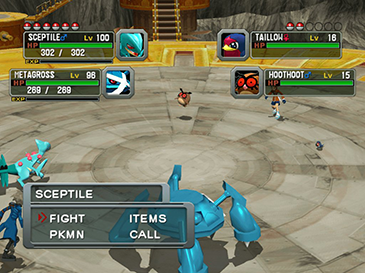
Colosseum preserves the core turn-based combat and type interactions familiar to series fans, but rearranges the focus of play for a console environment. Random wild encounters are limited; much of the single-player progression depends on battling enemy trainers and acquiring their Shadow Pokémon through a special capture method commonly called "snagging." Snagging allows the protagonist to take control of certain opposing Pokémon during battle, a mechanic that framed the game's mission design and pacing. Technical and design details from the developers are discussed at length in a retrospective developer note: developer details.
Many encounters are framed as double battles, and the game emphasises strategic pairings rather than solo captures. Shadow Pokémon require purification before they regain normal behaviour and full move availability; this purification process functions as both a narrative and mechanical objective. Multiplayer modes provide competitive matches outside the main plot, offering an arena-style experience more common to console titles.
Story, setting and characters
The game's narrative departs from the typical gym-challenge structure of the handheld games and follows a more linear, mission-based campaign. Players travel across towns and a region shaped for the title, confronting a criminal organisation that captures and weaponises Shadow Pokémon. The storyline is often described as darker and more mature in tone than contemporary portable entries, emphasising themes of rescue, redemption and the ethics of altering living creatures. Early previews and interviews placed particular emphasis on adapting characters and plot for a home-console audience: franchise notes and development interview.
Development influences and release
Development of Colosseum involved collaboration between Genius Sonority and series staff, and the team cited influences from role-playing games outside the Pokémon lineage when shaping pacing and tone. Reported influences include titles that emphasise cinematic presentation and story-heavy design, which informed the game's structure and graphical direction: design influences.
Pokémon Colosseum was first shown publicly at the 2003 Electronic Entertainment Expo, where it attracted attention as a console-focused Pokémon project: E3 2003 coverage. The game was released in Japan on November 21, 2003, in North America on March 22, 2004, and in Europe on May 14, 2004; contemporary release notices and regional details are available through archived announcements: Japan release, North America release, Europe release.
Connectivity, sequel and legacy
Technically, Colosseum supported the GameCube–Game Boy Advance link cable, enabling certain interactions and transfers with compatible handheld titles. This connectivity allowed players to bring Pokémon between systems and added integration for collectors and competitive players. The game also spawned a spiritual sequel — another GameCube-exclusive entry that continued the Shadow Pokémon concept — and is often cited when discussing how the franchise experimented with alternate capture systems and more mature storytelling on home hardware.
Further reading and notable facts
- Shadow Pokémon: Central to the game's plot; they must be recovered and purified rather than caught in the wild.
- Snagging mechanic: A core gameplay innovation allowing the player to capture opposing trainer-owned Pokémon under specific conditions.
- Home-console focus: One of the first major attempts to adapt Pokémon conventions for a living-room audience with a cinematic presentation.
- Multiplayer and connectivity: Included competitive battle modes and compatibility features via the GameCube–GBA link cable.
Colosseum remains a notable experiment in the series for its willingness to change familiar systems to suit a different platform and audience. For readers seeking primary sources, interviews and event coverage cited above provide contemporary context and developer perspective on why the team chose a distinct approach for a home-console Pokémon title.
Related articles
Author
AlegsaOnline.com Pokémon Colosseum (GameCube) — overview, gameplay, and legacy Leandro Alegsa
URL: https://en.alegsaonline.com/art/77663
Sources
- esrb.org : "ESRB: Pokemon Colosseum"
- gamefaqs.com : "Pokemon Colosseum: Release Data"
- nintendo.co.jp : "「新しいことをしよう」でスペシャリストたちがぞくぞく集結"
- gamespot.com : "Pokémon Colosseum E3 2003 Preshow Report"
- ca.ign.com : "Pokemon Colosseum Review"