
Plaquemines Parish, Louisiana
Coastal parish at the mouth of the Mississippi River in Louisiana, largest combined land-and-water area in the state; seat Pointe à la Hache; economy shaped by fishing, shipping, oil and coastal change.
Overview
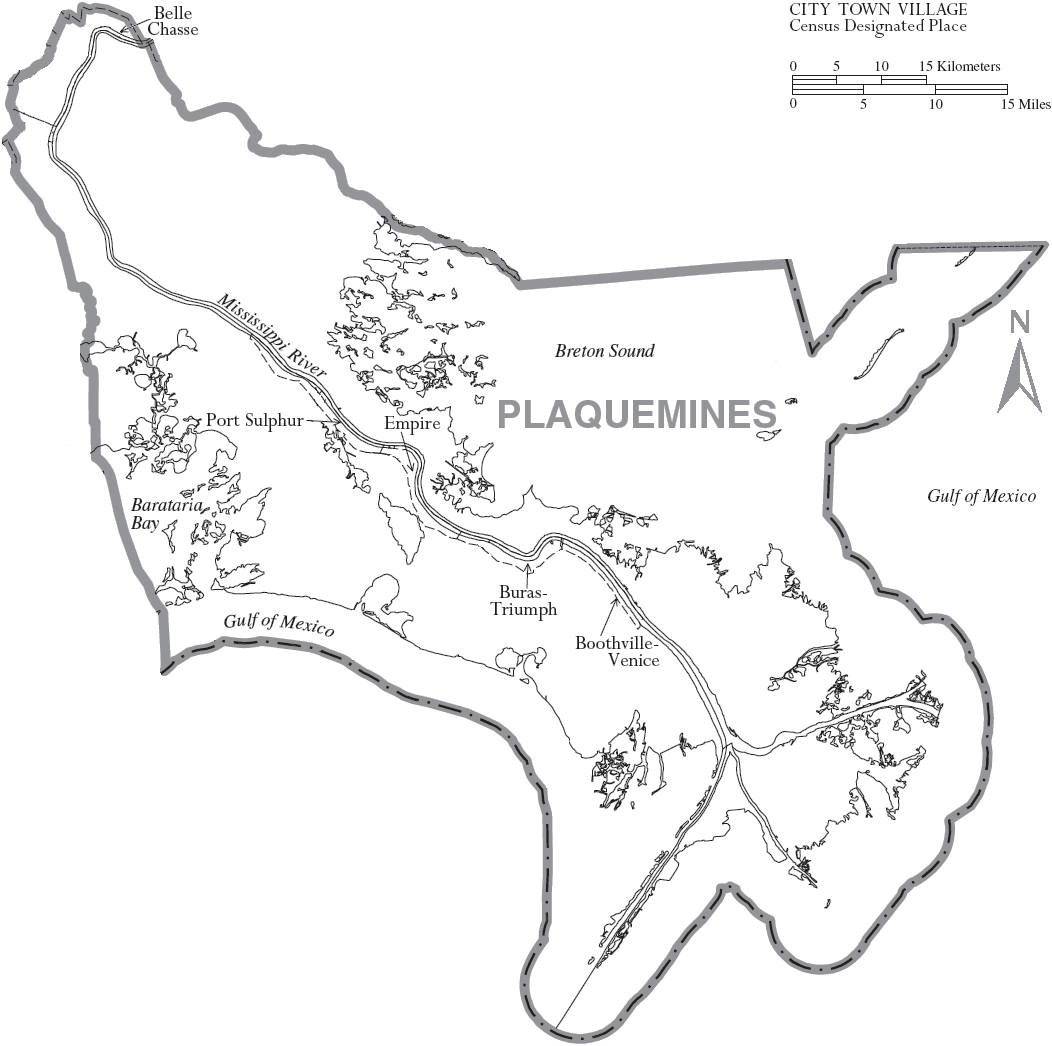
Plaquemines Parish occupies the lower end of the Mississippi River delta and reaches to the Gulf of Mexico. It is noted for having the largest combined land and water area of any parish in Louisiana. The parish name is sometimes given in Cajun French as Paroisse Plaquemine, and its name is pronounced ['plɑ.kə.mɪnz]. Historically and today the landscape is a mix of river channels, bayous, marshes and barrier islands.
Image gallery
4 Images


Geography and environment
The parish extends along both banks of the lower Mississippi River and includes extensive wetlands that buffer inland communities from open water. Sediment deposition, subsidence and storm surge continually reshape shorelines and islands. Much of the local economy and ecology depends on the river’s flow, the health of marshes, and access to the Gulf.
History and development
Plaquemines has a long human history that predates European contact, later becoming part of French and Spanish colonial Louisiana. Through the 18th and 19th centuries the parish developed around river commerce, fishing and agriculture. In the 20th century petroleum and shipping infrastructure expanded along the river and nearshore areas, bringing new jobs and environmental pressures.
Communities and government
The official parish seat is Pointe à la Hache, a small river community that serves as the administrative center; the phrase parish seat refers to this role. Other population centers include towns and settlements clustered along the river and bayous. As a civil division the parish carries responsibilities for local services, emergency response and coastal protection programs.
Economy and culture
Local livelihoods center on commercial fishing (shrimp, oysters), timber, river-related shipping and oil-and-gas operations. Outdoor recreation, hunting and seafood festivals reflect Cajun and maritime cultural traditions. The parish’s access to deepwater channels makes it important for coastal commerce and logistics.
Hazards, restoration and notable facts
Plaquemines is exposed to tropical storms, hurricane surge and chronic land loss. Major storms have periodically damaged communities and infrastructure, prompting federal, state and local restoration efforts to rebuild marshes, barrier islands and levees. According to the 2000 count the parish population was recorded as 26,757, a figure that has since fluctuated with economic changes and storm impacts. For general reference about administrative status see the local parish information pages; for pronunciation and local names consult regional language resources here and contextual maps here.
- Location: Lower Mississippi River to the Gulf.
- Seat: Pointe à la Hache.
- Main activities: Fishing, shipping, oil-and-gas, coastal restoration.
Related articles
Author
AlegsaOnline.com Plaquemines Parish, Louisiana Leandro Alegsa
URL: https://en.alegsaonline.com/art/77304