
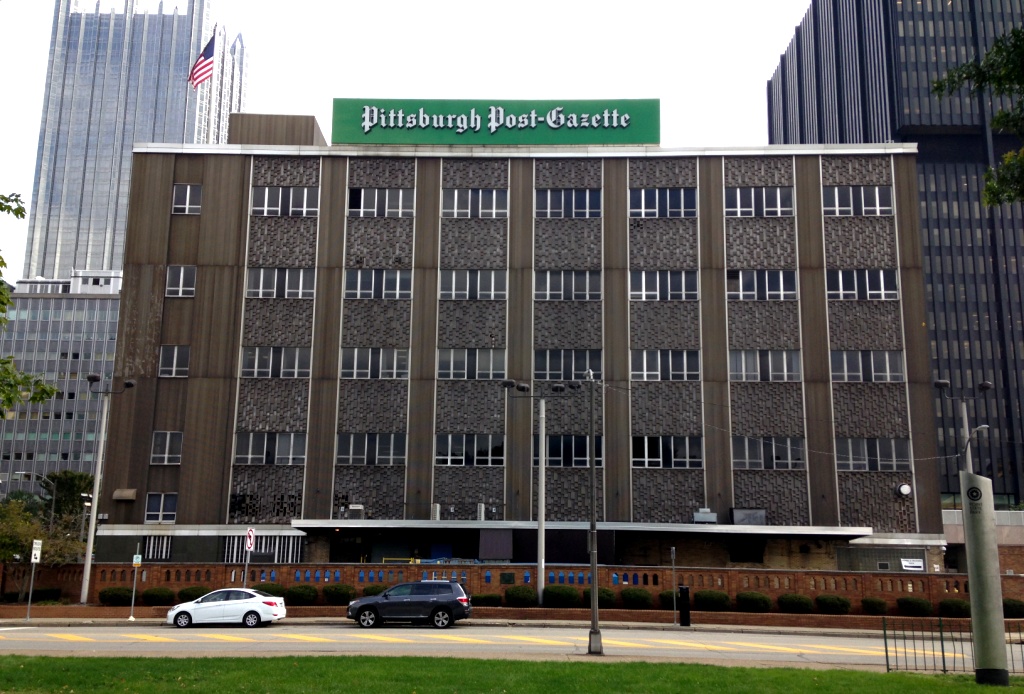
Pittsburgh Post-Gazette
Major daily newspaper serving metropolitan Pittsburgh, known as the PG, with deep local coverage, a long history dating to the 19th century, and multiple Pulitzer Prizes.
Overview
The Pittsburgh Post-Gazette, commonly called the PG, is the principal daily newspaper for the Pittsburgh metropolitan area in Pennsylvania. It provides reporting on local government, business, sports, culture and opinion, and serves as a primary news source for the region. Over its long existence the paper has won multiple journalism awards and has been a central institution in Pittsburgh’s public life.
Image gallery
4 Images


Characteristics and content
The newspaper publishes a mix of news and commentary aimed at both city and suburban readers. Typical coverage areas include:
- Local and regional news: municipal government, education, and community issues
- Sports: extensive coverage of Pittsburgh’s professional and collegiate teams
- Business and economy: reporting on energy, manufacturing and local commerce
- Arts and culture: reviews, features and event listings
History and development
The paper traces its roots to the 19th century. The earliest edition that eventually led to today’s Post-Gazette appeared in 1842 as the Daily Morning Post. That publication grew out of several weeklies that supported the Democratic political perspective in their era, including the Mercury, the Allegheny Democrat and the American Manufacturer, reflecting the partisan press culture of the time. Over subsequent decades the Morning Post merged and evolved through partnerships with other local titles to become the modern Pittsburgh Post-Gazette.
Notable achievements
The Post-Gazette has been recognized for its journalistic work at the national level, including multiple Pulitzer Prizes awarded for reporting and public service. These honors reflect the paper’s investigative projects and sustained coverage of issues important to readers in southwestern Pennsylvania.
Role and readership
At various points in its history the PG has ranked as the largest newspaper in the Pittsburgh area by circulation. Its audience includes city residents, suburban communities and readers interested in regional politics, industry and sports. The newsroom has adapted to changing media habits by maintaining a presence in print alongside digital reporting and opinion content.
Distinctive facts
Although it is commonly called the PG, the publication’s origins in 19th-century pro‑Democratic weeklies are a reminder of an era when many American newspapers openly aligned with political parties. Today it functions as a modern regional newspaper covering a wide range of civic life.
Related articles
Author
AlegsaOnline.com Pittsburgh Post-Gazette Leandro Alegsa
URL: https://en.alegsaonline.com/art/77155
Sources
- abcas3.accessabc.com : "United States Circulation averages for the six months ended: 9/30/2011" · webcitation.org
- chroniclingamerica.loc.gov : "About The Daily morning post"
- archive.wikiwix.com : archive.wikiwix.com/cache/20140511091526/http://chroniclingamerica.loc.gov/lccn/sn8402624…