
Piombino — coastal town and port in Tuscany, Italy
Piombino is a coastal comune in the Province of Livorno, Tuscany. Known as a ferry gateway to Elba, it has Etruscan roots, medieval fortifications and a modern port and industrial zone.
Overview
Piombino is a coastal town and comune in the Province of Livorno, within the region of Tuscany, Italy. It sits at a narrow stretch of coast that marks the meeting of the Ligurian Sea and the Tyrrhenian Sea, facing the island of Elba and bordering the northern reaches of the Maremma. Its position has long made it an important maritime hub for both trade and travel.
Image gallery
7 Images


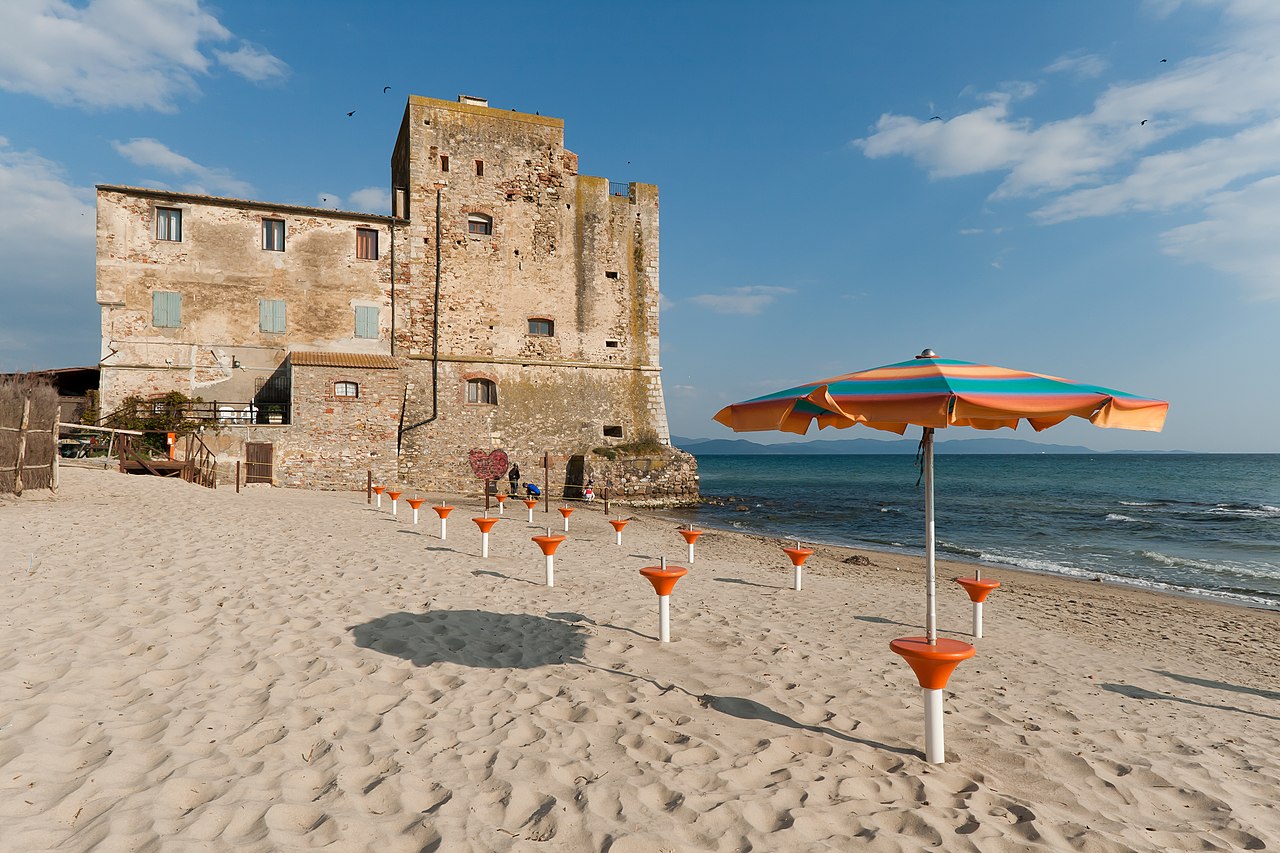


Geography and urban character
The historic center of Piombino occupies a rocky promontory with winding streets, medieval walls and sea-facing promenades. Below the old town are working docks and ferry berths; beyond them lies a larger industrial district that developed in the nineteenth and twentieth centuries around metalworking and port-related activities. Nearby coastal features include the Gulf of Baratti and archaeological areas associated with ancient Etruscan settlements.
History
Human presence around Piombino dates back to the Etruscan period when the area served as an outlet for inland settlements such as Populonia. During the Middle Ages the town grew in significance as a maritime outpost and later came under the influence of the maritime Republic of Pisa. In the early modern era Piombino was the centre of a small principality governed by local lords; its fortifications were strengthened to guard the coast and the approaches to Elba. Over time it was incorporated into larger Tuscan and Italian states while preserving a distinctive local identity.
Economy and transport
Piombino's economy combines port activities, light and heavy industry, and tourism. Its port serves as one of the principal embarkation points for ferries to Elba and other nearby islands, operating alongside the larger port of Livorno. Cargo handling, ship repair and metallurgical works have shaped the town's industrial hinterland. Seasonal tourism—driven by beaches, archaeological sites and island excursions—supplements the local economy.
Main sights and culture
Visitors find a mix of archaeological and medieval attractions: Etruscan remains and necropolises in the Baratti and Populonia area, a harbourfront historic centre with ramparts and a fortress, and museums that display finds from the surrounding coasts. Cultural life includes local festivals, seafood cuisine and events tied to maritime tradition. The landscape around Piombino offers rugged shorelines, sheltered coves and access to island excursions.
Notable facts and distinctions
- Piombino occupies a strategic coastal point where two seas meet, giving it maritime importance beyond its size.
- Its role as a ferry gateway makes it a frequent transit point to Elba and a complement to the facilities offered by the port of Livorno.
- The town sits near significant Etruscan sites, linking it to ancient Mediterranean trade networks.
- Its compact old town and visible fortifications reflect a layered history from antiquity through the Middle Ages and Renaissance to the industrial age.
For general orientation and travel planning, sources on the Province of Livorno, regional guides to Tuscany, and ferry timetables to Elba are useful starting points. Piombino remains both a living port town and a doorway to the islands and archaeological past of Italy's western coast.
Related articles
Author
AlegsaOnline.com Piombino — coastal town and port in Tuscany, Italy Leandro Alegsa
URL: https://en.alegsaonline.com/art/77026