
Phosphine (PH3) — properties, production, uses, and safety
Phosphine (PH3), also called phosphane, is a colorless, flammable, and toxic phosphorus hydride gas. Overview of its properties, production, applications, and safety precautions.
Overview
Phosphine is the simplest phosphorus hydride with chemical formula PH3. Commonly named phosphane or phosphorus hydride, it is a covalent gas at ambient conditions. It is often associated with a garlic- or decaying-fish-like smell in technical samples, although pure PH3 can be essentially odorless. Phosphine is distinct from ionic phosphide compounds and from the protonated phosphonium ion (PH4+).
Image gallery
8 Images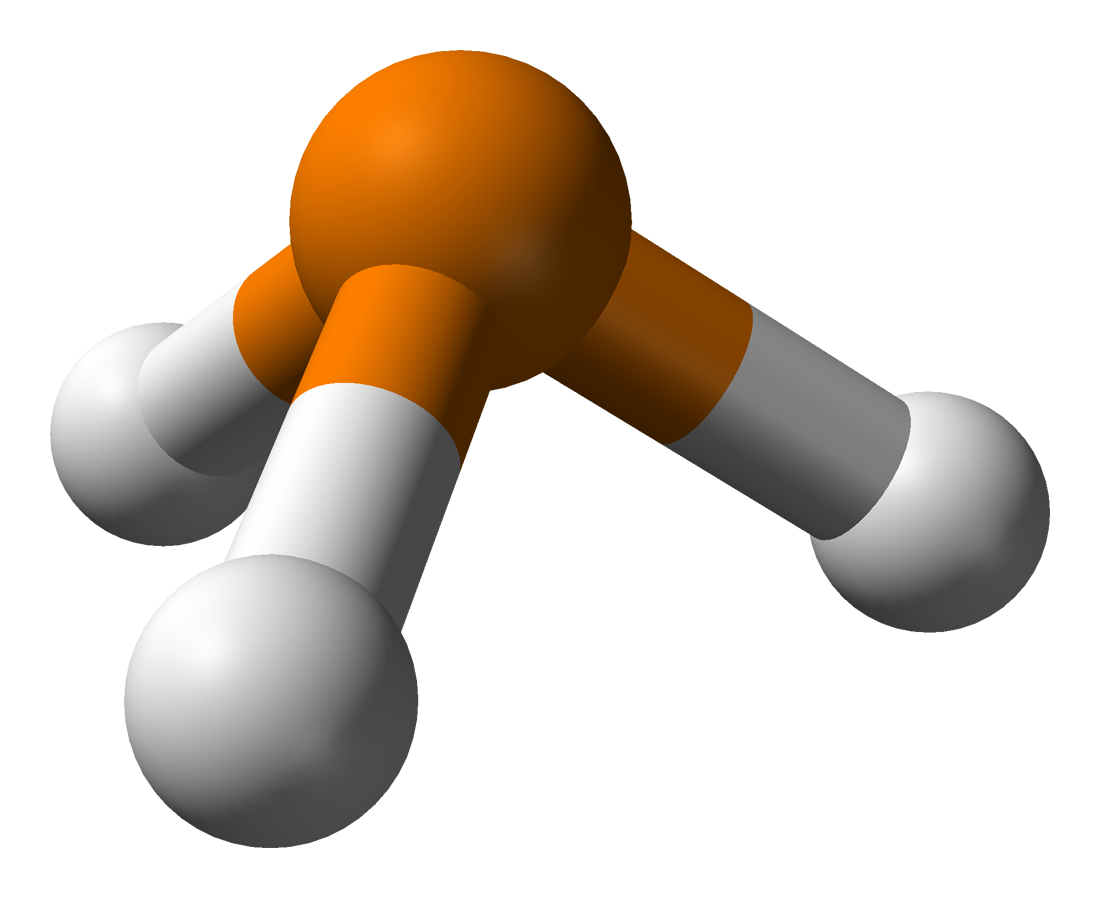





Physical and chemical properties
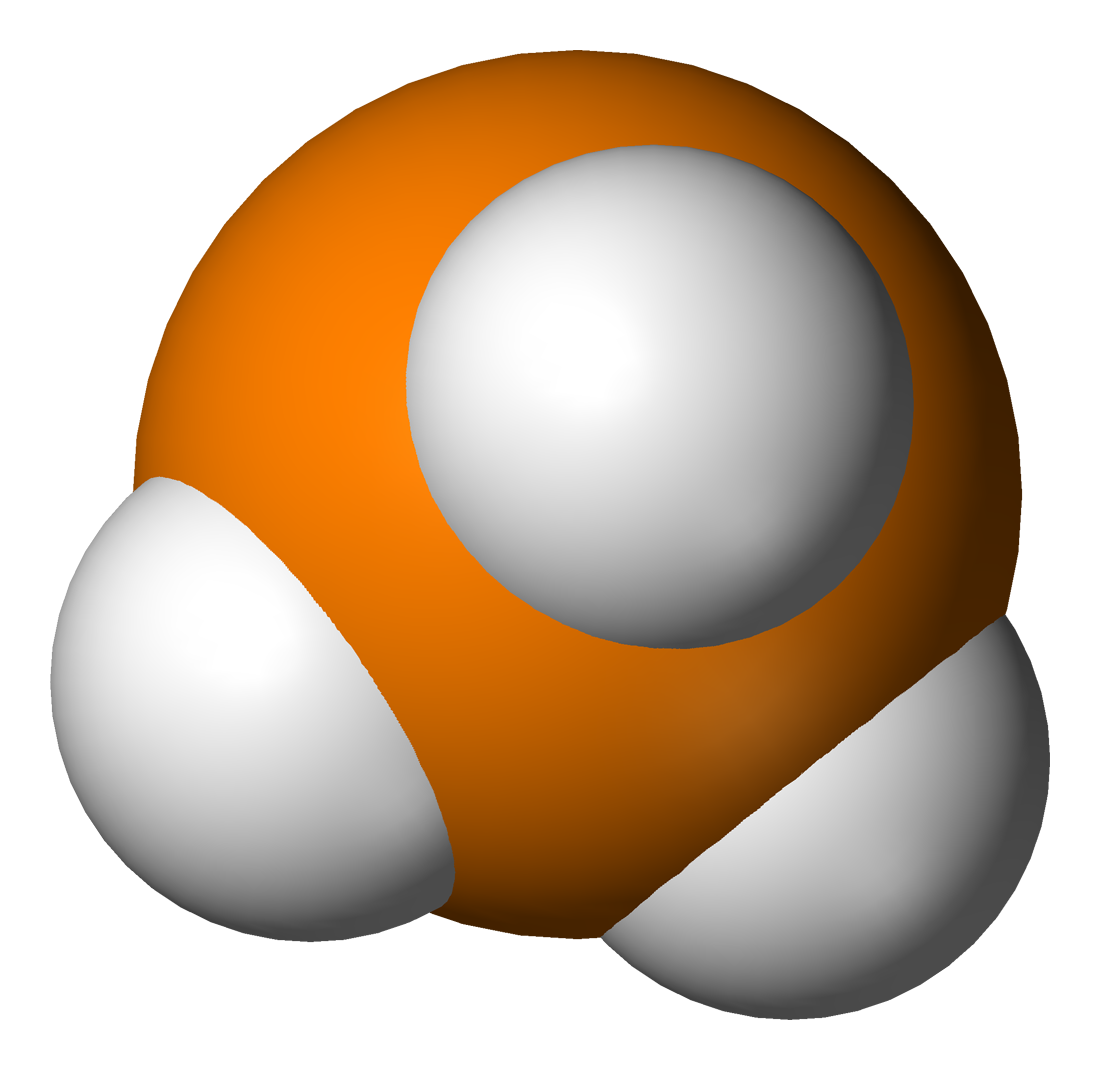
PH3 is a colorless, flammable gas with a trigonal pyramidal molecular shape and a lone pair on the phosphorus atom. Compared with ammonia, it is a much weaker base and has limited hydrogen-bonding. It is sparingly soluble in water and can be oxidized to phosphorus oxyacids or phosphorus oxides. Impure samples often contain traces of diphosphane, which can ignite spontaneously in air.
Production and history
Historically, phosphine was first recognized as a product of reactions between elemental phosphorus and bases or during decomposition of phosphorus-containing organic matter. Industrially it is produced by the hydrolysis of metal phosphides or by reduction of phosphorus halides and is encountered as a decomposition product in anaerobic environments such as marshes or landfills.
Uses and applications
- Semiconductor industry: PH3 serves as a phosphorus source for doping silicon and III–V semiconductors during crystal growth and vapor deposition processes.
- Fumigation: certain solid fumigants release phosphine gas and are used for stored-grain pest control under controlled conditions.
- Chemical synthesis: used as a precursor to organophosphorus compounds and in some specialized reductions.
Safety and handling
Phosphine is highly toxic by inhalation and can be fatal in sufficient concentration. It forms explosive mixtures with air and contaminated samples may contain pyrophoric impurities. Industrial and laboratory use requires gas-detection monitors, ventilation, and strict controls. For guidance consult safety datasheets and regulatory material: safety information.
Distinctions and notable facts
Phosphine should not be confused with phosphide salts (compounds containing P3− or organophosphide anions). It has been detected in trace natural environments from biological or geochemical processes and is occasionally discussed in studies of atmospheric chemistry. For further chemistry details see resources on phosphorus compounds and on hydrogen chemistry.
Related articles
Author
AlegsaOnline.com Phosphine (PH3) — properties, production, uses, and safety Leandro Alegsa
URL: https://en.alegsaonline.com/art/76571