
Phenix City, Alabama
Phenix City, Alabama, is a riverfront city on the Georgia border, spanning Russell and Lee counties. Known for its proximity to Columbus and Fort Benning, it has a complex 20th-century history and regional commercial role.
Overview
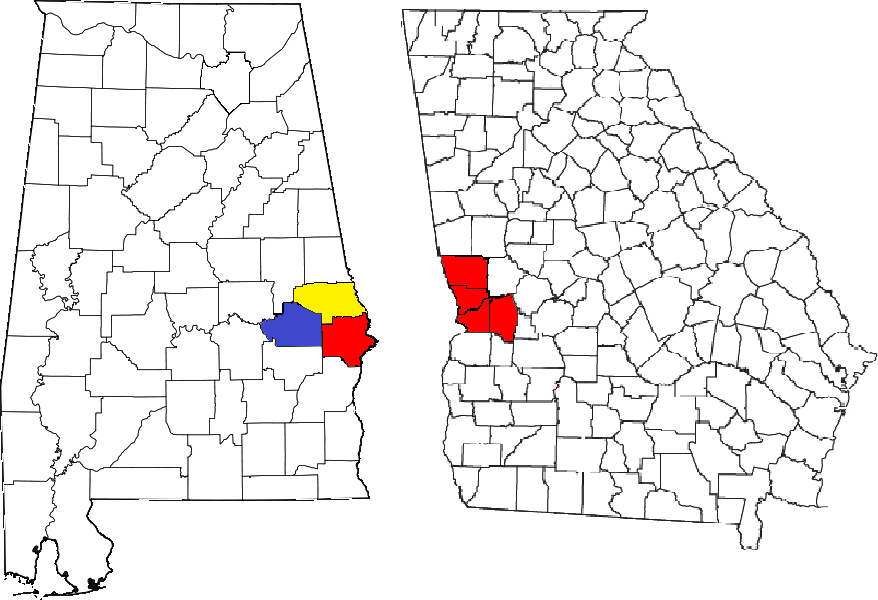
Phenix City is a municipality in eastern Alabama that lies along the Chattahoochee River and directly across from Columbus, Georgia. The community spans two counties, Lee County and Russell County, and is commonly associated with the larger Columbus metropolitan area. It serves as a regional center for retail, services, and residential neighborhoods that have grown up because of nearby military and industrial employers.
Image gallery
10 Images




Geography and administration
The city sits on the Alabama side of the river that forms the state boundary with the neighboring state. As part of the U.S. state of Alabama, Phenix City functions as an important local hub with river crossings linking it to downtown Columbus and surrounding communities. Its position at a state border has shaped commuting patterns, commerce, and cross-state cultural ties.
History and development
Phenix City's growth followed the wider economic development of the region: river trade, rail connections, and later automobile routes and suburban expansion. In the mid-20th century the city gained national attention for entrenched organized vice and corruption. A sustained law-enforcement and political effort in that era brought major reforms and changed the city's reputation, after which local institutions and civic leaders focused on redevelopment and normalizing municipal governance.
Economy and community life
Today the local economy blends retail, light manufacturing, government and services. Its proximity to a major U.S. Army installation and to downtown Columbus influences employment and housing. The city contains parks, schools, and community facilities that serve residents from both sides of the river, and it acts as a commercial node for surrounding rural areas.
Notable facts and distinctions
- The city's name is spelled Phenix, not like the more common "Phoenix"; the atypical spelling is a notable local feature.
- Its riverside location and multiple bridges make it an important connector to Columbus, Georgia.
- Phenix City has a layered history, from 19th-century river commerce to mid-20th-century reform and contemporary suburban growth.
For more detailed municipal, historical, or visitor information, local government and regional resources provide maps, event listings, and guidance on services and development projects.
Related articles
Author
AlegsaOnline.com Phenix City, Alabama Leandro Alegsa
URL: https://en.alegsaonline.com/art/76363
Sources
- census.gov : "Annual Estimates of the Population for Incorporated Places in Alabama, Listed Alphabetically: April 1, 2000 to July 1, 2006"