
Petticoat Junction
American rural sitcom (1963–1970) set at the Shady Rest Hotel, created by Paul Henning; known for country humor, generational family dynamics, and its connection to other 1960s rural comedies.
Petticoat Junction is an American television sitcom that aired on CBS from 1963 until 1970. The show centers on the Shady Rest Hotel, a small country inn operated by widowed matriarch Kate Bradley and run alongside her three daughters and her amiable uncle. Combining gentle comedy, music, and rural settings, the series was part of a wave of countryside-themed programs that attracted large audiences in the 1960s.
Image gallery
5 Images

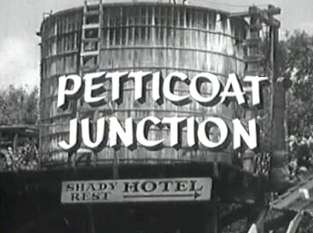


Premise and main characters
The action unfolds in and around the Shady Rest Hotel, where family life and the day-to-day business of running a rural lodging create recurring comic situations. Key figures include the hotel owner Kate Bradley, her three daughters (often referred to collectively by the shared "Jo" suffix), and Uncle Joe, whose schemes and storytelling add a recurring source of humor. The Hooterville Cannonball, a local passenger train, is also a familiar presence in the show and figures in many plotlines.
Production, creator, and related series
Petticoat Junction was created by Paul Henning and developed after the commercial success of his earlier rural comedy The Beverly Hillbillies. Henning’s approach emphasized character-driven humor, a warm depiction of small-town life, and musical interludes. The series itself helped spawn or overlap with other rural sitcoms of the era; most notably it shared a fictional universe with the spin-off Green Acres and formed part of a trio of Henning-created rural comedies referenced in period publicity and scheduling on Paul Henning-linked projects.
Themes, style, and popular features
Petticoat Junction balanced situational comedy with elements of family drama and occasional musical performances. Its tone was generally wholesome and sentimental rather than satirical or edgy, relying on recurring character traits, misunderstandings, and the interplay between rural and more urban perspectives. The prominence of the hotel setting allowed episodic stories about guests, local neighbors, and mismatched romances.
Legacy and cultural significance
The program is remembered as a representative example of 1960s rural network programming. It helped popularize a rustic subgenre on American television and contributed characters and locations that persisted through crossover episodes and spin-offs. In later decades, Petticoat Junction has circulated in syndication and on classic-TV packages, where it continues to be noted for its nostalgic portrayal of small-town life and for its role in a cluster of interrelated sitcoms from the same creative stable.
Notable distinctions
- Part of a group of 1960s rural sitcoms created or popularized by Paul Henning.
- Set almost entirely at a family-run hotel, setting it apart from workplace or urban comedies of the period.
- Regularly featured a local train, the Hooterville Cannonball, as a memorable recurring element.
For those researching mid-20th-century American television, Petticoat Junction offers a case study in family-centered sitcom writing, rural representation on mainstream networks, and how spin-offs and shared fictional worlds were used by producers to expand successful series. More information on broadcast history and episode guides can be found through contemporary television archives and fan resources.
Related articles
Author
AlegsaOnline.com Petticoat Junction Leandro Alegsa
URL: https://en.alegsaonline.com/art/76243
Sources
- imdb.com : ""Petticoat Junction" (1963)"