
Click beetle (Elateridae): appearance, behavior and human relevance
Click beetles (family Elateridae) are elongated beetles known for an audible snapping jump. This article covers their form, the clicking mechanism, life cycle, ecology, agricultural impact and notable facts.
Click beetles are a widespread group of beetles commonly referred to as click beetles, elaters, snapping beetles, spring beetles or skipjacks. They belong to the family Elateridae, which contains many genera and species found on most continents. Members of this family vary in size and color but share a distinct body shape and a characteristic ability to produce a sudden clicking noise while propelling themselves into the air.
Image gallery
6 Images


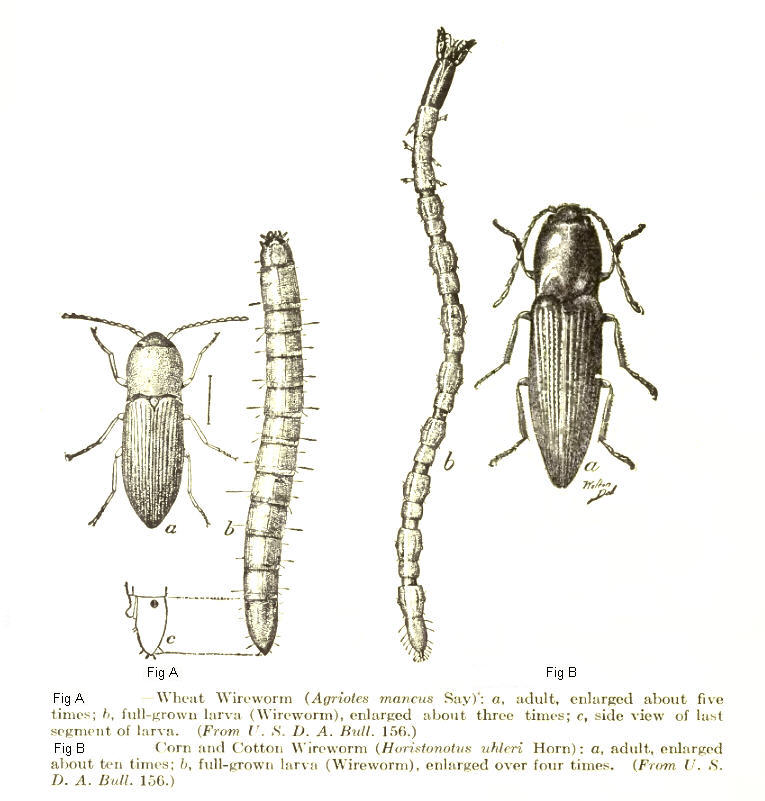
Physical characteristics
Most click beetles have an elongated, somewhat flattened body with hard wing covers (elytra) and a pronounced pronotum behind the head. Antennae are usually serrate or saw-like. Larvae, known as wireworms, are elongate, tough-bodied grubs that live in soil and plant debris. Adult and larval forms differ markedly in habitat and diet: adults are often found on vegetation, tree bark or attracted to lights at night, while larvae feed on roots or decaying organic matter.
How the clicking works
The distinctive jump is produced by a mechanical interaction between parts of the thorax. A spine on the prosternum fits into a corresponding groove on the mesosternum and can be rapidly released. When the beetle flexes the prosternal joint it snaps the peg into the groove, producing an audible "click" and converting stored elastic energy into an upward thrust. This mechanism involves the beetle's thorax and a specialized prosternal spine, and can flip individuals from their backs onto their legs or launch them several body lengths into the air.
Behavior and ecology
Clicking serves primarily as an escape response from predators and as a righting reflex when the insect is overturned. It is also used occasionally in startling displays. Many species are nocturnal and come to lights; others live in grassland, forest litter or agricultural fields. Predators include birds, small mammals and other insects, and the sudden click often helps the beetle avoid capture by confusing or startling the attacker (predator interactions).
Life cycle and human relevance
Click beetles undergo complete metamorphosis—egg, larva (wireworm), pupa and adult. Larval stages can last several years in some species, during which they may feed on crop roots and seeds and cause economic damage in agriculture. Because of this, wireworms are monitored by farmers and entomologists, and various management strategies are used to reduce their impact. At the same time, adults and larvae play roles in soil ecology as decomposers and as part of food webs.
Notable facts and distinctions
- Jump capability: the click can propel beetles a distance that, by body-length comparisons, often ranges between short hops and leaps; measurements commonly cited put jumps in the order of tens of centimetres (jump height references).
- Common names: regional names such as "skipjack" or "spring beetle" reflect the jumping behaviour rather than taxonomic differences; true affiliation is determined by anatomical traits and placement in taxonomic lists.
- Research interest: the efficient energy storage and rapid release in the click mechanism has attracted attention from biomechanical studies and engineers interested in bioinspired jumping devices.
Identification tips
- Look for an elongate, hard-bodied beetle with a pronounced pronotum and serrate antennae.
- If overturned, observe whether the insect produces a sharp click and righting jump—this is diagnostic for many Elateridae.
- Inspect habitat: soil-dwelling larvae (wireworms) are usually associated with areas of long-term vegetation or recent planting and can be sampled for agricultural assessment.
For more detailed taxonomic information, species lists and regional guides consult specialist keys and entomological resources (thorax anatomy notes, structural diagrams). Additional authoritative references and databases can provide distribution maps, pest management recommendations and conservation status for particular click beetle species (ecology and management, species catalogues).
Questions and answers
Q: What is a click beetle?
A: A click beetle is a type of beetle in the family Elateridae known for its ability to flick itself into the air and make a clicking sound.
Q: What are some other names for click beetles?
A: Click beetles are also called elaters, snapping beetles, spring beetles, or skipjacks.
Q: Where can click beetles be found?
A: Click beetles can be found almost anywhere on Earth.
Q: How do click beetles flick themselves into the air?
A: Click beetles flick themselves into the air by flexing the joint between sections of the thorax, where there is a spine on one side of the joint and a groove on the other. The peg is snapped into the groove, creating a "click" that propels the beetle into the air.
Q: Why do click beetles click?
A: Click beetles click mainly to escape from predators.
Q: How high can click beetles jump when they click?
A: Click beetles can jump between 15 and 30 centimeters into the air when they click.
Q: What happens if a click beetle lands on its back?
A: If a click beetle lands on its back, it repeats the click until it is able to land on its legs.
Tags
Related articles
Author
AlegsaOnline.com Click beetle (Elateridae): appearance, behavior and human relevance Leandro Alegsa
URL: https://en.alegsaonline.com/art/20970
Sources
- en.wikisource.org : "Wireworm"
- en.wikisource.org : "Click Beetle"