
Pembrokeshire Coast Path
A 186-mile coastal National Trail in west Wales, famed for dramatic cliffs, beaches, wildlife and links to the Wales Coast Path and Ceredigion Coast Path.
Overview
The Pembrokeshire Coast Path is a long-distance footpath that traces the shoreline of Pembrokeshire in Wales, United Kingdom. Known in Welsh as Llwybr Arfordir Sir Benfro, it was established as a recognised footpath in 1970 and today forms a celebrated National Trail. The official route runs for about 186 miles (299 km), largely following cliffs, headlands and sandy bays so walkers are frequently within sight or earshot of the sea. The path is also a component of the wider Wales Coast Path, which links coastal routes around the country.
Image gallery
7 Images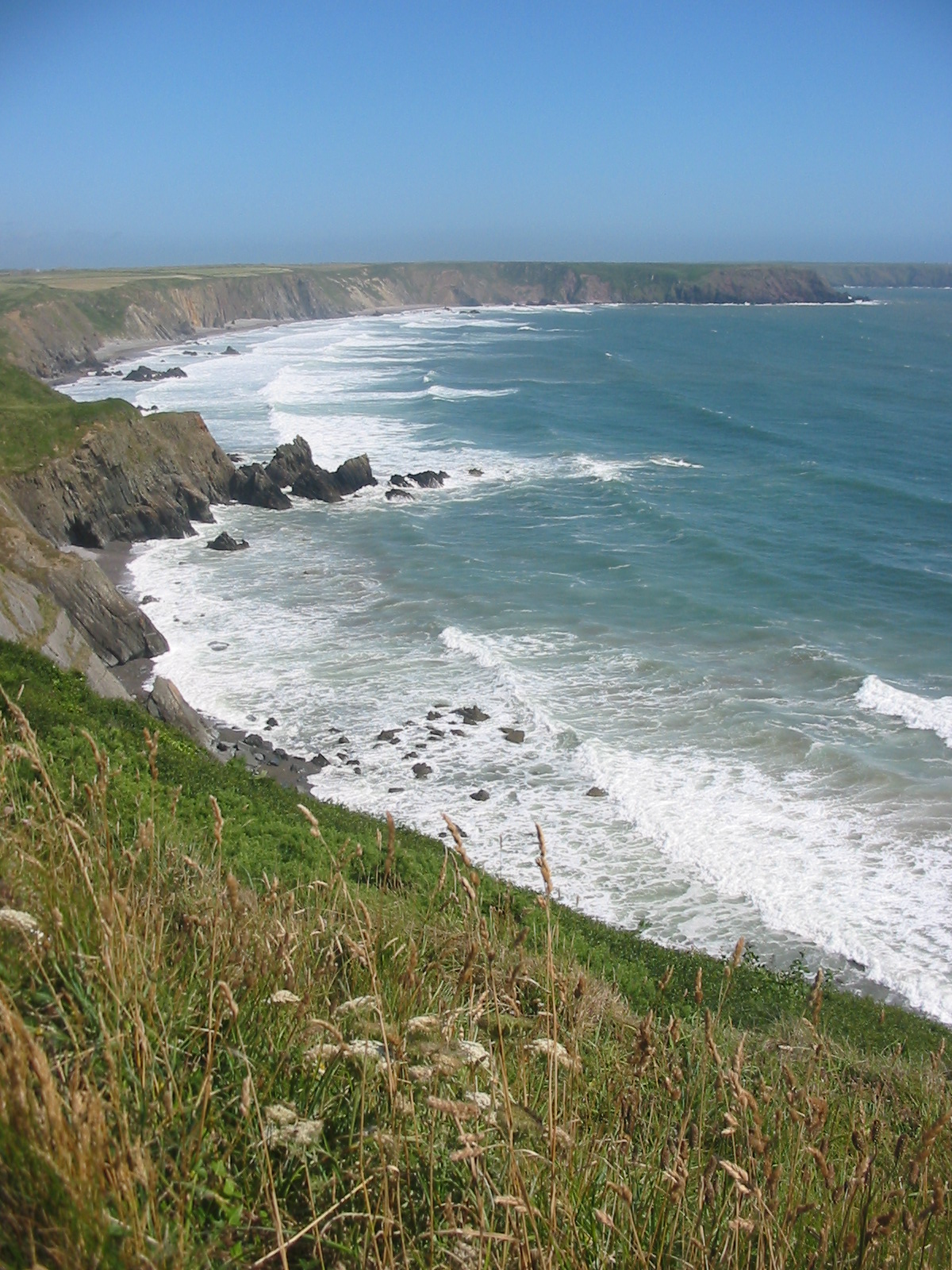


Route, terrain and key facts
The route commonly regarded as the Pembrokeshire Coast Path begins at Amroth in the south and finishes at St Dogmaels in the north, where it connects with the Ceredigion Coast Path. Elevation varies: the highest point on the trail is Pen yr Afr at about 175 m (574 ft), while the lowest sections include tidal crossings such as Sandy Haven where the path comes close to sea level at low tide. Much of the trail lies within the Pembrokeshire Coast National Park and traverses a mix of precipitous cliffs, rocky headlands, dunes and sheltered coves.
- Length: approximately 186 miles (299 km)
- Established as a footpath: 1970
- Highest point: Pen yr Afr (around 175 m / 574 ft)
- Connects to: Ceredigion Coast Path and the Wales Coast Path
History and conservation
The modern route grew from local walking interests and conservation efforts in the mid-20th century. Its designation as a long-distance path and the creation of the Pembrokeshire Coast National Park have helped protect coastal habitats, manage access and maintain waymarking. Local authorities, the national park authority and volunteer groups cooperate to maintain paths, repair erosion damage and promote responsible use so that fragile cliff-top vegetation and seabird colonies are not harmed by uncontrolled footfall.
Walking the path: uses, services and safety
The trail is used by long-distance walkers completing multi-day treks and by visitors doing shorter day sections. Many towns and villages along the route provide accommodation, refreshments and public transport links, allowing the path to be enjoyed in stages. The route is waymarked and is popular year-round, but conditions change with the seasons. Safety considerations include exposed cliff edges, tidal crossings, rapidly changeable weather and livestock in fields; walkers should plan sections, check tide times where applicable and carry appropriate clothing and footwear. National Trail waymarking (acorn symbol) helps with navigation on most sections.
Notable sights, wildlife and geology
The path offers a succession of scenic highlights: dramatic headlands and viewpoints, quiet sandy beaches, and small harbours. Nearby islands and offshore rocks support seabird colonies and marine life; walkers may encounter gannets, fulmars and other coastal birds, and seals are commonly seen from the shore. The coastline displays varied geology—sandstones, limestones and shales—giving rise to cliffs, caves and stacked rock formations that are of interest to geologists and casual visitors alike.
Practical suggestions and popular sections
- Popular day sections: St David's Head, Strumble Head, the area around Bosherston and the cliffs above Marloes Sands.
- Plan for transport between end points when doing linear sections; many walkers use bus services or arrange pickups.
- Respect local land use: fields may contain grazing animals and some paths cross private farmland.
- Check local guidance on seasonal path closures or diversions, and consult the national park or local visitor centres for up-to-date advice.
The Pembrokeshire Coast Path remains one of Britain’s most popular coastal walks, valued for its combination of wild scenery, accessible towns and well-maintained trail links. For route details, maps and visitor information, consult national park resources and local walking organisations before setting out.
Questions and answers
Q: What is the Pembrokeshire Coast Path?
A: The Pembrokeshire Coast Path is a footpath in Pembrokeshire, Wales that is 186 miles long and can be walked by anyone for free.
Q: When was the Pembrokeshire Coast Path made a footpath?
A: The Pembrokeshire Coast Path was made a footpath in 1970.
Q: How high is Pen yr afr, the highest place on the path?
A: Pen yr afr, the highest place on the Pembrokeshire Coast Path, is 574 feet (175m) high.
Q: What is the lowest point on the path?
A: The lowest point on the Pembrokeshire Coast Path is Sandy Haven crossing, which is 6 feet (2m) low at the water.
Q: Where does the path start and end?
A: The path starts at Amroth and goes north to Poppit Sands, and now extends to St. Dogmaels.
Q: Is there any fee required to walk on the Pembrokeshire Coast Path?
A: No, anyone can walk on the Pembrokeshire Coast Path anytime for free.
Q: What is the Pembrokeshire Coast Path a part of?
A: The Pembrokeshire Coast Path is a part of the Wales Coast Path.
Related articles
Author
AlegsaOnline.com Pembrokeshire Coast Path Leandro Alegsa
URL: https://en.alegsaonline.com/art/75524
Sources
- nationaltrail.co.uk : "Pembrokeshire Coast Path"
- nt.pcnpa.org.uk : "Pembrokeshire Coast Path Statistics"
- pemcoastphotos.com : "Coast Path Marker"
- visitpembrokeshire.com : "Pembrokeshire Coast Path: Newport to St Dogmaels"
- bbc.co.uk : "All-Wales coast path moves a step closer at St Dogmaels"
- bbc.co.uk : "All-Wales coast path nears completion"
- visitpembrokeshire.com : "Pembrokeshire Coast Path: Welcome"
- pembrokeshirecoastpath.com : "Pembrokeshire Coast Path"
- nationaltrail.co.uk : "Pembrokeshire Coast picks up an award"
- walesonline.co.uk : "Pembrokeshire Coast Path walks off with accolade of being one of world's top trails"
- visitwales.co.uk : "Wales' coastline & beaches guide"