
Paraglider: Foot-launched Flexible-wing Aircraft
A paraglider is a lightweight, foot-launched glider with a ram-air fabric wing. Pilots use slopes, thermals, ridge lift or towing to stay aloft for recreation, cross-country flying, tandem rides and competitions.
A paraglider is a lightweight, free-flying aircraft that uses a flexible, ram-air wing and is launched by the pilot on foot. Unlike powered aircraft, paragliders have no rigid fuselage or engine (except in powered variants) and rely on aerodynamic lift generated by the canopy to remain airborne. They are used for a wide range of activities from training and leisure flights to competitive cross-country and aerobatic flying.
Image gallery
10 Images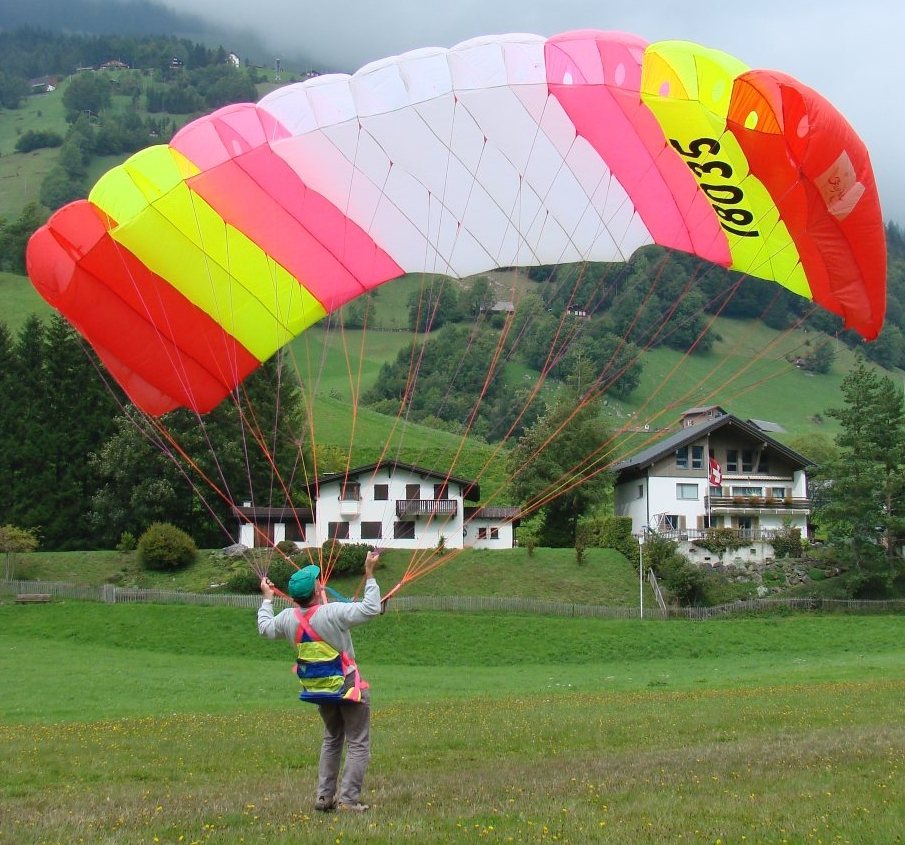


Characteristics and components
The main components are the canopy (also called the wing), a set of suspension lines, risers that connect lines to the pilot, and a harness. Modern canopies consist of many cells with an aerodynamic profile that inflates by ram air. Lines are arranged in rows (commonly labeled A, B, C and sometimes D) to distribute load and control the wing shape. Pilots control direction and speed through brake toggles, weight-shift, and a speedbar or trims that change the wing’s angle of attack. Instruments such as variometers, GPS units, and radios are often carried in the harness for navigation and safety. A reserve parachute is a standard safety item.
History and development
Paragliding evolved from parachute and hang-glider technology in the late 20th century as ram-air, or parafoil, designs allowed controllable, efficient wings without rigid structure. Improvements in materials, line design and aerodynamic shaping have increased glide ratios, handling and passive safety. Certification systems and pilot training standards were introduced to help standardize safety and performance across different glider classes.
Launching methods and flight modes
Pilots use several launching techniques depending on terrain and conditions. Common methods include:
- Hill or mountain launches: running off slopes to convert forward speed into lift for a downhill flight to a lower landing zone.
- Winch towing or aerotow: ground winches, ultralight aircraft or balloon tows raise the glider to altitude before release.
- Coastal or ridge soaring: flying along slopes or cliffs where steady onshore winds produce lift.
- Paramotoring: a powered variant where a backpack motor provides thrust and enables level launches and takeoffs from flat ground.
Uses, training and safety
Paragliding is practiced recreationally, commercially (tandem flights for tourism), and competitively in cross-country and aerobatic events. Training with certified instructors is essential; beginners progress through staged lessons focusing on ground handling, short flights, and decision-making. Safety measures include choosing suitable weather, using certified equipment, carrying a reserve parachute, and following local airspace rules. Many countries maintain rating systems for gliders and pilots to indicate suitability for different skill levels.
Distinctions and notable facts
Paragliders differ from hang gliders by their flexible, frameless wing and from parachutes by being designed for sustained lift and maneuvering rather than solely descent. Tandem paragliders allow two occupants and are widely used for instruction and commercial flights. Advances continue in materials, performance and safety, making the sport more accessible while retaining an emphasis on weather knowledge and pilot skill.
Related articles
Author
AlegsaOnline.com Paraglider: Foot-launched Flexible-wing Aircraft Leandro Alegsa
URL: https://en.alegsaonline.com/art/74516