
Pandeglang Regency, Banten (Indonesia)
Pandeglang Regency is an administrative region on Java's western tip in Banten province, Indonesia, noted for coastal tourism, Ujung Kulon National Park, Sundanese culture and agriculture.
Pandeglang Regency is an administrative regency (Indonesian Kabupaten) located on the western extremity of Java Island within the province of Banten. The regency covers a mix of coastal plains, peninsulas and low hills and its administrative centre is the town of Pandeglang. It is part of the broader island-state of Indonesia and plays a role as both an agricultural hinterland and a coastal tourism area.
Image gallery
1 Image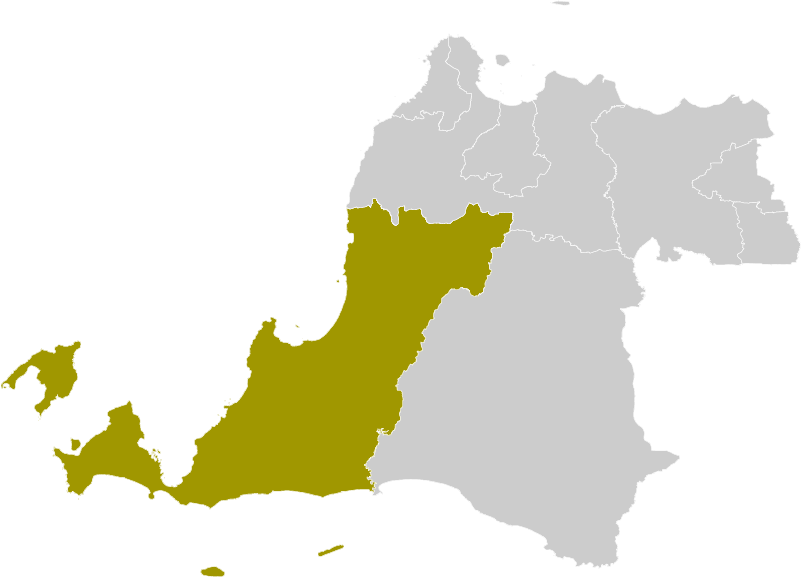
Geography and environment
Pandeglang fronts the Sunda Strait and includes the Ujung Kulon peninsula, a largely forested area that preserves important lowland habitats. The coastline contains beaches, bays and small fishing villages. Ujung Kulon National Park, on the peninsula and nearby islands, is internationally recognised for its biodiversity and is associated with the remaining population of the critically endangered Javan rhinoceros.
History and administration
The area has historical links with the Banten Sultanate and later Indonesian administrative reorganisation. When Banten became a separate province from West Java in the early 2000s, Pandeglang remained one of its regencies. The local government administers multiple districts and oversees development that balances agriculture, fisheries and conservation.
Economy, society and culture
The local economy combines subsistence and commercial agriculture, coastal fisheries and an expanding tourism sector. Many residents speak Sundanese along with the national language, Indonesian, and local customs reflect Sundanese cultural traditions. Small-scale trade and services support the regency's towns and visitor areas.
Tourism and conservation
- Ujung Kulon National Park — protected area with unique flora and fauna, and recognised for conservation value.
- Beaches and resorts — attractions such as Tanjung Lesung and nearby coastal stretches draw domestic visitors for surfing, diving and seaside recreation.
- Proximity to the Sunda Strait — the maritime corridor near Krakatoa gives the region geological and historical interest.
Pandeglang's significance stems from this combination of ecological importance, cultural identity and coastal resources. Visitors are drawn by natural parks and beaches, while planners and conservationists focus on protecting habitats and supporting sustainable tourism and local livelihoods.
Related articles
Author
AlegsaOnline.com Pandeglang Regency, Banten (Indonesia) Leandro Alegsa
URL: https://en.alegsaonline.com/art/74337