
Palace of Culture and Science (Pałac Kultury i Nauki)
A landmark high-rise in central Warsaw completed in the 1950s. The Palace houses cultural institutions, offices and an observation deck and is a prominent, contested symbol of Poland's 20th-century history.
Overview
The Palace of Culture and Science is a prominent high-rise in central Warsaw. Standing about 237 metres tall, it is commonly cited as the second-tallest building in Poland and one of the city's best-known landmarks. Locally abbreviated as PKiN, the structure dominates its district and remains a focal point for visitors and residents.
Image gallery
8 Images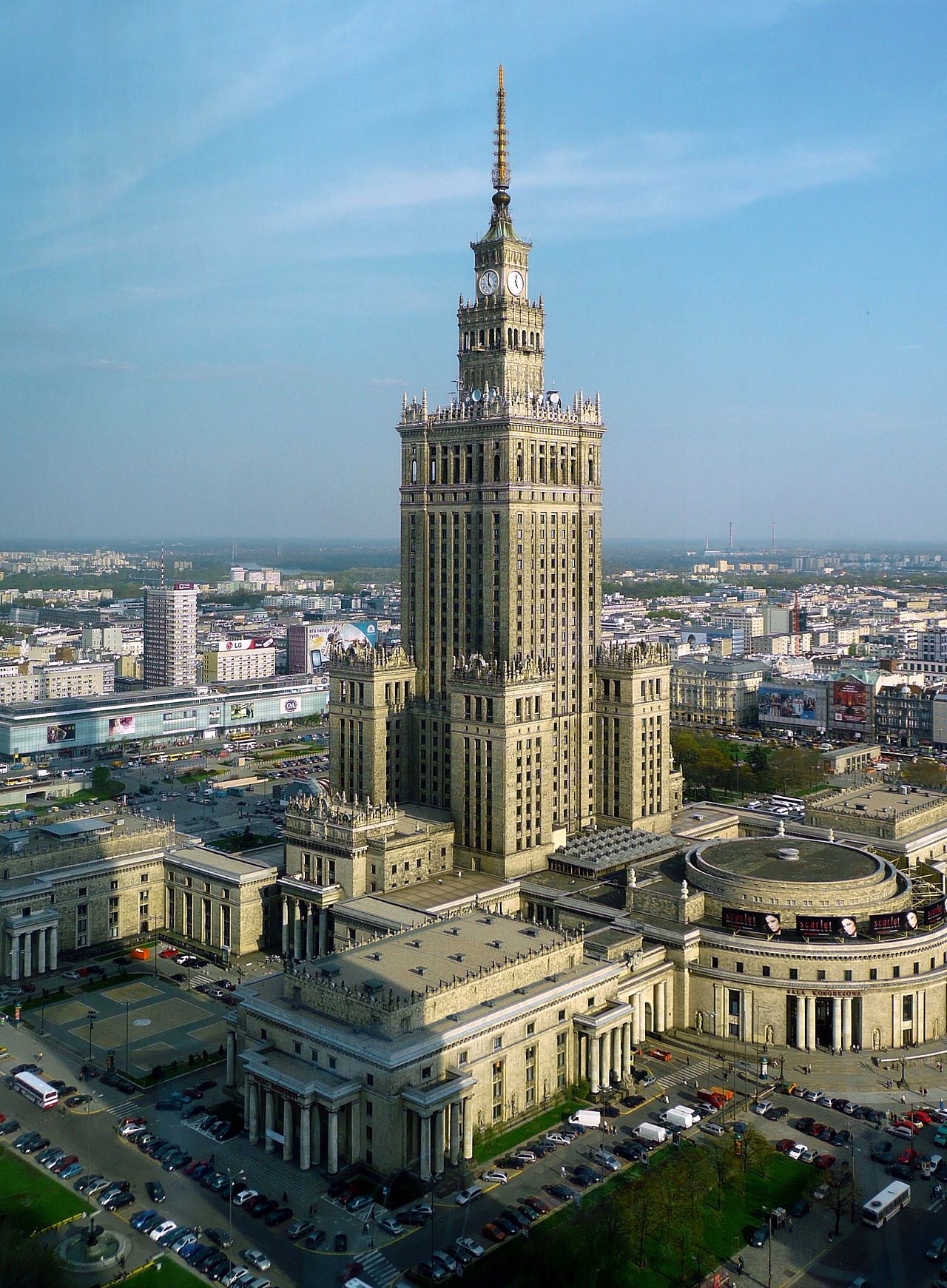


Architecture and layout
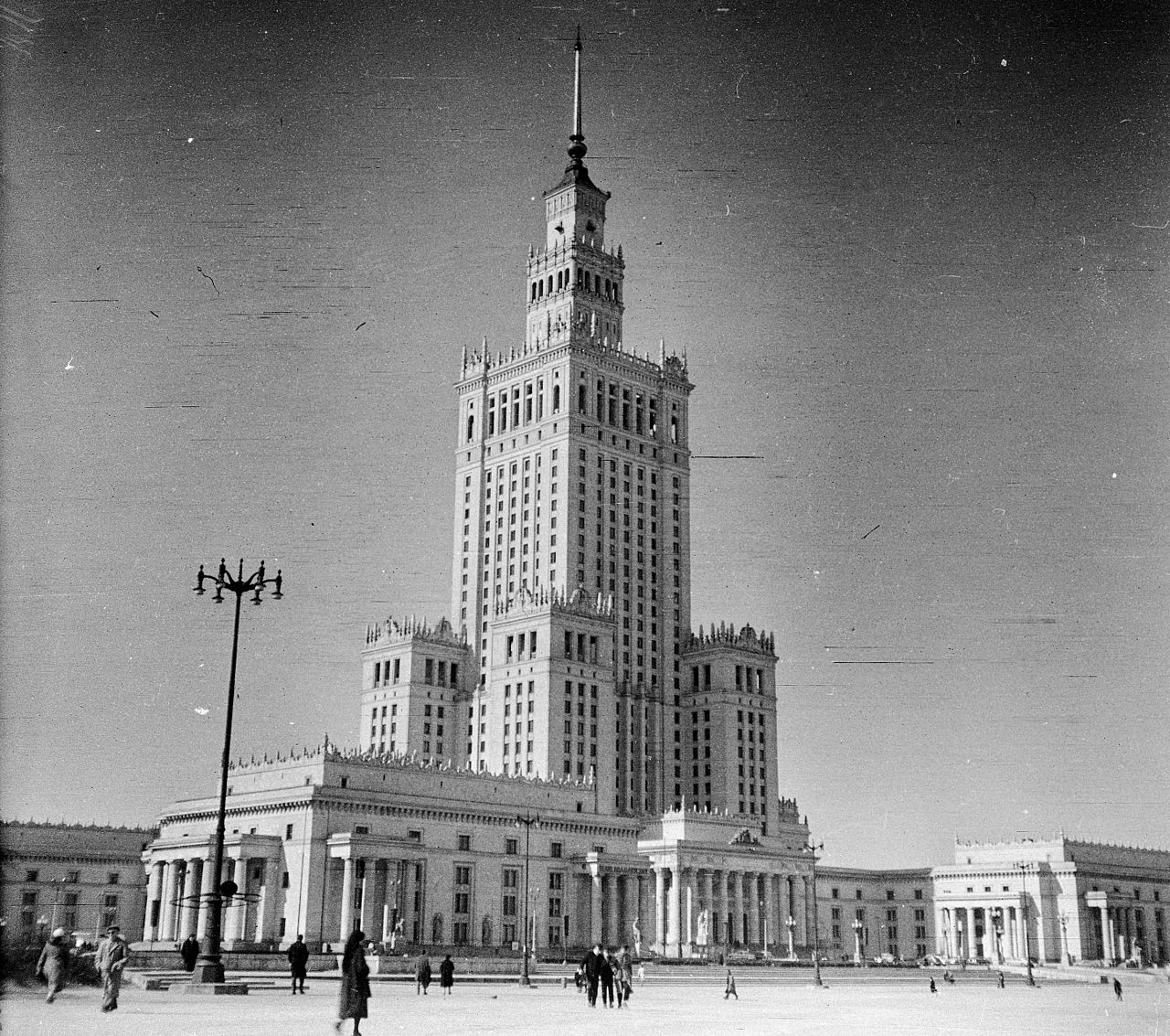
Built in the early 1950s and completed in 1955, the Palace was designed in a monumental, historicizing form associated with socialist realist architecture. The building combines a tall central tower with a broad base that contains multiple wings and public halls. Decorative elements include setbacks, clock faces and stylized ornamentation that reflect the period's preference for grand civic symbolism.
Functions and facilities
The complex contains a mix of cultural, educational and commercial spaces. Inside are theatres, cinemas, exhibition halls and museums alongside offices and conference rooms. An observation platform on the upper floors offers panoramic views of the city and is a popular attraction for tourists and photographers.
Uses and public access
- Performance venues hosting plays, concerts and film screenings.
- Exhibition and conference spaces used by cultural institutions and businesses.
- Observation deck and visitor services providing city views and guided information.
History and significance
Commissioned and constructed in the early postwar period, the Palace was a major building project of its era and reflected political as well as architectural ambitions. Over time it has been viewed in mixed ways: as an imposing remnant of mid-20th-century geopolitics and as a practical civic center that supports cultural life in Warsaw. Debates about its symbolism and future have accompanied efforts to maintain and adapt its spaces to contemporary needs.
Notable facts
The Palace is often referenced when discussing Warsaw's skyline and urban development. It is documented as one of the tallest buildings in the country and a rare example of large-scale socialist-realist high-rise construction in Europe. For further basic references about the building and its role in the city, see introductory resources linked here: building overview, Poland, Warsaw.
Related articles
Author
AlegsaOnline.com Palace of Culture and Science (Pałac Kultury i Nauki) Leandro Alegsa
URL: https://en.alegsaonline.com/art/74100