
Osu! Tatakae! Ouendan (Hey! Fight! Cheer Squad)
Osu! Tatakae! Ouendan is a rhythm game for the Nintendo DS where a male cheer squad helps people by performing rhythm routines. It inspired sequels, a Western spin‑off and a lasting fan community.
Osu! Tatakae! Ouendan (literally “Hey! Fight! Cheer Squad”) is a stylus‑driven rhythm video game developed by iNiS and published by Nintendo for the Nintendo DS. First released in Japan, the game pairs music‑timed input with short comic vignettes: a small, enthusiastic male cheer squad arrives to motivate characters facing personal crises, and the player keeps the beat to help them succeed.
Image gallery
2 Images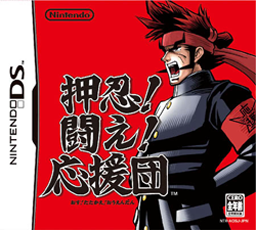

Gameplay and mechanics
Gameplay takes place on the DS touch screen, where circular markers appear to the rhythm of a song. The player taps, follows sliding strokes, and spins a wheel in time with shrinking approach circles to register hits. Successful timing builds a combo and fills a performance meter; poor timing reduces the meter and can cause failure. Levels are presented as discrete scenarios with one song per stage, and the game emphasizes precise timing and pattern recognition rather than note memorization alone.
Presentation, music, and structure
The game combines brisk, often upbeat music with exaggerated, comic illustrations and short animated scenes displayed on the top screen. Most tracks are cover versions of popular Japanese songs arranged to fit the game’s rhythm gameplay. Each stage’s story—ranging from small personal misfortunes to comedic disasters—is resolved when the cheer squad completes their routine, reinforcing the game’s lighthearted tone.
History, sequels and regional versions
Osu! Tatakae! Ouendan was developed by iNiS and became notable for its inventive use of the DS hardware and its strong, stylized presentation. It later received a direct sequel in Japan, Moero! Nekketsu Rhythm Damashii Osu! Tatakae! Ouendan 2, and an Americanized reinterpretation, Elite Beat Agents, which recast characters and musical selections to better suit Western audiences. The series is an example of how localization can change visual and musical identity while preserving core mechanics.
Reception and legacy
The original Ouendan and its follow‑ups earned praise for tight controls, quirky storytelling, and memorable stage concepts. Outside Japan the game gained a cult following through imports, reviews, and the Western adaptation. Its mechanics and name also inspired a popular, fan‑made PC rhythm game that streams custom beatmaps and keeps a strong competitive and creative community.
Notable characteristics and distinctions
- Stylus‑centred input: tapping, sliding, and spinning timed to musical cues.
- Short narrative vignettes that give each song a situational context.
- Use of cover versions of songs to fit the game’s tone and tempo.
- Direct Japanese sequel and a culturally adapted Western counterpart.
Further information
- Rhythm game genre overview
- Osu! Tatakae! Ouendan game entry
- Nintendo (publisher) information
- Nintendo DS platform details
- Handheld gaming context
- Game console background
- Elite Beat Agents (Western adaptation)
- Western music selections (context)
- European releases and regional music considerations
- Moero! Nekketsu Rhythm Damashii Osu! Tatakae! Ouendan 2
Related articles
Author
AlegsaOnline.com Osu! Tatakae! Ouendan (Hey! Fight! Cheer Squad) Leandro Alegsa
URL: https://en.alegsaonline.com/art/73460