
Oligarchy: rule by a few — definition, history, types and modern contexts
Oligarchy is government or control by a small group. This article outlines its definition, historical examples (Sparta, Venice), main characteristics, variants, modern forms and how it differs from related systems.
Overview
Oligarchy is a form of political power in which authority is concentrated in the hands of a relatively small, select group of people. The term derives from Greek roots meaning "few" and "to rule." In practice an oligarchy can be explicit or informal: the small group may hold office, dominate institutions, or exercise decisive influence behind the scenes. The concept is often discussed alongside other systems of rule and governance, and is commonly contrasted with broad-based democracy and singular-rule monarchies. For a concise definition within broader government studies see government resources.
Image gallery
1 Image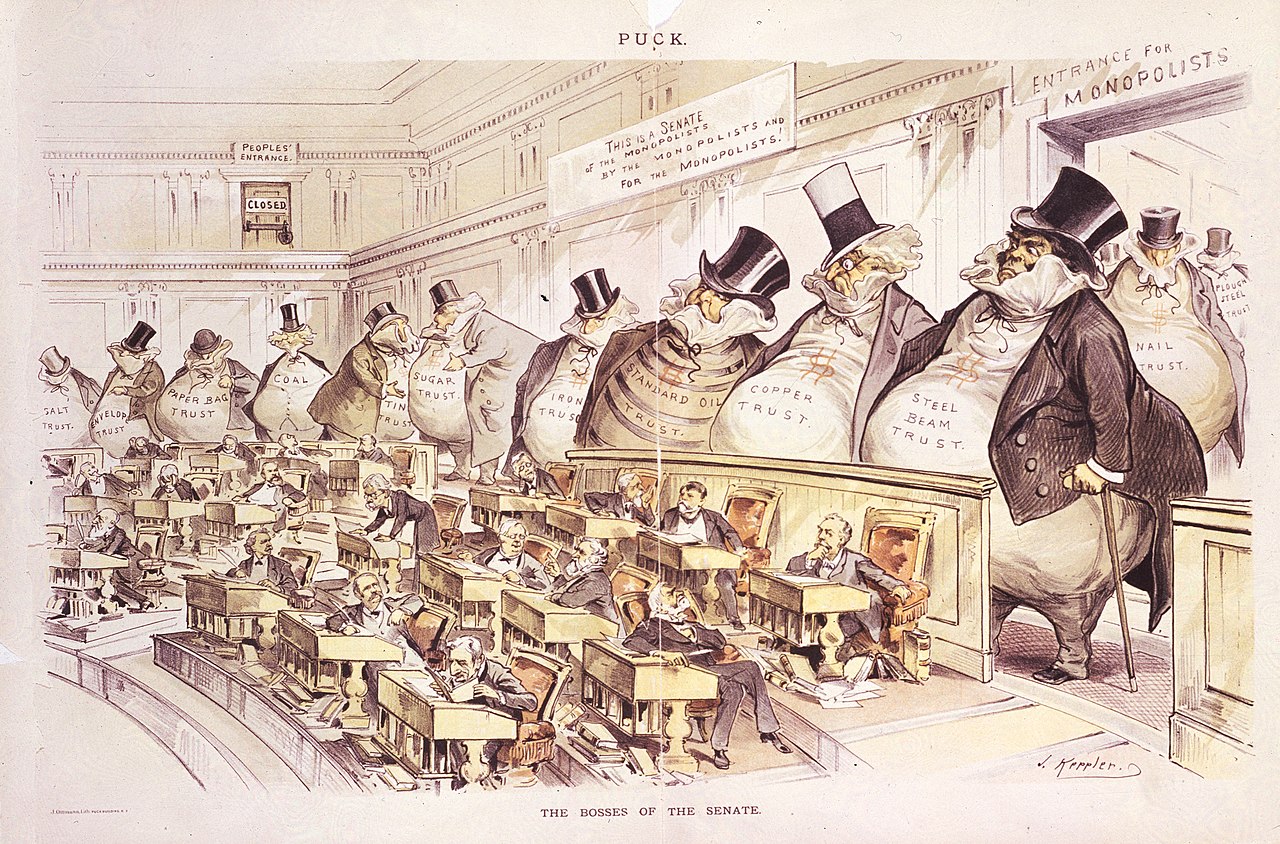
Characteristics and mechanisms
Oligarchic rule typically rests on several reinforcing mechanisms. These include concentrated wealth, control of military or police forces, dominance of key institutions (courts, media, administrative agencies), and tight social networks that limit political competition. Oligarchies may be hereditary, corporate, military, clerical, or based on professional elites. Forms of entrenchment include restrictive voting laws, patronage, legal privileges, or informal bargaining among elite factions.
Historical development
Variants of oligarchy appear throughout history. In some ancient Greek city-states a small council or elite families governed civic affairs; notable ancient examples include Sparta, where power was shared between kings, elders and influential families (Sparta). In medieval and early-modern Europe, many merchant republics and city-states—such as Venice and Genoa—were run by narrow oligarchic councils drawn from leading families and commercial interests. Over time, oligarchic structures adapted to changing economic and military circumstances but retained the core pattern of concentrated decision-making.
Variants and modern contexts
Modern oligarchies can take several shapes: military juntas controlled by a group of officers; corporate or plutocratic forms where major business interests dominate policy; clerical oligarchies led by religious authorities; and informal elite rule inside nominally democratic states. In some post-industrial societies, academic observers note oligarchic tendencies when economic elites exert disproportionate influence over legislation, media narratives, or regulatory frameworks while formal democratic processes continue to operate.
Uses, effects and criticisms
Advocates or defenders of concentrated rule have sometimes argued it brings stability, policy coherence, and efficient decision-making in times of crisis. Critics point to the democratic deficit, reduced accountability, higher risk of corruption, and social inequality that often accompany oligarchic control. Political scientists and historians study indicators such as wealth concentration, elite circulation, and institutional capture to assess whether power is genuinely broadly distributed or locked within a narrow group.
Distinctions and notable points
Oligarchy should be distinguished from similar labels. Aristocracy emphasizes rule by a hereditary noble class; plutocracy denotes rule by the wealthy; kleptocracy identifies systems where leaders enrich themselves illicitly; technocracy highlights governance by technical experts. A single polity can exhibit overlapping features—an oligarchic regime may also be plutocratic or kleptocratic—so careful analysis of power sources and accountability mechanisms is essential when diagnosing what type of rule is in place.
Related articles
Author
AlegsaOnline.com Oligarchy: rule by a few — definition, history, types and modern contexts Leandro Alegsa
URL: https://en.alegsaonline.com/art/72374