
Norwood Park, Chicago: neighborhood, history, landmarks and community life
Norwood Park is a largely residential community area on Chicago's Northwest Side, known for its historic Old Norwood Park district, annual Memorial Day parade, and longtime institutions such as Taft High School.
Norwood Park is one of the 77 official community areas of Chicago, located on the city's Northwest Side. Largely residential, it combines older, tree‑lined neighborhoods with small commercial corridors, parks and civic institutions. The area is often described by residents as a collection of distinct neighborhoods rather than a single uniform district; that local identity is visible in its housing stock, historic sites and long‑running community events.
Image gallery
2 Images
Neighborhoods and character
The community area contains several commonly referenced neighborhoods: Big Oaks, Norwood Park East, Norwood Park West, Old Norwood Park, Oriole Park and Union Ridge. These subareas vary in scale and style but share a suburban atmosphere within the city — predominantly single‑family homes, modest apartment buildings, and front yards. Old Norwood Park in particular is noted for its older houses, curving streets and an emphasis on preservation that gives it the feel of a small village inside Chicago.
History and origins
Norwood Park was organized as a village in the early 1870s (it was incorporated in 1874) out of portions of nearby townships. The name was inspired by the popular 19th‑century novel Norwood, or Village Life in New England by Henry Ward Beecher; the literary connection reflected a desire to promote a tranquil, community‑oriented image. In 1893 the village was annexed to the City of Chicago, becoming part of the expanding municipal map while retaining many of its original neighborhood patterns.
Landmarks and institutions
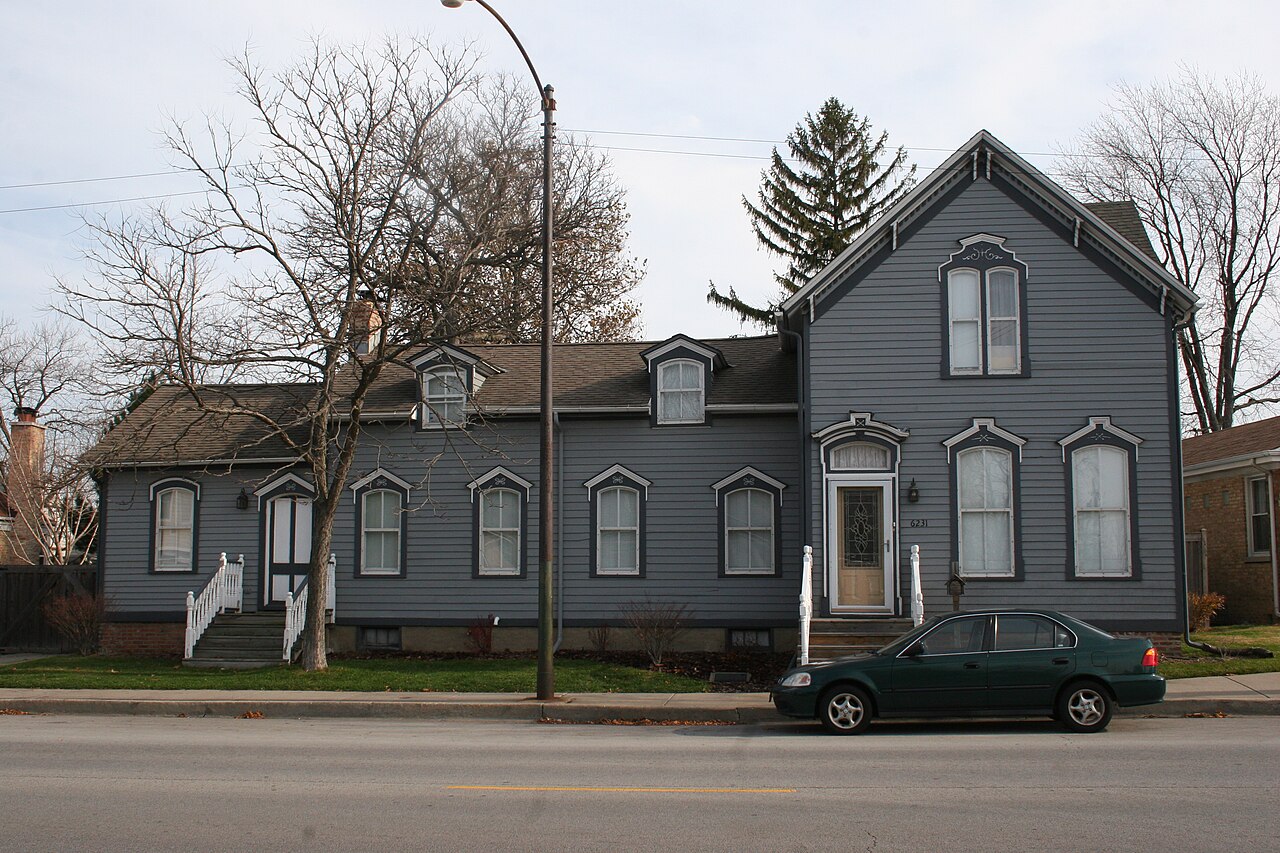
The neighborhood contains several notable landmarks. The Noble‑Seymour‑Crippen House, located in Old Norwood Park, is often cited as among the oldest surviving residential structures within Chicago and is a focus of local preservation efforts. Education and civic life are anchored by institutions such as Taft High School, completed in 1939 with later additions, which serves as a regional public high school and community gathering point. Local churches, parks and small businesses also contribute to the neighborhood’s civic fabric.
Community life, events and transport
Norwood Park hosts a number of recurring community traditions. A Memorial Day parade that has run along neighborhood streets since the early 20th century remains an important annual event and a focal point for civic pride and remembrance. The area is served by a mix of public transit and commuter options that connect residents to downtown Chicago and adjacent suburbs, along with neighborhood parks and local commercial strips that provide daily amenities.
Distinctive facts
- Norwood Park is one of Chicago’s community areas with a pronounced village feel within the urban grid.
- Its name traces to a late‑19th century novel by Henry Ward Beecher, reflecting early marketing of suburban life.
- The Memorial Day parade is a long‑running tradition; details are available through local community organizations and event listings such as Memorial Day information.
- Taft High School is a prominent local institution; see school resources at Taft High School.
Today Norwood Park remains attractive to households seeking a quieter residential environment inside the municipal boundaries of Chicago. Its combination of historic buildings, neighborhood traditions and accessible services helps sustain a distinct local identity within the larger city.
Related articles
Author
AlegsaOnline.com Norwood Park, Chicago: neighborhood, history, landmarks and community life Leandro Alegsa
URL: https://en.alegsaonline.com/art/71136
Sources
- encyclopedia.chicagohistory.org : "Norwood Park"
- chicagology.com : chicagology.com/wp-content/themes/revolution-20/chicagoimages/annexation1930.jpg