
Norfolk wherry: traditional sailboat of the Broads
A Norfolk wherry is a shallow‑draft, gaff‑rigged sailing boat developed for the Norfolk Broads, used historically for cargo, passengers and later for leisure; known for its single tall sail and forward mast.
Overview
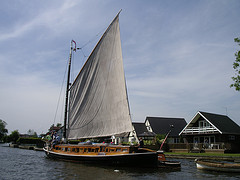
The Norfolk wherry is a distinctive type of sailing craft developed for use on the rivers and shallow lakes of the English Broads. Designed to work in confined waters with low bridges and variable winds, the wherry became a familiar sight across The Broads. It is characterized by a single large gaff sail and a mast set well forward in the hull.
Image gallery
2 Images
Design and characteristics
Wherries combine a broad beam and shallow draft to carry substantial loads without deep water. Typical design features include:
- One unstayed mast stepped forward, often mounted on a tabernacle so it can be lowered quickly under bridges.
- A single, tall gaff sail that provides power while keeping rigging minimal and easy to handle.
- Wooden construction and a hull shaped for stability and cargo space rather than speed.
Types and historical roles
Over time, builders produced several main forms of the wherry to meet different needs: commercial trading wherries that carried coal, grain, straw and building materials; passenger or ferry wherries used to move people between villages and towns; and elegant pleasure or "yacht" wherries commissioned by wealthy owners for leisure cruising. Each type kept the basic rig but varied in finish, accommodation and hull layout.
History and development
Wherries evolved to suit the local waterways and the transport economy of Norfolk and Suffolk. In the 19th and early 20th centuries they were a crucial part of regional commerce and communication. The ability to lower the mast and the shallow draft made them practical where other vessels could not operate. As roads and railways expanded, many commercial wherries declined in number, while some were adapted for recreational use.
Uses, legacy and preservation
Today wherries are appreciated for their historic importance and unique appearance. A small number survive as restored working boats and museum exhibits, and they appear in boating festivals and heritage events. Sail treatment historically gave many sails a dark appearance, which led to the familiar "black sail" look on commercial wherries; restored pleasure wherries often display lighter finishes. For further background on traditional boat types see boat classifications.
Notable facts: the forward mast and gaff rig make a wherry instantly recognizable, and their adaptability to shallow, bridge‑lined waterways explains their long association with the Broads. Conservation groups and local trusts continue to maintain and celebrate surviving examples.
Related articles
Author
AlegsaOnline.com Norfolk wherry: traditional sailboat of the Broads Leandro Alegsa
URL: https://en.alegsaonline.com/art/70704