
Nicolas-Joseph Cugnot — pioneer of the self-propelled vehicle
French military engineer Nicolas-Joseph Cugnot (1725–1804) built one of the first full-scale self-propelled steam vehicles in the 1760s–70s, an early experiment that influenced later road and railway development.
Overview
Nicolas-Joseph Cugnot (26 February 1725 – 2 October 1804) was a French military engineer and inventor credited with building one of the earliest full-scale self-propelled mechanical vehicles. Working in the later 18th century, he designed a steam-driven "fardier" intended to move heavy loads for the French Army. His experiments are widely cited as a key early step in the development of road locomotion.
Image gallery
5 Images



Design and operation
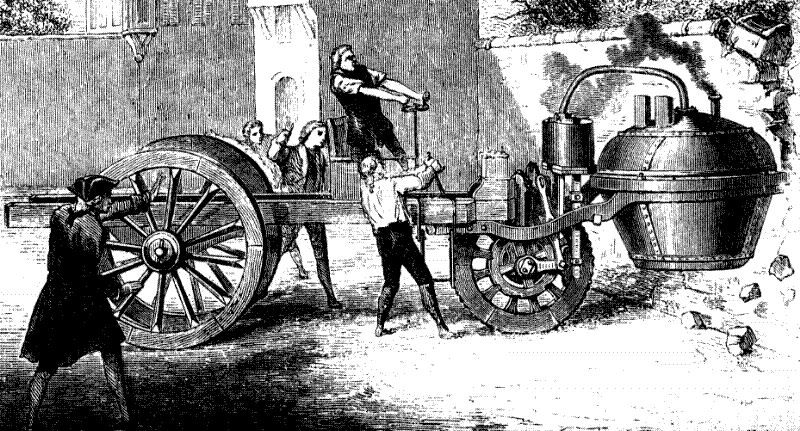
Cugnot's vehicle was notable for its unusual layout and direct-drive steam mechanism. Typically described as a three-wheeled dray, it carried a vertical boiler and a single-cylinder steam engine mounted near the front wheel. Steam power drove the wheel directly through a piston action rather than gears, which made the machine heavy, slow and mechanically simple. Operational limits—small boiler capacity, frequent stops to take on water and low speed—meant it was not yet practical for sustained transport.
Characteristics and parts
- Chassis: Three-wheel frame with a load platform.
- Boiler and furnace: Small, located beneath or beside the engine.
- Engine: Single piston reciprocating unit driving the front wheel.
- Controls: Rudimentary steering and braking suited to short trials.
Contemporary accounts emphasize the vehicle's experimental nature: it demonstrated that steam could propel a wheeled vehicle, but it also revealed practical problems that needed later engineering solutions.
History, trials and legacy
Cugnot built experimental models in the late 1760s and a larger trial machine around 1769–1770, reportedly for hauling artillery. Although the trials encountered mechanical failures and limited usefulness, the machines were influential in showing the potential of self-propelled transport. The idea foreshadowed later steam road vehicles and the development of railway locomotives.
Examples and replicas of Cugnot's vehicle have been preserved and displayed; one notable historic piece is associated with the museum record that documents early industrial inventions. Historians and engineers today regard Cugnot as an important early experimenter whose work helped frame questions about power, control and roadworthiness that others would solve in the 19th century.
Notable facts and distinctions
Cugnot is often called the builder of the "first automobile," but modern historians caution that definitions vary: his machine was steam-powered, extremely slow and intended for hauling rather than personal transport. Nevertheless, its demonstration of self-propulsion marks a clear milestone in mobility history and in the broader transition from human- and animal-powered conveyance to mechanically powered vehicles.
Related articles
Author
AlegsaOnline.com Nicolas-Joseph Cugnot — pioneer of the self-propelled vehicle Leandro Alegsa
URL: https://en.alegsaonline.com/art/70014