
A Boy Like That — song from West Side Story
A dramatic duet from the musical West Side Story (1957), composed by Leonard Bernstein with lyrics by Stephen Sondheim. Contrasts loyalty and forbidden love; known from Broadway and the 1961 film adaptation.
Overview
"A Boy Like That", originally presented as "A Boy Like That/I Have a Love," is a dramatic duet from the Broadway musical West Side Story. The music was composed by Leonard Bernstein and the lyrics were written by Stephen Sondheim. The number functions as a turning point in the story, where conflicting loyalties and an emergence of forbidden love are voiced through a powerful exchange between two female characters. The song debuted as part of a landmark production on Broadway in the late 1950s.
Image gallery
1 Image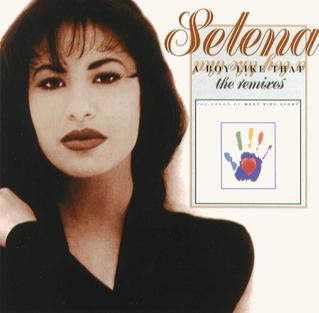
Composition and dramatic role
The piece is effectively two contrasting sections: the admonitory opening that warns against pursuing a dangerous partner, and the more urgent, hopeful rebuttal that expresses an intense personal commitment. Musically it is notable for its conversational, call-and-response texture and strong rhythmic drive. The lyrics emphasize moral pressure and social consequence, while the music supports sudden shifts in emotion—moving from accusation to pleading—so the duet reads as a compact scene in musical form rather than a simple love song.
Performance history
On Broadway the roles were first performed by Chita Rivera and Carol Lawrence, whose portrayals helped establish the song's dramatic reputation. The story reached a wider audience with the 1961 film adaptation, which featured actors Rita Moreno and Natalie Wood in the corresponding roles. For the movie release some vocal parts were supplemented by off-screen singers and dubbing, a common studio practice at the time; details of the film vocal credits are noted in production records and discussions of dubbing practices (dubbing credits).
Legacy and interpretations
"A Boy Like That" remains a frequently cited example of mid-20th-century musical theatre writing, illustrating how dramatic narrative and musical invention can be tightly integrated. The song has been performed in concert settings, revived in stage productions, and recorded by various artists exploring its emotional tensions. Critics and scholars often point to the lyric-writing and orchestration as emblematic of Bernstein and Sondheim's collaborative strengths.
Notable facts and distinctions
- The song is sometimes referenced by its two-part title to acknowledge both the accusatory and the loving sections.
- Its placement within West Side Story makes it essential to the plot: it helps clarify character motivations and heighten dramatic stakes.
- The film adaptation brought wider public attention to the number, even as it employed studio dubbing practices for some sung parts; the film itself is frequently discussed for its performances and production choices.
As a musical theatre piece, "A Boy Like That" continues to be taught, performed and analyzed for its concentrated drama, memorable melody, and incisive lyrics, securing its place in the repertoire of classic American musical theatre.
Related articles
Author
AlegsaOnline.com A Boy Like That — song from West Side Story Leandro Alegsa
URL: https://en.alegsaonline.com/art/7