
Nairobi — capital and principal city of Kenya
Comprehensive overview of Nairobi: origin and growth, geography, economy, culture, landmarks, transport, and contemporary challenges affecting Kenya's largest city.
Overview
Nairobi is the largest city in Kenya and serves as the country's political and economic center. Its name derives from the Maasai phrase often rendered as "place of cool waters." The city grew rapidly from a late 19th-century railway settlement into a major metropolitan area with several million residents and a regional influence that reaches across Africa. Nairobi combines modern commercial districts, residential neighborhoods, and important natural and cultural sites.
Image gallery
10 Images





Geography and environment
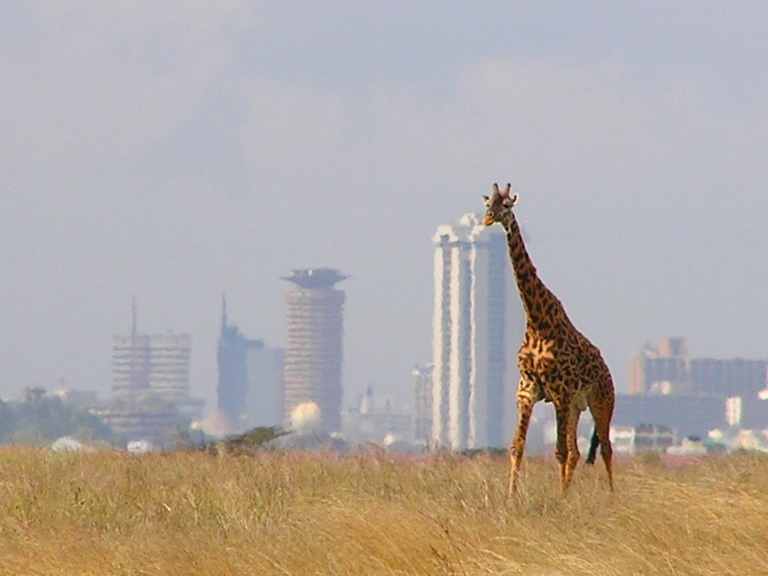
Located inland on the Kenyan plateau, Nairobi sits at a relatively high elevation and enjoys a moderate equatorial climate. The city is notable for its proximity to protected areas; most famously, Nairobi National Park lies immediately south of the central business district and supports wildlife such as lions, giraffes and rhinos within sight of skyscrapers. Rivers and small watercourses cross the metropolitan area, and green spaces and urban forests play a visible role in the city's landscape.
History and development
Nairobi originated in the 1890s as a depot along the Uganda Railway that linked the East African interior to the port of Mombasa. It later replaced coastal towns as the colonial administrative center, prompting rapid infrastructure and population growth. Over the 20th century Nairobi evolved into a national capital and a hub for trade, education and international organizations. Its early transport role connecting to what is now Uganda shaped both settlement patterns and commercial corridors.
Economy, culture and attractions
Nairobi is an economic engine for Kenya and the region, hosting government institutions, multinational companies, NGOs and financial services. The city has an active cultural scene with museums, theaters and festivals. Popular shopping and leisure centers include malls such as Yaya Centre, The Junction, Sarit Centre, Village Market, The Hub Karen and Thika Road Mall. One high-profile commercial complex that drew international attention after a 2013 terrorist attack was Westgate Mall, an incident that had lasting social and security impacts.
Urban structure and transport
The urban area contains a mix of formal planned districts, informal settlements and suburban estates. Nairobi's transport network includes major roads, an expanding light-rail and commuter rail network, and an international airport serving regional flights. Continued urban expansion places pressure on housing, services and transport infrastructure, prompting ongoing planning and investment initiatives.
Challenges and notable facts
Nairobi faces typical pressures of rapidly growing cities: migration from rural areas, demand for affordable housing, traffic congestion, and crime in parts of the city. Different sources report varying estimates of the city's population and metropolitan area; for official figures and demographic data see population resources here. As Kenya's capital, Nairobi also hosts diplomatic missions and international delegations, reflecting its regional political and economic importance (capital functions). Historical and international connections include trade and migration links to many neighboring countries, and diverse communities, including residents of varied national origins such as individuals with ties to Israel and other nations.
- Major shopping and leisure centers: Yaya Centre, The Junction, Sarit Centre, Village Market, The Hub Karen, Thika Road Mall.
- Nearby attractions: Nairobi National Park, national museums, botanical gardens and cultural venues.
- Historical note: Founded as a railway depot on the line to Uganda and the port at Mombasa.
Related articles
Author
AlegsaOnline.com Nairobi — capital and principal city of Kenya Leandro Alegsa
URL: https://en.alegsaonline.com/art/68144