
Musette: French bagpipe, pastoral dance, and musical drone effect
Musette denotes a small French bellows bagpipe, a pastoral dance genre, and a musical device imitating bagpipes by sustained drones; widely used by Baroque and later composers to evoke rustic scenes.
Overview
The term musette has several related meanings in Western music. It names a small, bellows-operated French bagpipe and, by extension, a dance or pastoral genre and a compositional technique that imitates the instrument's steady drone. In art music the word signals a rustic or shepherd-like character: composers wrote movements "musette" or indicated an "alla musetta" affect to suggest countryside atmospheres and folk sonorities.
Image gallery
4 Images
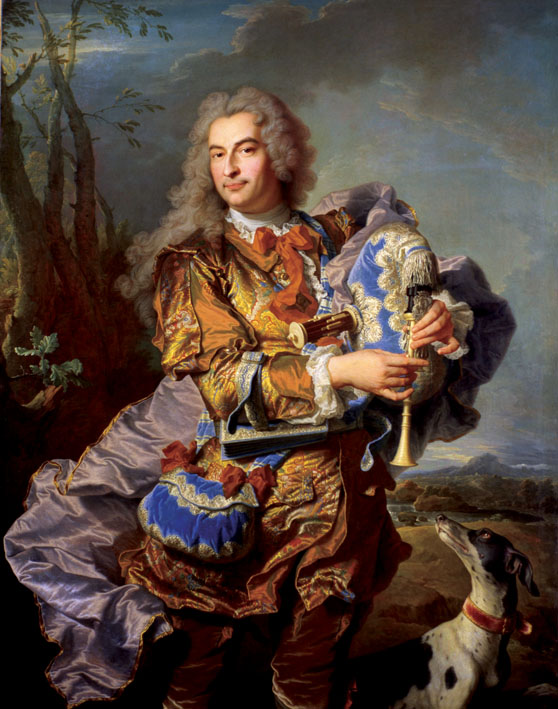


The instrument
The original musette is a compact, bellows-blown bagpipe used in France and often associated with courtly and popular music of the 17th and 18th centuries. It typically produces a continuous sustain from one or more drones beneath a simple melodic line. References to the instrument and reconstructions are discussed in specialist literature and instrument catalogues (musette (instrument)). The device is related to other bellows-blown pipes and is sometimes contrasted with mouth-blown varieties (bellows-played bagpipes).
Musical characteristics
A musical passage described as a musette commonly includes:
- a sustained low pitch or drones, often emphasizing the tonic and its fifth, which creates an open, modal sonority;
- a simple, folk-like upper melody that floats over the drone and avoids dense polyphony;
- harmonic language that favors open intervals, repeated patterns, and limited chordal movement to preserve the rustic colour;
- rhythmic features that suggest dance or pastoral song rather than strict contrapuntal development.
History and development
The musette idiom entered art music in the Baroque period as composers adopted the instrument's sonorities in keyboard, chamber, and orchestral writing. Baroque composers used the device as a shorthand for pastoral scenes and for evoking peasant or shepherd life. Scholarly surveys of the period and stylistic discussions treat the musette under pastoral forms and ornamentation practices (Baroque studies).
Notable composers and examples
Several leading composers incorporated musette effects. For example, Johann Sebastian Bach included pieces and passages that feature drone-like textures on keyboard instruments and in ensemble contexts. French harpsichordists such as François Couperin titled movements "Musette" to indicate the style. Other composers adopted the device for colour and local character: Haydn uses a drone to support a folk-like tune in the finale of one of his later symphonies, and various composers of the Baroque and Classical eras made similar uses (some composers favored the interval of a fifth for its close resemblance to traditional bagpipe sonorities).
Performance practice and modern use
Performers seeking an authentic musette effect may employ actual pipe instruments, appropriate registrations on the harpsichord or organ, or sustained techniques on strings and winds. Historically informed ensembles and modern composers both draw on the idiom: film and stage scoring, folk-inspired compositions, and neo-pastoral works continue to use drone textures to suggest rural or archaic settings.
Further reading and resources
For introductory entries and catalogues consult general reference works and specialized studies of French baroque repertoire and instrument construction. Editions, organology surveys and repertory guides discuss the musette in both its instrumental and stylistic senses; see collections focused on the French keyboard and on pastoral forms (Baroque surveys), composer monographs on Bach and Couperin, and modern discussions of classical orchestral practice (Haydn, other composers). Research and instrument reconstructions are documented in specialist catalogues and articles (musette, bellows-played bagpipes).
Related articles
Author
AlegsaOnline.com Musette: French bagpipe, pastoral dance, and musical drone effect Leandro Alegsa
URL: https://en.alegsaonline.com/art/67719