
Mortal Kombat (1995 film)
1995 live-action film adaptation of the Mortal Kombat video game, directed by Paul W.S. Anderson; noted for its faithful visuals, commercial success and mixed critical reception.
Overview
Mortal Kombat is a 1995 live-action martial arts fantasy film adapted from the popular video game franchise. Directed by Paul W.S. Anderson and produced by Lawrence Kasanoff and Lauri Apelian, the picture translates the game's tournament premise and distinctive characters into a linear action story. The film mixes practical stunts, choreographed fight sequences and early visual effects to recreate the look and feel of the source material. For production details see production notes and genre context at genre reference.
Image gallery
5 Images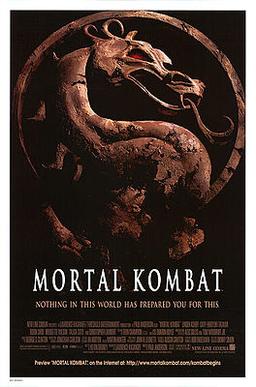



Cast and premise
The narrative follows a small group of Earth warriors summoned to defend their realm in a supernatural martial arts tournament. Key characters include Liu Kang, Sonya Blade and Johnny Cage, guided by the thunder god Raiden, facing opponents controlled by the sorcerer Shang Tsung. The cast featured known action actors of the era; a brief cast listing is below.
- Liu Kang — the determined champion
- Sonya Blade — the military fighter
- Johnny Cage — the movie star turned warrior
- Raiden and Shang Tsung — supernatural mentors and antagonists
Production and adaptation
The film was developed after the video game's surge in popularity during the early 1990s. Filmmakers emphasized recognizable costumes, signature moves and a soundtrack that matched the game's tone. Fight choreography drew on both cinematic and arcade inspirations, while some of the game's more graphic elements were toned down for a broad theatrical release. Early marketing and interviews are archived at press materials (Argentina) and press materials (Israel).
Release and reception
Mortal Kombat opened in mid‑1995 in several international territories before reaching North American cinemas. Release dates included Argentina and Israel in July, North America in August, the United Kingdom in October and Australia in December of that year; see respective release listings at North America, United Kingdom and Australia. Critics were mixed: many praised the visuals and fight sequences but found the plot and dialogue weaker. Aggregators reflected divided views, with a lower rating on one site and a middling score on another: Rotten Tomatoes and Metacritic.
Legacy
Despite mixed reviews, the film performed well enough commercially to spawn a sequel, Mortal Kombat: Annihilation (1997), and contributed to the emergence of video-game-to-film adaptations as a mainstream phenomenon. It remains notable among fans for its faithful visual references to the source material and for helping keep the franchise in public view, later paving the way for additional adaptations and reboots.
Related articles
Author
AlegsaOnline.com Mortal Kombat (1995 film) Leandro Alegsa
URL: https://en.alegsaonline.com/art/66783