
Morrisons — British supermarket chain
Overview of Wm Morrison Supermarkets plc (Morrisons), a major UK supermarket group: history, operations, branding, market position and notable developments.
Overview
Wm Morrison Supermarkets plc, commonly known as Morrisons, is a major grocery retailer headquartered in Bradford, West Yorkshire, England. Founded in the late 19th century, it grew from a market stall into one of the United Kingdom's leading supermarket groups with hundreds of stores nationwide. The company's shares were previously traded on the London Stock Exchange (stock listing), and it has been a long-standing competitor in the British grocery market alongside chains such as Tesco, Sainsbury's and Asda. Morrisons is known for a strong focus on fresh food and sizeable in-store production operations.
Image gallery
10 Images


History and development
Morrisons traces its origins to a small market business founded by William Morrison in the late 1800s. Over the 20th century the firm expanded from wholesale and local retail into a national supermarket operator. The company remained family-influenced for many decades; Sir Ken Morrison was a notable figure until he stepped back from day-to-day responsibilities in the 2000s. Executive leadership has changed over time, with several different chief executives guiding strategy and store formats.
Key milestones include expansion of store numbers across the United Kingdom, several acquisitions and investments in manufacturing capacity, and periodic rebranding of own-label ranges. In the 2000s and 2010s the business invested in larger distribution and processing facilities and opened new regional centres as part of redevelopment programmes that also created local jobs.
Operations, format and characteristics
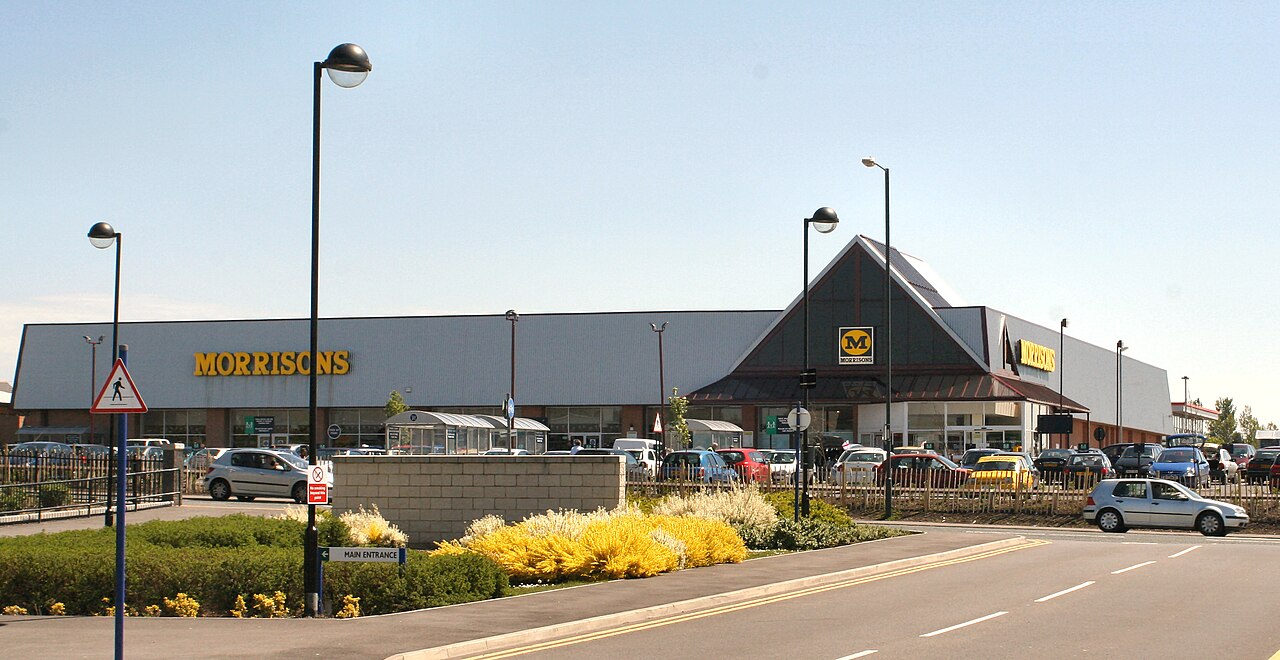
Morrisons has traditionally emphasized fresh food counters (butchers, fishmongers, bakeries) and in-store food preparation. The group operates a mix of supermarket formats from smaller convenience-style shops to large supermarket and superstore formats. A notable feature of Morrisons' model has been vertical integration: the retailer has owned manufacturing sites, bakeries and food-processing facilities to supply its own stores.
- Store types: convenience stores, standard supermarkets, larger superstores.
- Product focus: fresh produce, meat, bakery and chilled goods, supported by own-label ranges.
- Supply chain: significant in-house production and regional distribution centres.
Branding, private labels and examples
Like many supermarket chains, Morrisons sells a mixture of branded goods and private-label lines. Over time its own-label portfolio has been adjusted and renamed: earlier budget-focused ranges were relaunched and rebranded to reflect changing price strategies. For example, budget ranges introduced or refreshed in the 2000s and 2010s sought to present clearer low-cost options while the core Morrisons-branded ranges emphasise quality and freshness.
Notable events and market position
Morrisons has been consistently ranked among the largest UK supermarket chains. It has pursued growth through both organic expansion and selective acquisitions, including investments in bakery operations in the 2000s and the opening or redevelopment of distribution centres that added employment in local areas. As with other national grocers, the company has adapted to changing consumer habits by evolving store formats and expanding online ordering and delivery channels.
In recent years the group has experienced significant corporate changes typical of mature retail businesses, while continuing to operate its network of stores and supply operations across the UK. Its long-standing association with Bradford remains a defining aspect of its identity.
Distinctions and notable facts
- Morrisons began as a market stall business and retained a strong emphasis on fresh in-store counters.
- The company has frequently adjusted its own-label strategy to balance price competitiveness and product quality.
- Investments in manufacturing and distribution have been used to support store supply and local employment.
Related articles
Author
AlegsaOnline.com Morrisons — British supermarket chain Leandro Alegsa
URL: https://en.alegsaonline.com/art/66766
Sources
- miranda.hemscott.com : "Preliminary Results 2013"
- news.bbc.co.uk : "Co-op buys Somerfield for £1.57bn"
- morrisons.co.uk : Contact Us
- telegraph.co.uk : "Sir Ken Morrison, 76, bows out to applause and sales gift"
- morrisons.co.uk : "WM Morrisons Board Member Biographies"
- morrisons.co.uk : "'Our stores', Morrisons website"
- thegrocer.co.uk : "The Grocer Today – Latest News"
- guardian.co.uk : "Morrison buys Rathbone Bakeries"
- bridgwatermercury.co.uk : "Morrisons Distribution Centre Preview"