
Moorish Science Temple of America
A religious and national movement founded in the early 20th century by Noble Drew Ali that combined elements of Islam, Christianity, and esoteric teachings to promote Moorish identity and social uplift among African Americans.
The Moorish Science Temple of America is a religious and fraternal organization established in the United States in the early 20th century by Noble Drew Ali (born Timothy Drew). It taught that many African Americans were of Moorish ancestry and encouraged members to adopt a distinct national and spiritual identity. The movement combined religious ritual, community organizing, and symbolic claims about nationality to address the social and legal marginalization faced by Black Americans.
Image gallery
4 Images
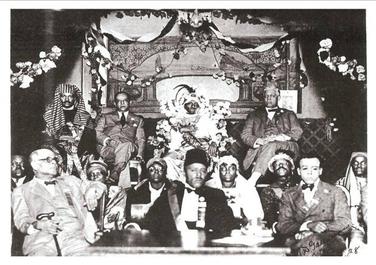


Beliefs and practices
Beliefs in the Moorish Science Temple draw on a mix of Islamic terminology, Christian moral precepts, and esoteric writings attributed to the founder. Members often used honorific surnames such as "Bey" and "El," and followed a code emphasizing moral conduct, self-help, and economic cooperation. A central text of the movement, written by Noble Drew Ali, is treated as a guidebook for spiritual and communal life rather than as a replacement for the Qur'an of mainstream Islam.
Organization and rituals
The movement is organized into local temples or assemblies that conduct weekly meetings, instruction, and community events. Early congregations used ceremonial dress and rites drawn from a variety of traditions; these practices have varied over time and between different branches. The structure combined elements of a religious congregation with a fraternal society focused on mutual aid and identity formation.
Origins and development
Noble Drew Ali introduced his teachings in the northeastern United States and the organization grew during the Great Migration as African Americans moved to urban centers. The Temple experienced internal divisions and legal challenges after the founder's death, which led to the formation of multiple groups claiming the Moorish name or legacy. Despite schisms, the movement persisted in various forms throughout the 20th and 21st centuries.
Influence, controversies, and distinctions
The Moorish Science Temple helped shape Afrocentric religious identity and was an antecedent to later Black Muslim movements, though it is distinct in its syncretic theology and emphasis on Moorish nationality. In recent decades some unrelated individuals and groups have appropriated Moorish terminology for political or "sovereign citizen" claims; these contemporary uses are controversial and not representative of the historical organization. The Temple's enduring legacy lies in its role promoting dignity, community organization, and alternative frameworks of citizenship for African Americans.
Notable facts
- The founder acted as both spiritual leader and organizer, producing a central text for members.
- Members historically adopted Moorish identity markers to resist racial labels imposed by U.S. society.
- The movement combined spiritual teaching with practical programs for uplift and mutual aid.
Related articles
Author
AlegsaOnline.com Moorish Science Temple of America Leandro Alegsa
URL: https://en.alegsaonline.com/art/66569