
Ashton-under-Lyne
Market town in the Metropolitan Borough of Tameside, Greater Manchester, England, with a long industrial history, local cultural sites, markets and transport links to Manchester.
Overview
Ashton-under-Lyne is a market town in the Metropolitan Borough of Tameside, part of the metropolitan county of Greater Manchester in north-west England. It lies to the east of Manchester city centre on the River Tame and serves as one of Tameside's administrative and commercial centres.
Image gallery
10 Images




Name and geography
The town's name is traditionally explained as deriving from Old English elements meaning an "ash tree settlement", with the suffix "-under-Lyne" indicating location beneath a hillside or ridge. Ashton occupies a valley setting crossed by the River Tame and was historically surrounded by rural farmland before industrial expansion.
History and development
Ashton-under-Lyne grew rapidly during the Industrial Revolution when textile manufacturing and coal mining became dominant local industries. Cotton mills, warehouses and associated commercial activity reshaped the town in the 18th and 19th centuries. In the 20th century the local economy diversified as heavy industry declined and services and retail expanded.
Landmarks and institutions
- Ashton Market and town centre shopping streets, long established as local trading hubs.
- Portland Basin Museum and canal-side heritage sites that interpret the area's industrial past.
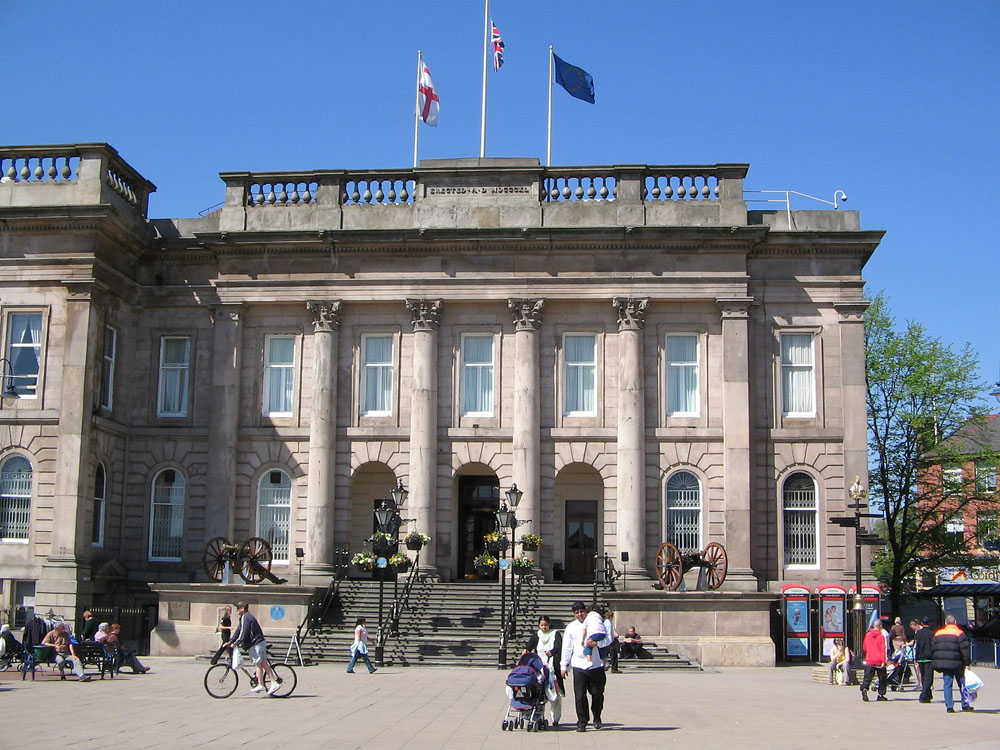
- Ashton Town Hall and other civic buildings that reflect Victorian-era architecture.
- Local sports clubs such as the semi-professional football team Curzon Ashton and community arts venues.
Transport and economy
The town is connected to Greater Manchester by road and public transport. In the 2010s the Manchester Metrolink tram network was extended to serve Ashton, improving links into the metropolitan area. Local employment is a mix of retail, public services, light industry and commuting to Manchester.
Culture and notable facts
Ashton retains market-town traditions alongside museum displays and cultural events that recall its industrial heritage. It is often cited for its role in the region's textile history and for community regeneration efforts that aim to preserve historic buildings while supporting modern economic activity.
Tags
Related articles
Author
AlegsaOnline.com Ashton-under-Lyne Leandro Alegsa
URL: https://en.alegsaonline.com/art/6597